Lesson 2: CTP Program Overview 


Lesson Objectives

  • Define the CTP Program
  • Describe the CTP program’s mission
  • Identify key milestones of CTP history
  • Identify program participant roles
  • Describe benefits of becoming a CTP
Transcript
Lesson List: Introduction, CTP Program Overview, The Funding Process: Pre-Award Budget Planning, Eligible Activities, The Funding Process: Awards, Tools and Resources, The Funding Process: Monitoring and Post Award, Program Evolution (CTP Program Overview is selected)
The CTP Program

This lesson provides a high-level overview of the Cooperating Technical Partners Program (CTP) Program. Specifically,    

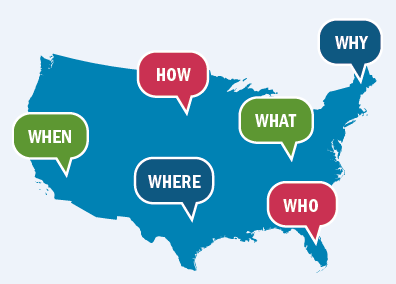
  • What is the CTP Program?
  • Who can become a CTP?
  • Where do CTPs operate?
  • When did the program begin?
  • How did the program begin?
  • Why become a CTP (benefits)?
Transcript
Map outline of the US with 6 quesions: Who? What? When? Where? How? Why?
What is the CTP Program?
CTP Element: Innovation plus Collaboration
CTP Element: FEMA plus Community Partners
Note Icon
Note
Click this link to learn more about the CTP Program: https://www.fema.gov/cooperating-technical-partners-program
Transcript
CTP Program Mission
  • Leveraging Partnerships
  • Reducing the Impacts of Hazards
  • Empowering Communities
Transcript
DHS Seal and FEMA Logo showing US Department of Homeland Security and organization name - FEMA (white background, blue writing)
CTP Logo: Cooperating Technical Partners with mountains in background (blue background with white text)
CTP Milestones Timeline
CTP history and milestones timeline: 1968, 1999, 2001, 2002, 2009, 2013, 2014
CTP Milestones Timeline
Click each milestone year below to see the history of the CTP Program.
Transcript
CTP Today
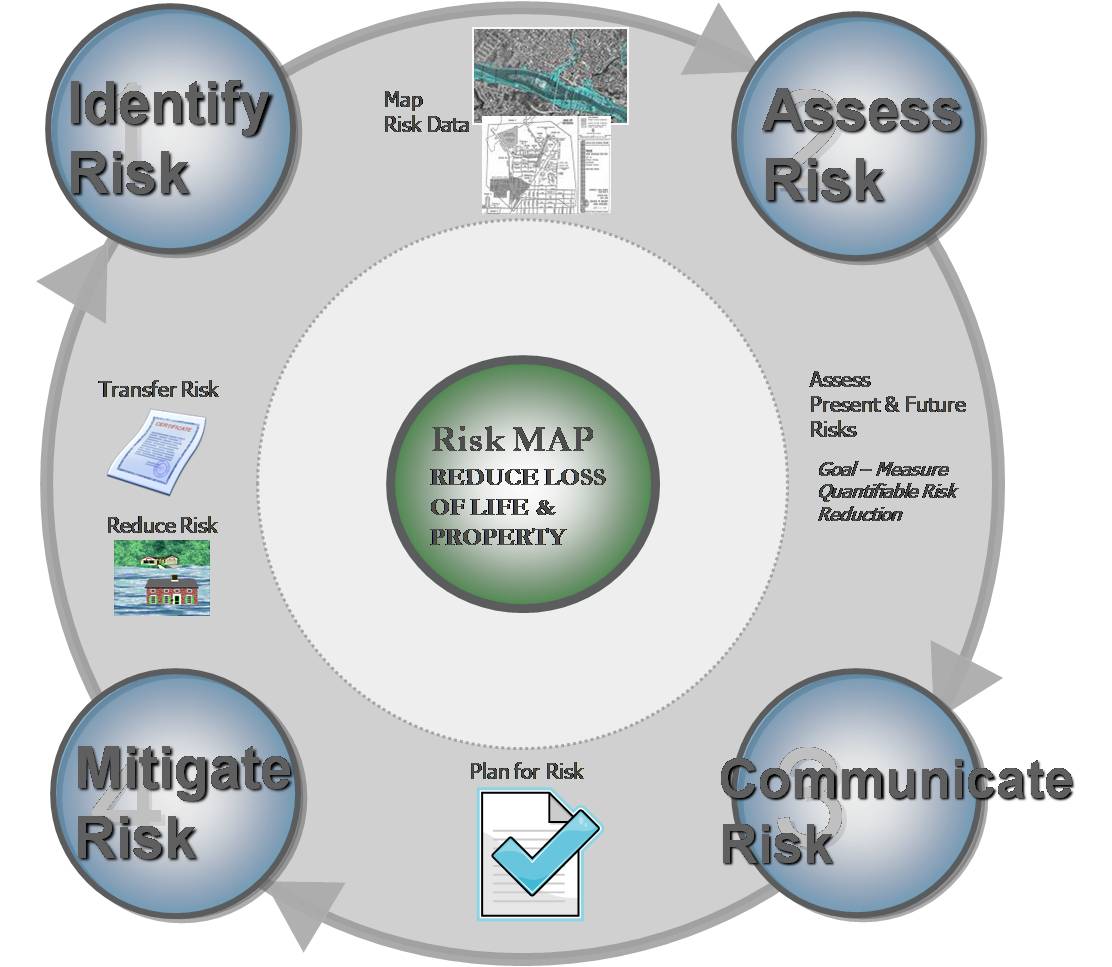
CTPs navigate the Risk MAP process through the following steps:
  1. Mitigation planning, where the risk is discussed and the community identifies actions it should consider to help make itself more resilient.
  2. Project planning, including discovery of the need for updated flood hazard maps and risk identification toolsets.
  3. Mapping, which creates the Flood Insurance Rate Maps, or FIRMs, for the communities, as well as and flood risk products.
  4. Preliminary issuance of FIRM data, when FIRMs are issued to local communities for review and comment.
  5. Assessment of flood risks and potentially other risks that impact the communities in the project.
  6. Effective issuance of FIRMs, when FIRMs are finalized and adopted by communities, which can then inform the mitigation planning process as well.
Transcript
Riskmap Lifecycle image (see description link on screen)
CTP Program Roles
Click each role to learn more.
Transcript
Becoming a CTP
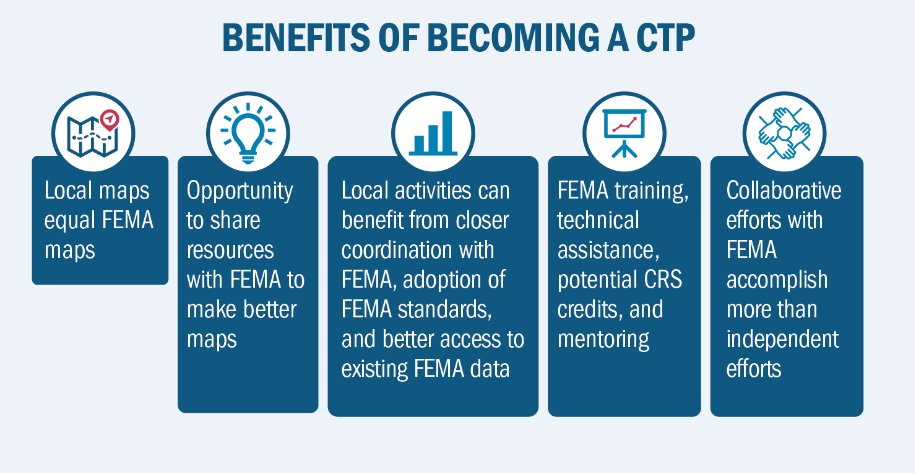
Benefits of becoming a CTP: Local maps equal FEMA Maps, Opportunity to share resources with FEMA to make better maps, Local activities can benefit from closer coordination with FEMA, adoption of FEMA standards and better access to existing FEMA data, FEMA training, technical assistance, potential CRS credits and mentoring, collaborative efforts with FEMA accomplish more then individual efforts.
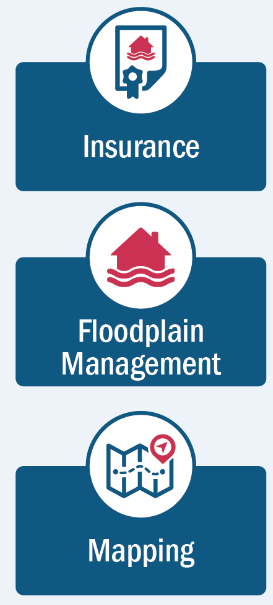
Three NFIP Components: Insurance, Floodplain Management, Mapping
3 NFIP Levels: Insurance, Floodplain Management, Mapping
Transcript
Lesson 2 Summary
What is the CTP Program?
  • Mission
  • History
  • Risk Map Process Cycle
  • Roles
  • Becoming a CTP
Transcript