Lesson 3 Overview and Objectives

This lesson provides an overview of the insurance review process for Applicants requesting Public Assistance grant funding.

At the end of this lesson, participants will be able to:

  • Review the purpose of the insurance review FEMA conducts on Applicants requesting Public Assistance grant funding
  • Summarize the process and key components of the insurance review FEMA conducts on Applicants requesting Public Assistance grant funding
Insurance Review Process (1 of 3)

As mentioned in previous lessons, the Robert T. Stafford Act requires that Applicants insure facilities and their contents with the "types and extent" of insurance that is reasonably available, adequate, and necessary to protect against future loss to the property. Types refers to the hazard(s) that caused the disaster-related damage and extent refers to the amount of insurance required.

FEMA will calculate the amount of insurance the Applicant is required to obtain and maintain using estimated or actual eligible costs prior to any reductions and including both the Federal and non-Federal cost share.

If FEMA provides assistance that covers costs related to replacing, restoring, repairing, reconstructing, or constructing items that are not buildings, contents, equipment, and vehicles, FEMA will subtract costs related to these items from the amount of required insurance.

Insurance Review Process (2 of 3)

Applicants must insure against future losses from the hazard(s) that caused the damage to the property.

  • When multiple hazards cause damage to a property, the Applicant must insure against each hazard in an amount based on the damage caused by each hazard.
  • FEMA requires insurance against the hazard(s) that caused the damage, even if that means the Applicant must purchase additional or broader coverage.
  • If an Applicant relocates a facility outside of a Special Flood Hazard Area, FEMA may not require the Applicant to obtain and maintain flood insurance, but will require an all-hazards or other appropriate policy to protect against future loss.
Insurance Review Process (3 of 3)

Prior to project approval, FEMA will notify Applicants of their initial insurance requirement(s) and identify the types and extent of insurance the Applicant is required to obtain and maintain through Grants Portal.

The type and extent of insurance required may be modified based on the appropriate provisions.

Project Size

FEMA categorizes projects as large or small based on the final approved amount of eligible costs after any cost adjustments, including insurance reductions:

  • A Small Project is a Project with a cost below the threshold
  • A Large Project is a Project with a cost equal to or greater than the threshold

The threshold applies to incidents declared within that fiscal year. FEMA administers funding for Large and Small projects differently.

For Large Projects that are not capped projects, FEMA adjusts any estimated costs to the actual incurred amount so that the final approved funding is based on actual costs.

For Small Projects, FEMA does not adjust estimated costs to the actual incurred amount.

Small Projects (1 of 2)

Small Projects are most commonly formulated on an estimate of costs. Insurance reductions for Small Projects are made on an anticipated insurance proceeds basis.

Once FEMA obligates a Small Project, FEMA does not adjust the approved amount of an individual Small Project. FEMA only adjusts the approved amount on individual Small Projects if one of the following conditions applies:

  • Applicant did not complete the approved scope of work
  • Applicant requests additional funds related to an eligible change in scope of work
  • Project contains inadvertent errors or omissions
  • Actual insurance proceeds differ from the amount deducted in the Project

In these cases, FEMA only adjusts the specific cost items affected.

Small Projects (2 of 2)

To close Small Projects, the Recipient must certify that the Applicant completed the approved scope of work for all its Small Projects and complied with all Environmental and Historic Preservation requirements.

The Recipient must submit the certification of completion of all Small Projects to FEMA within 180 days from the date that the Applicant completes its last Small Project. Once FEMA receives the Recipient's certification, FEMA closes all of the Applicant's Small Projects.

Large Projects (1 of 3)

Large Projects are either formulated on an estimate of costs or actual costs. Initially insurance reductions for Large Projects may be done on an anticipated insurance proceed reduction basis. However, all Large Projects undergo final reconciliation at closeout based on actual costs and actual insurance proceeds received.

With the exception of Capped Projects, the final eligible grant amount for a Large Project is the actual documented cost of the completed, eligible scope of work. Therefore, upon completion of each Large Project that FEMA obligated based on an estimated amount; the Applicant should provide the documentation to support the actual costs.

If the actual costs significantly differ from the estimated amount, the Applicant should provide an explanation for the significant difference.

Large Projects (2 of 3)

The Recipient must certify that all incurred costs are associated with the approved scope of work and that the Applicant completed all work in accordance with FEMA regulations and policies.

The Recipient must submit its certification of the Applicant's completion of each Large Project with the final payment of claim and supporting documentation to FEMA within 180 days from the date that the Applicant completes each Large Project.

FEMA reviews the documentation and, if necessary, obligates additional funds or reduces funding based on actual costs to complete the eligible scope of work.

Large Projects (3 of 3)

If the project included approved hazard mitigation measures; FEMA does not re-evaluate the cost-effectiveness of the Hazard Mitigation Proposal based on the final actual cost. If during the review, FEMA determines that the Applicant performed work that was not included in the approved scope of work.

FEMA will designate the project as an Improved Project, cap the funding at the original estimated amount, and review the additional scope of work for Environmental and Historic Preservation compliance.

For Capped Projects, the Applicant must provide documentation to support that it used the funds in accordance with the eligibility criteria and alternative procedures guidance.

Once FEMA completes the necessary review and funding adjustments, FEMA closes the project.

Categories of Work

Insurance coverages can be found in all Categories of Work (A through G). Therefore, all projects are reviewed for insurance coverage.

Emergency Work - Address an immediate threat:Permanent Work - Restoration of:
  • Debris Removal
  • Emergency protective measures
  • Roads/bridges
  • Water control facilities
  • Buildings/equipment
  • Utilities
  • Parks, recreational, and other facilities
Applicant

The Applicants' responsibility in the insurance review process is to respond to the Request For Information from FEMA and provide all of the information required for the review.

The Applicant is responsible for risk management. It is important to remember that private insurance is the first source of help after a disaster. FEMA Public Assistance is supplemental in nature and available when communities are overwhelmed by a disaster and after insurance benefits and other local or State resources have been exhausted.

A member of the National Flood Insurance Program providing information to a survivor
Program Delivery Manager

The Program Delivery Manager is a single point-of-contact assigned to each Applicant. The Program Delivery Manager provides assistance to the Applicant throughout the application process and the insurance review process.

Work that is already completed is compiled by the Program Delivery Manager, in coordination with the Applicant, to ensure all supporting documentation is provided.

The Program Delivery Manager will contact the Applicant via Grants Portal, as necessary, for any outstanding issues, requests for information, and for project concurrence and signature.
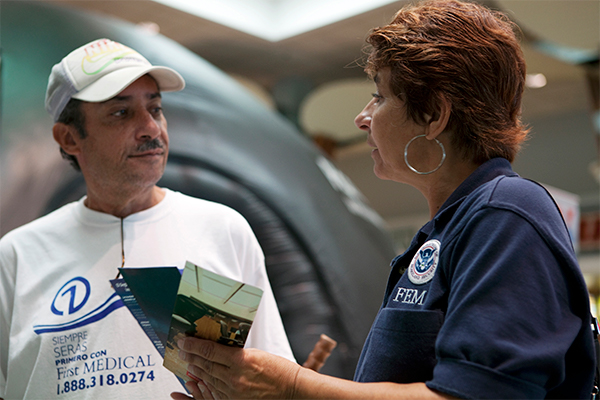

A program manager standing and talking
Insurance Specialist

The Insurance Specialist is typically a certified and qualified and/or general property insurance adjuster with experience dealing with commercial property insurance policies working in the Consolidate Resource Center.

The Insurance Specialist's primary role is to provide technical expertise in evaluating insurance related issues.

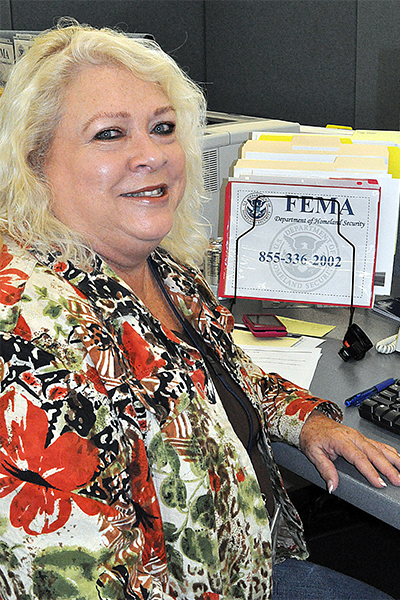
Insurance specialist sitting at her desk
Recipient/State Insurance Specialist

The Recipient Insurance Specialist has the responsibility for ensuring that the Applicant has obtained and/or maintains insurance for insurable facilities that received Public Assistance grant funding.

Not all States have dedicated insurance specialist positions; all Recipients have insurance duties and responsibilities.

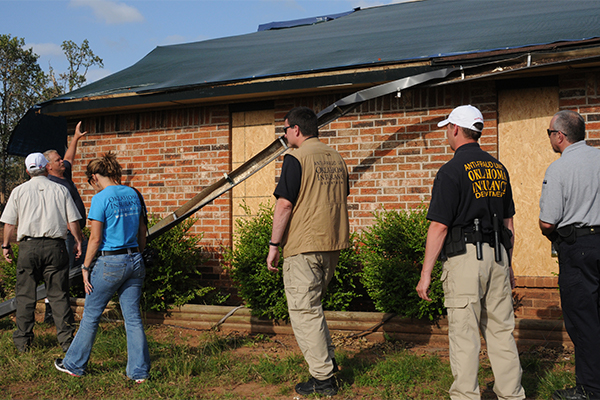
An Oklahoma insurance commissioner and members of the anti-fraud unit reviewing damage to a home
FEMA Insurance Specialist

The FEMA Insurance Specialist is responsible for reviewing damage and insurance to assess impacts for Public Assistance funding.

The FEMA Insurance Specialist will address insurance issues as identified throughout the Public Assistance Program process.

A FEMA specialist standing and smiling in the foreground with people in the background.
Key Components

There are several key components for determining total eligible costs for a project's grant obligation, including:

  • Anticipated or actual insurance proceeds reductions
  • Deductibles and self-insured retention
  • Duplication of benefits
  • Prior loss reductions
  • Mandatory reductions for Special Flood Hazard Areas
  • Obtain and Maintain Grant funding condition
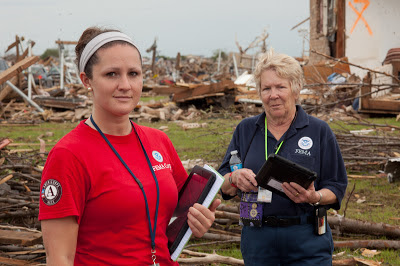
Photo: 2 FEMA employees
Anticipated or Actual Insurance Proceeds

Before FEMA approves assistance for a facility, the Applicant must provide FEMA with information about any actual or anticipated insurance settlement or recovery it is entitled to for that facility.

FEMA will reduce assistance to the Applicant by the amount of:

  • Actual insurance proceeds, if known
  • If the amount of actual insurance proceeds is unknown, the insurance specialist will reduce the grant by the anticipated insurance proceeds expected
  • If the amount of actual insurance proceeds is known, FEMA will reduce the grant by those actual proceeds
Self-Insured Plans

Self-Insured Plans are comprised of Self-Insured Retention. Self-Insured Retention is a type of retained risk whereby the policyholder retains an amount of loss before an additional layer (or layers) of coverage become available. Upon meeting the threshold, the insurer offering the additional layer(s) assumes liability.

FEMA does not consider self-insured retentions to constitute self-insurance plans.

Duplication of Benefits (1 of 3)

FEMA cannot provide assistance for disaster-related losses that duplicate benefits available to an Applicant from another source, including insurance.

Applicants must take reasonable efforts to recover insurance proceeds that they are entitled to receive from their insurer(s).

The Insurance Specialist reviews the damage to assess components that are or are not covered items in consideration for funding to eliminate the duplication of efforts.

Duplication of Benefits (2 of 3)

When an Applicant receives proceeds for losses that are ineligible for FEMA assistance, FEMA will calculate a relative apportionment of insurance proceeds before reduction assistance. FEMA will apportion insurance proceeds as follows, based on:

  • Proceeds per type of loss as specified by the Applicant's policy or settlement documentation
  • Policy limits for categories of loss as specified in the Applicant's policy
  • Ratio of total eligible losses compared to total ineligible losses
Duplication of Benefits (3 of 3)

If an Applicant has an obtain and maintain insurance requirement from a previous event:

  • FEMA will reduce assistance by the actual or anticipated amount of insurance proceeds or the amount of insurance required in the previous disaster, whichever is greater
  • FEMA will only consider insolvent insurers, legal fees, or apportionment of proceeds when the Applicant's anticipated or actual insurance proceeds are higher than the amount of insurance required in the previous disaster
  • If an Applicant failed to obtain or maintain insurance for a facility as required in the previous disaster, that facility is not eligible for disaster assistance
Obtain and Maintain Grant Funding Condition

As a condition of receiving FEMA Public Assistance funding, Applicants are required to obtain and maintain using estimated or actual eligible costs prior to any reductions (for example, reductions by insurance proceeds or based on a previous insurance requirement) and including both the Federal and non-Federal cost share.

Failure to comply with obtain and maintain insurance requirements can lead to loss of funding not just for the current disaster but for a future disaster, regardless of what peril causes the future loss.

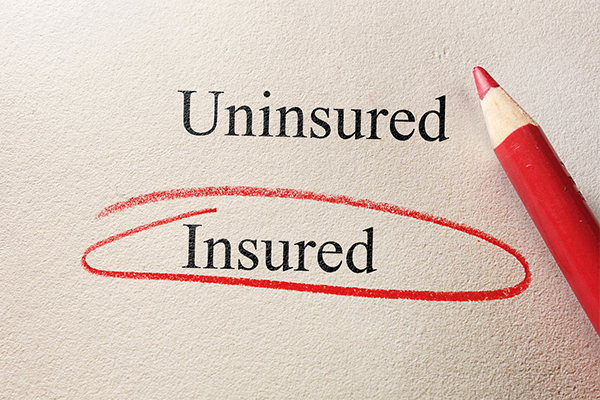
A paper with the word uninsured and the word insured, but the word insured is circled in red with a pencil next to it
Insurance Commissioner's Certification (1 of 5)

Sometimes insurance market conditions prevent the ability to reasonably meet the obtain and maintain insurance requirement. As a result, the Robert T. Stafford Act allows the Applicant to apply for an Insurance Commissioner's Certification.

The Insurance Commissioner's Certification acts as a declaration that some portion of the obtain and maintain requirement is not reasonably available to a FEMA Public Assistance Applicant. It may be the best way to ensure continued eligibility for FEMA Public Assistance grant funding if you incur damage to insurable assets in a subsequent disaster.

Insurance Commissioner's Certification (2 of 5)

Why an Insurance Commissioner Certification may be needed:

  • Applicant who has not obtained and maintained insurance (for the full amount of FEMA Public Assistance eligible damages) in a current disaster is at risk for de-obligation of that funding
  • Eligibility for future FEMA Public Assistance grant funding requires Applicants to obtain and maintain insurance for each damaged facility (in at least the amount of previously eligible damages) that has received FEMA Public Assistance grant funding in a prior disaster of the same type
  • Applicant that cannot reasonably obtain and maintain the required level of insurance coverage can apply for an Insurance Commissioner Certification. For future Public Assistance eligibility, FEMA does not require greater amounts of insurance than certified as reasonable by the State Insurance Commissioner
  • Facilities that sustained eligible damages that do not exceed $5,000 will not have an obtain and maintain requirement
Insurance Commissioner's Certification (3 of 5)

Insurance Commissioner's Certification Application Process

1. Applicant notifies the Recipient that, because of the insurance market, it merits consideration for an Insurance Commissioner's Certification.

2. The Recipient sends an application packet to the Applicant.

Five steps of Insurance Commissioner's Certification: 1. Establish Minimum Budget 2. Procurement 3. ICC Request 4. Documentation Review 5. Insurance Commissioner's Decision. Each Step has a related icon.
Insurance Commissioner's Certification (4 of 5)

Insurance Commissioner's Certification Application Process

3. Applicant returns the completed application to the Recipient's Office.

    • The Recipient reviews the required documentation for completeness
    • Make the threshold determination that the Applicant is a candidate for consideration of an Insurance Commissioner's Certification
Five steps of Insurance Commissioner's Certification: 1. Establish Minimum Budget 2. Procurement 3. ICC Request 4. Documentation Review 5. Insurance Commissioner's Decision. Each Step has a related icon.
Insurance Commissioner's Certification (5 of 5)

Insurance Commissioner's Certification Application Process

4. The Recipient forwards the packet to the Department of Insurance and an Insurance Commissioner for consideration.

    • Staff reviews the packet; request for clarification and additional documentation (if it is needed to make a decision)
    • The Recipient assists the Applicant in addressing the request(s) for additional information or documentation

5. Department of Insurance and Insurance Commissioner makes the final determination.

Five steps of Insurance Commissioner's Certification: 1. Establish Minimum Budget 2. Procurement 3. ICC Request 4. Documentation Review 5. Insurance Commissioner's Decision. Each Step has a related icon.
Subsequent Assistance

When a facility that received assistance is damaged by the same hazard in a subsequent disaster:

  1. If the Applicant failed to maintain the required insurance from the previous disaster, then the facility is not eligible for assistance in any subsequent disaster.
  2. Upon proof that the Applicant maintained its required insurance, FEMA will reduce assistance in the subsequent disaster by the amount of insurance required in the previous disaster.
  3. If FEMA modified the Applicant's insurance requirements, assistance will be reduced by the modified insurance requirement.
  4. If the Applicant's anticipated or actual insurance proceeds are higher than the amount of insurance required in the previous disaster, FEMA will reduce assistance by that amount.
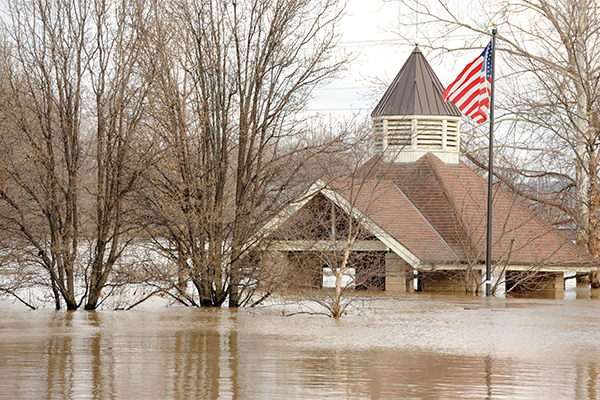
A flooded building with a flag in front of it
Properties Located within Special Flood Hazard Areas (1 of 2)

For properties located in a Special Flood Hazard Area, applicable law may require FEMA to reduce assistance.

  • The reduction of assistance applies to properties insurable by the National Flood Insurance Program that meet each of the following criteria:
    • Located in a Special Flood Hazard Area where FEMA has identified the area as a Special Flood Hazard Area for more than one year
    • Damaged by flooding
    • Uninsured for flood loss
  • FEMA will reduce assistance by the lesser of:
    • The value of the property at the time of the disaster
    • The maximum amount of insurance proceeds that a Standard Flood Insurance Policy would provide for a building and its contents
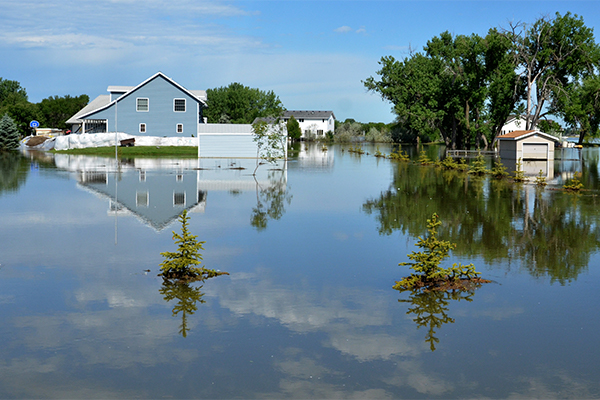
Flooded Residential Area
Properties Located within Special Flood Hazard Areas (2 of 2)
  • For property located in a Special Flood Hazard Area that is covered by flood insurance:
    • FEMA will reduce assistance by the amount of actual or anticipated insurance proceeds or by the maximum amount of insurance proceeds that a Standard Flood Insurance Policy would provide
    • If the property is not insured through a Standard Flood Insurance Policy and the amount of actual or anticipated proceeds is less than what would be provided through a Standard Flood Insurance Policy, then FEMA will reduce assistance by the maximum amount of insurance proceeds that a Standard Flood Insurance Policy would provide.

Note: Just because the property in a Special Flood Hazard Area has flood insurance does not mean the "Mandatory Reduction" is not calculated, it is calculated and compared to the actual flood insurance claim amount to determine if other flood coverage exceeds the Standard Flood Insurance Policy.

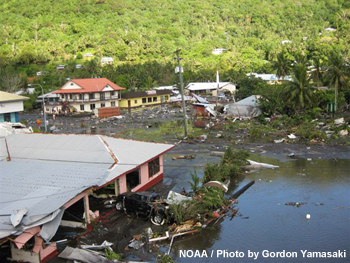
Damage and flooding at the Fagasa Road intersection during the 2009 Samoan tsunami
Lesson 3 Summary

In this lesson, you learned how to:

  • Review the purpose of the insurance review FEMA conducts on Applicants requesting Public Assistance grant funding
  • Summarize the process and key components of the insurance review FEMA conducts on Applicants requesting Public Assistance grant funding

The next lesson will provide an overview of where in Grants Portal Applicants can locate insurance requirements.