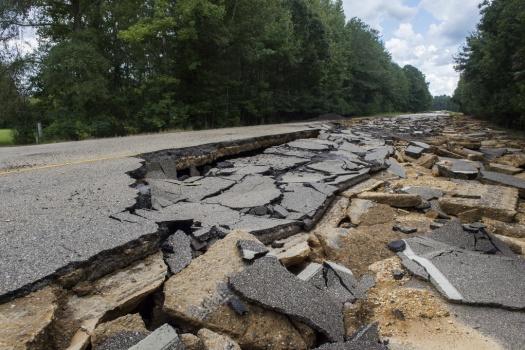
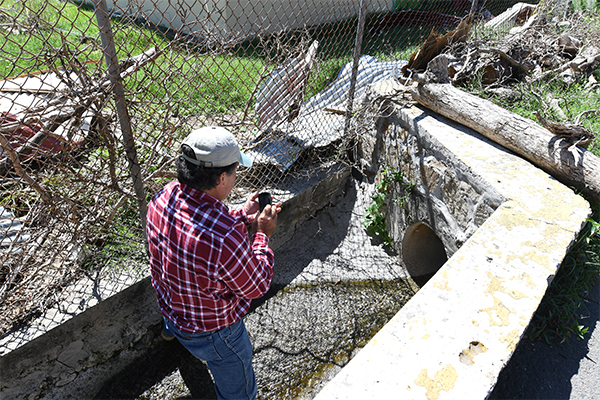
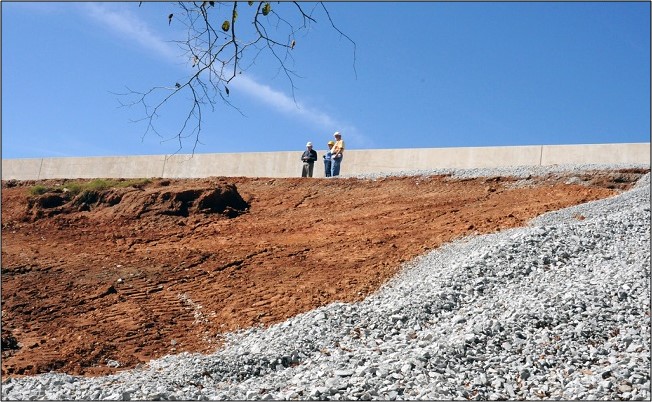
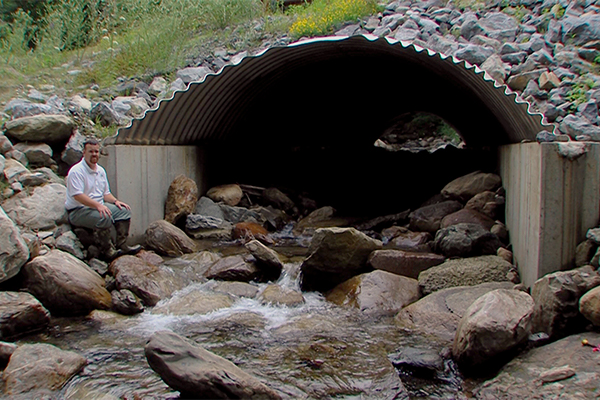
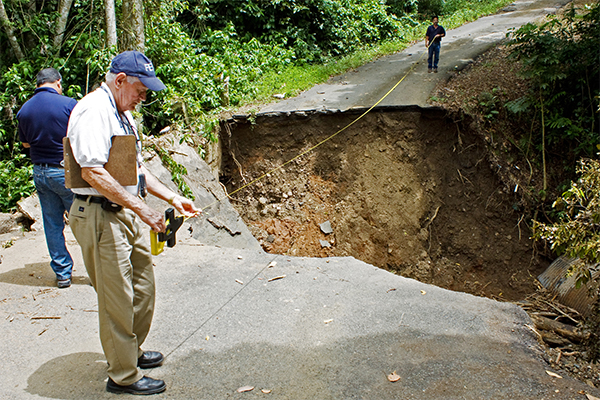
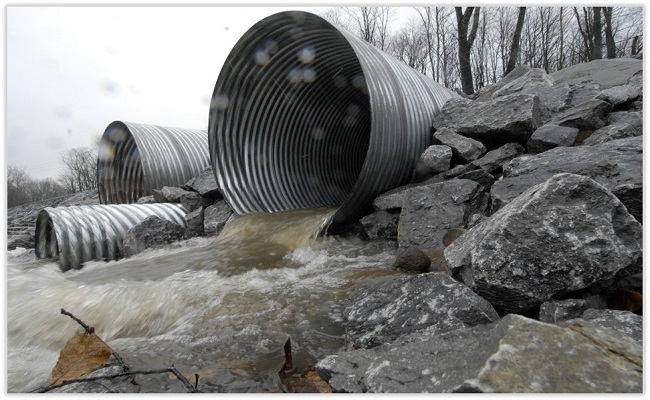
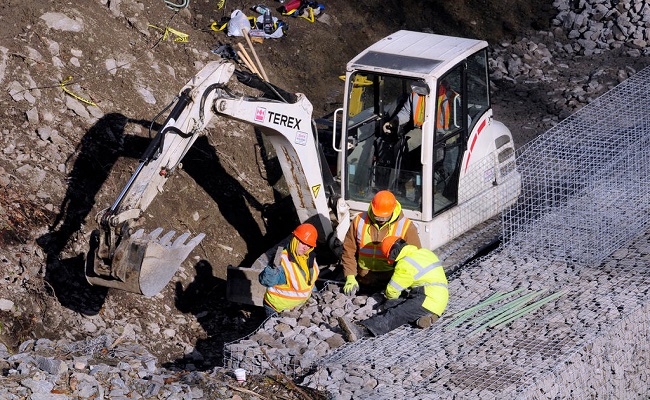
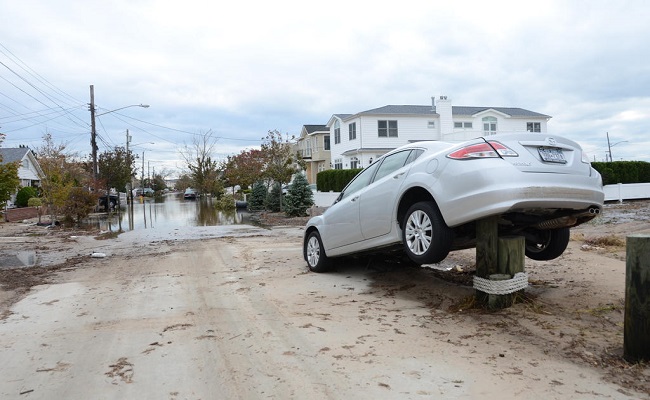
This course provides an overview of roads and culverts in the context of the Public Assistance Program. By the end of the course, State, Local, Tribal, and Territorial Recipients and Applicants will be able to differentiate maintenance work from disaster-related damages, describe the eligibility requirements for Public Assistance grants for roads and culverts, and identify documentation required to substantiate disaster-related damage.
Upon completion of this course, the participants will be able to:
Describe Public Assistance work eligibility requirements for roads and culverts
Discuss factors specific to roads and culverts for scoping and costing
Explain how to maintain compliance with special considerations rules and regulations for work on roads and culverts
This lesson provides an overview of administrative requirements, course goals and objectives, and general eligibility requirements and documentation for roads and culverts.
Upon completion of this lesson, participants will be able to:
Identify the administrative requirements of the course
State the goals and objectives of the course
Discuss the importance of pre-disaster documentation and records
Overview of Eligibility for Roads and Culverts
Roads and culverts are some of the most commonly damaged structures during disasters. Therefore, it is important for Applicants to understand the eligibility and documentation requirements for work on roads and culverts to be eligible for Public Assistance grant funding.
For work on roads and culverts to be eligible for Public Assistance grant funding, the facility (road or culvert) must have incurred damage beyond the threshold for Public Assistance grant funding.
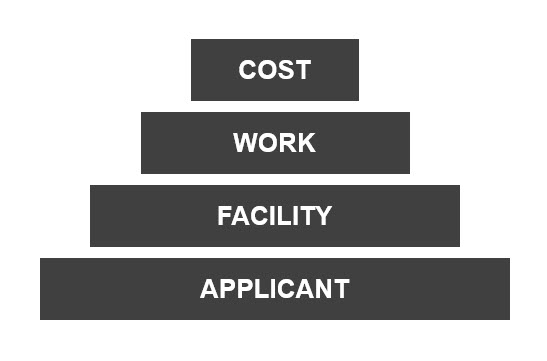
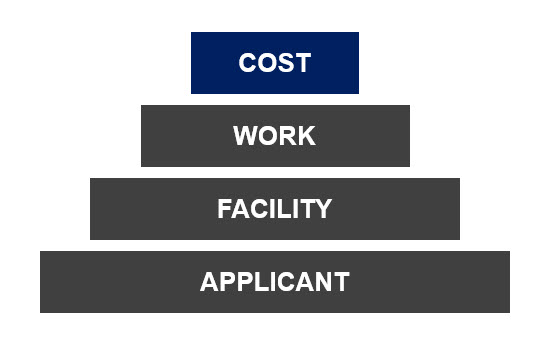
In addition to reaching the damage threshold, the work must meet the four basic qualifications for general eligibility:
Applicant
Facility
Work
Cost
Damage Threshold for Roads and Culverts
FEMA sets minimum damage thresholds for incidents declared within each federal fiscal year. The damage threshold is a dollar amount that projects must meet to be eligible for Public Assistance grant funding.
Because of the administrative cost involved, FEMA does not process projects below the minimum threshold unless the Applicant is eligible, disputing the scope of work or cost, and planning to appeal an amount that would increase the project amount to at least the minimum threshold.
The threshold applies to each project, not to each site. In some instances, a single site where damage occurred may not meet the damage threshold. However, an Applicant may combine multiple sites into one project to meet the minimum threshold, as long as the sites can be logically grouped according to damages.
Refer to FEMA.gov for the most current and accurate information regarding damage thresholds for the Public Assistance Program.
Four Basic Components of Eligibility (1 of 5)
To be eligible for Public Assistance grant funding, work on a road or culvert must meet the four basic qualifications for general eligibility.
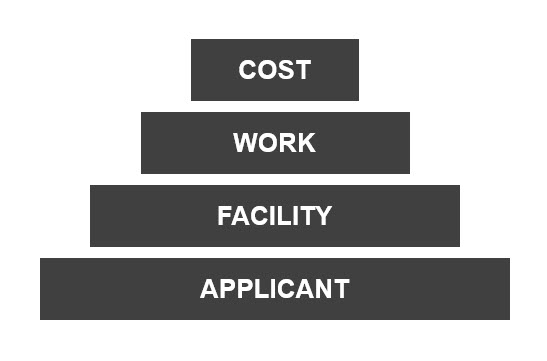
The four basic qualifications of eligibility are:
Applicant
Facility
Work
Cost
Four Basic Components of Eligibility (2 of 5)
Applicant
The first step in reviewing eligibility is determining Applicant eligibility. State, Local, Tribal, Territorial governments, and certain types of private nonprofit organizations are eligible Applicants for Public Assistance.
Four Basic Components of Eligibility (3 of 5)
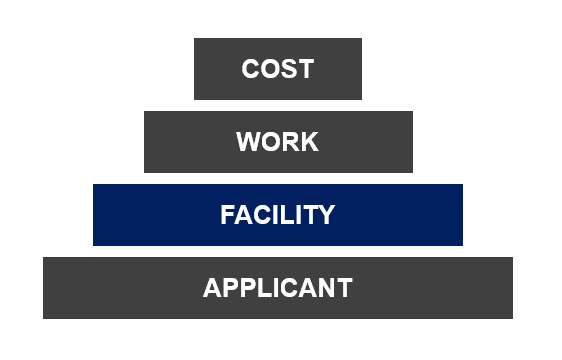
The next step is to determine if the facility is eligible for Public Assistance grant funding.
Facility:
For a facility to be eligible, it must adhere to the following requirements:
Public facility
A facility owned by a State, Local, Tribal, or Territorial, government for which they have legal responsibility to make repairs
Private nonprofit facility
A facility that provides educational, utility, emergency, medical, or custodial care, and other essential government-type services to the general public
Facilities under the specific authority of other federal agencies are generally not eligible for FEMA reimbursement i.e., USACE, NRCS, USDA and others.
Facility must have been active and fully operational at the start of the incident period
Facilities that are not yet under contract but are scheduled for repair or replacement using non-federal funds are eligible, if the damage did not exist prior to the incident
Four Basic Components of Eligibility (4 of 5)
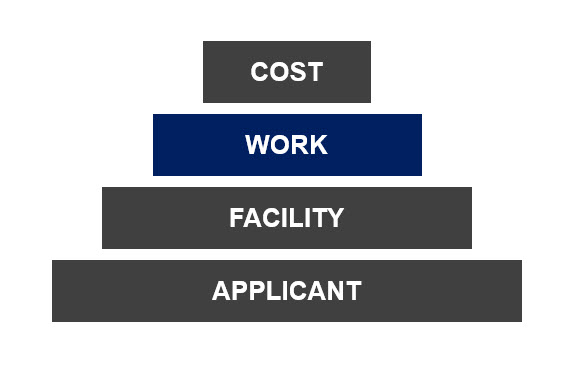
The next step is to determine if the work to be performed is eligible for Public Assistance grant funding.
Work:
To be eligible, work must be required to repair and restore a facility to its pre-disaster condition as a direct result of a declared incident and performed within the designated disaster area. Work on roads and culverts is eligible under Category C of the Public Assistance Program.
The last step is to determine if the cost is eligible for Public Assistance grant funding.
Four Basic Components of Eligibility (5 of 5)
The next step is to determine if the cost is eligible for Public Assistance grant funding.
Cost:
To be eligible for reimbursement under the Public Assistance Program, costs must be directly tied to the performance of eligible work, and necessary and reasonable to accomplish the work properly and efficiently.
For more information on eligibility considerations, please refer to the course: IS-1000: Public Assistance Program and Eligibility.
Documentation and Records for Roads and Culverts
It is important that Applicants maintain reliable documentation and records for roads and culverts.
Applicants should be prepared to provide documentation to demonstrate the pre-disaster condition of the road or culvert. This can include a routine maintenance plan, material purchase invoices, and activity logs that confirm the performance of normal maintenance and inspection activities.
Applicants must also provide FEMA with records and documents of the work completed on the road or culvert when requesting Public Assistance grant funding.
Distinguishing Between Pre-Disaster Damage and Disaster-Related Damage
Roads and culverts may incur damage over time caused from the age of the road, traffic flow, and frequent rain.
Therefore, distinguishing between pre-existing damage and disaster-related damage is often difficult but important for Public Assistance eligibility. Applicants must demonstrate that damage to the road or culvert was directly caused by the incident.
When evaluating damage, FEMA reviews maintenance records and documentation establishing that the Applicant has a routine maintenance program. Normal maintenance is not eligible for Public Assistance funding. Work to repair potholes or fatigue cracking is generally not eligible as this type of damage is rarely caused directly by one incident.
Impacts of Insufficient Documentation
Failure to provide sufficient documentation and records required by FEMA on roads and culverts may jeopardize Public Assistance grant funding.
Insufficient documentation of the pre-disaster condition and maintenance of roads and culverts may result in an ineligibility determination. Failure to demonstrate that reported damages are disaster-related can jeopardize the Applicant from receiving Public Assistance grant funding.
Insufficient documentation of work performed on roads and culverts may result in ineligible costs and therefore jeopardize the full amount of funding for which the Applicant may be eligible to receive.
Lesson 1 Summary
In this lesson, the participant learned the damage threshold for Public Assistance grant funding as well as the basic documentation and records requirements for roads and culverts.
The next lesson further explains work and cost eligibility, and scoping and costing considerations specific to roads and culverts.
Lesson 2 Overview and Objectives
This lesson describes work eligibility, cost eligibility, and documentation requirements for project formulation for work on roads and culverts.
Upon completion of this lesson, participants will be able to:
Describe eligible disaster-related damage sustained by roads and culverts
Identify documentation requirements and records for disaster-related damage sustained by roads and culverts
Work Eligibility for Roads and Culverts
In order for work to be eligible, it must fall under the following criteria:
The legal responsibility of an eligible Applicant
Located within the designated area
Required as a result of the declared incident
Criterion 1: Legal Responsibility for the Damaged Road or Culvert
The Applicant must demonstrate legal responsibility for the damaged road or culvert to FEMA for the work to be considered eligible for Public Assistance grant funding.
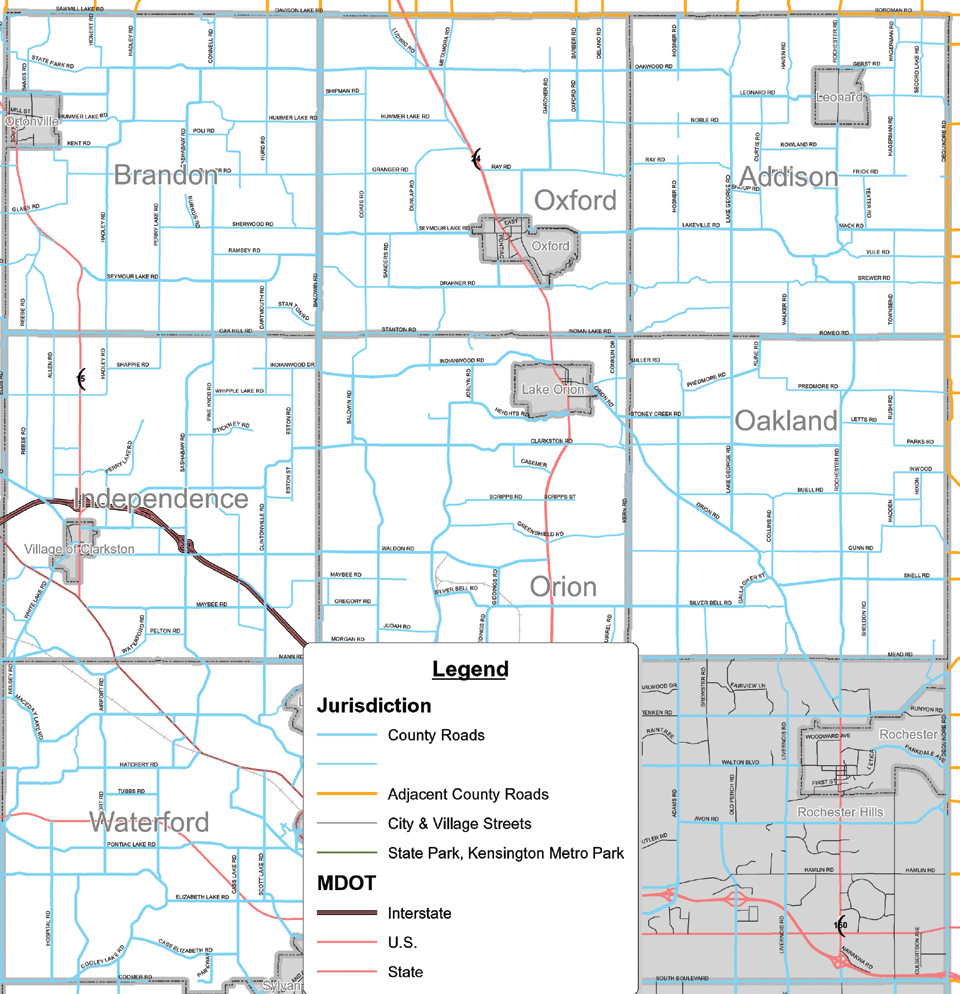
To demonstrate legal responsibility, an Applicant should retain a documented map of the roads and culverts for which they are legally responsible.
Within each county, parish, or borough, the respective engineering department maintains maps of the roads within their geographic region, depicting which entity (e.g., county, Federal government, local municipality) is legally responsible for each road.
Example: Legal Responsibility for the Damaged Facility
Review the map to the right of this text. This map is an example that a county, parish, or borough's engineering department may possess. It shows which entity is legally responsible for the roads within the geographic region.
Dashed lines represent roads for which the State is legally responsible
Dotted lines represent roads for which the town is legally responsible
Solid lines represent roads for which the county is legally responsible
Maintaining Versus Legal Responsibility for the Road or Culvert
Only jurisdictions that have legal responsibility for the road or culvert damaged in the incident are eligible to receive Public Assistance grants. Confusion may arise if an entity maintains a road instead of having legal responsibility for it.
When the entity maintaining the disaster-damaged road does not have legal responsibility, they should inform the organization that owns it for their costs to be included in the Applicants project.
For a project (work and cost) to be eligible, the Applicant must first be eligible
Only the owner of the facility (that incurred disaster-related damage) is eligible to apply for Public Assistance grant funding
Example: Maintaining Versus Owning the Road or Culvert
A township and a county have a mutual aid agreement. The agreement includes the county maintaining certain roads for the township's general upkeep.
Years after the agreement, a tornado impacts the township. The county acts on its mutual aid agreement and begins construction to repair significant damage throughout the township roads.
To recoup the money for this construction work, the county and township need to communicate on what disaster-related damages occurred and the documentation for any repairs done on the damages.
As the owner of the roads, it is important that the township apply for Public Assistance and include the costs the county incurred. The county may still conduct the work under the mutual aid agreement, but the township must apply for the assistance.
Criterion 2: Demonstrating the Road or Culvert is in the Designated Area
The disaster-damaged road or culvert must be located within the declared incident area to be eligible for Public Assistance grant funding.
Some roads (e.g., county roads and town roads) pass from one county to another, or weave in and out of a county
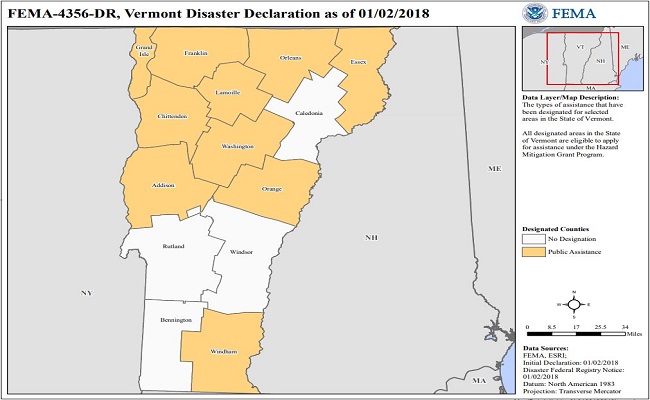
Applicants can determine if the damaged road or culvert is within the designated area by comparing a declared disaster map with the county, borough, or parish engineering department's road map
Applicants may only receive grant funding for sections of the road within the designated disaster area
Applicants must ensure culverts under roads or pathways exist within the designated disaster area as well
Tribal governments do not always have contiguous boundaries, and some have boundaries that cross State lines. Therefore, Tribal government declarations do not usually define specific designated geographical areas. If a specific designated area is not defined in the declaration, FEMA determines eligibility based on legal responsibility and whether the work is directly related to the declared incident.
Criterion 3: Designating Damage and Associated Work as Disaster-Related
The Applicant is responsible for showing that work is required to address damage caused by the declared incident. There are certain ways that Applicants can demonstrate disaster-related damage.
To demonstrate that damages are eligible for Public Assistance grant funding the Applicant should:
Conduct a damage assessment
Document disaster-related damage
Document pre-disaster conditions
Damage Assessment
When an incident occurs, a potential Applicant should inspect their facilities for any disaster-related damage.
Road crews and inspectors should examine roads and/or culverts within their jurisdictions for any damages
If there is a major disaster declaration, potential Applicants should do the following:
Attend the Applicant Briefing
Submit Request for Public Assistance
Discuss disaster-related damage during the Exploratory Call and/or Applicant Impact Survey (AIS) and the Recovery Scoping Meeting
Attend the Recovery Scoping Meeting or certify Recovery Scoping Video has been watched
Applicants must report all their damages within 60 days of the Recovery Scoping Meeting.
Documenting Damages
When an incident occurs, potential Applicants must document the disaster-related damage and provide that documentation to FEMA.
If damages are Work to be Completed, FEMA may document these damages at the time of the site inspection.
For completed work, the Applicant must provide FEMA with documentation of the disaster-related damage.
Examples of some of the required documents:
Photographs of the site, overall facility, and specific damage
Detailed description of damage with dimensions
Activity logs should capture damage maintenance separately from routine maintenance
Drawings, sketches, and plans of disaster-related damage (to scale)
Documenting Sequentially Damaged Sites
If an incident damages a road or a culvert multiple times, and the Applicant repairs it each time, the Applicant must document each repair to be eligible to obtain grant funding for all repairs. Below is an example:
Heavy rains occur on May 1
The roots from fallen trees damage a township's road
The township subsequently repairs the road
Heavy rains occur again on May 4
The same road is damaged by another root system from a fallen tree, and the township repairs the road
Heavy rains fall on May 6
Another tree to damage the road again
The township repairs the road once more
Heavy rains happen once again from May 8 - May 12
The township realizes the damage recurs and the rain will not let up
They do not repair the road until the rain stops for a few days
The President declares a major disaster for the township's county for the incident period of May 4 - May 12
Each time the township repaired the road, it should have documented the damage and the work to repair it.
For damages incurred between May 4 - May 12, the township can submit for reimbursement the cost of repair through the Public Assistance grant program
The repair for the May 1 damage is ineligible because it did not occur during the declared incident period
Documenting Pre-Disaster Conditions
FEMA requires the Applicant to submit documentation of the pre-disaster conditions of the damaged roads and culverts.
Documentation demonstrates the roads and culverts incurred the damages during the incident rather than the damages occurring prior to the incident
The Applicant is responsible to demonstrate the incident caused the damages to the roads and culverts
Regular maintenance is not eligible for Public Assistance funding
Work to repair potholes or fatigue cracking is generally ineligible as this type of damage is rarely caused by a single incident
The Program Delivery Manager will ask the Applicant for documentation showing the pre-disaster condition of the roads and culverts after the site inspection.
Documentation of Pre-Disaster Conditions
Applicants can provide FEMA with the following documentation to establish pre-disaster conditions:
Photographs or videos of the road/culvert
Inspection records
Maintenance records
Photographs and Videos of Pre-disaster Conditions
Photographs and videos play an important role in determining the condition of the road or culvert pre-disaster. Videos and photographs provide FEMA with a visual representation of the road and/or culvert before the disaster and provide information to determine the condition of the facility.
Potential Applicants should keep an updated photo-catalogue of all roads for which they have legal responsibility
If possible, they should video the conditions of the roads and culverts for which they have legal responsibility and update them regularly
All photographs and videos should contain:
The date the picture/video was taken
An identifier of where the picture/video was taken
An identifier of scale of the road or culvert
Maintenance Records
To obtain Public Assistance grant funding, the Applicant must provide FEMA with a maintenance record of the damaged road/culvert.
FEMA does not pay for road and culvert maintenance but does provide grant funding for eligible damage related to the incident
Maintenance records should consist of an activity or work log, such as a spreadsheet
The activity/work log should state whether the Applicant repaired a road/culvert due to an incident or conducted routine maintenance
Maintenance should occur in a set pattern. It should show that the Applicant carries out routine maintenance on a regular schedule
Frequency of maintenance or having a maintenance plan that states when maintenance occurs, supports maintenance records
Completing maintenance "as needed" is not a maintenance schedule, unless stated specifically in the maintenance plan (e.g., "After a heavy rain, the road crew will inspect and repair XXXX road.")
The Applicant will not be eligible for Public Assistance grant funding if the Applicant does not have maintenance records, provides inconsistent maintenance records, or shows neglect
Potential Applicants should upkeep maintenance logs not only for FEMA grant funding, but also for managing their infrastructure and budget process
Maintenance Activity/Work Log
When an Applicant provides FEMA with documentation of pre-disaster conditions for their roads and/or culverts, they should include an activity/work log. The log consists of:
Date of work
Location of work
Description of the work/routine maintenance vs. incident related and type of work (e.g. dirt road)
Labor
Size of the crew (including names of individuals and positions)
Number of hours worked
Materials used (e.g., tons of gravel)
Equipment used
Type of equipment used
Number of hours the equipment was used, including the operator
Example: Poor Maintenance
The following scenario is an example of poor maintenance and how it can jeopardize an Applicant's Public Assistance grant funding:
A county placed four inches of gravel on a road and did not maintain it
Seven years later, an incident occurs
FEMA determines that there was not four inches of gravel on the road at the time of the incident because a lack of maintenance. The Applicant will not receive grant funding to replace four inches of gravel on the road
Inspection Records
In addition to the maintenance records, the Applicant must supply FEMA with inspection records, especially for culverts. Inspections should occur regularly, like maintenance.
Inspection records should answer questions such as:
Are the culverts plugged?
Are the culverts' ends damaged?
Are ditches properly functioning?
Are there any known drainage issues?
Has any undermining of the culvert or low-water crossing occurred?
Cost Eligibility and Scope of Work
There are some factors involved with determining the scope of work and cost of a project. These include:
Documentation of the pre-disaster design, function, and capacity
Repair of the facility
Improved or alternate projects
Considerations for scope of work and cost estimates
Documentation of Pre-disaster Design, Function, and Capacity (1 of 2)
Not only does the pre-disaster design, function, and capacity help FEMA determine the facility's eligibility for Public Assistance grant funding, but it also guides the development of the scope of work and cost.
FEMA uses the documentation of the pre-disaster design, function, and capacity to determine the amount of funds needed for the scope of work.
Design
How was the road or culvert shaped?
What material was the road or culvert made from?
Function
What purpose does the road serve (e.g., highway)?
What does the culvert do (e.g., guide water under a road)?
Condition and Capacity
Is the road for cars, trucks, or both?
How much water does the culvert guide (e.g., creek, river) (gallons/minute, pressure/minute etc.)
Documentation of Pre-disaster Design, Function, and Capacity (2 of 2)
There are several documents that the Applicant may need to provide to FEMA to show pre-disaster design, function, and capacity. Examples include but are not limited to:
As-built drawings
Blueprints
Letter of Acceptance
For more information on documentation, please refer to the course: IS-1006 Documenting Disaster Damage and Developing Project Files.
Repair of the Facility - Labor
When creating the scope of work, the Applicant determines who will complete the work.
Force account labor
An Applicant's personnel are considered "force account" labor
FEMA reimburses force account labor based on the employee's hourly wage plus the employee's fringe benefits
Contract labor
An Applicant may request or obtain contract labor to conduct the work to repair the roads or culverts
Repair of the Facility - Equipment (1 of 4)
An Applicant has many equipment options to repair or replace their damaged road/culvert. FEMA provides grant funds for equipment the Applicant uses during repair/replacement of their road or culvert.
Force account equipment
This is equipment owned by the Applicant
FEMA funds the Applicant based on hourly rates or mileage placed on vehicles used
FEMA only applies equipment rates to the time the Applicant is actually operating equipment
Although costs associated with mobilizing equipment to a project site are eligible, costs for standby time (time spent on hold or in reserve) are not eligible unless the equipment operator uses the equipment intermittently for more than half of the working hours for a given day
In this case the intermittent standby time is eligible
Repair of the Facility - Equipment (2 of 4)
Purchased equipment
If an Applicant does not have the proper equipment, they may purchase the equipment if it is the most cost effective option
FEMA provides Public Assistance funding for both the purchase price and one of the following:
The use of the equipment based on equipment rates (without the ownership and depreciation components); OR
The actual fuel and maintenance cost
Repair of the Facility - Equipment (3 of 4)
Leased equipment
FEMA provides Public Assistance funding based on the term of the lease
Leasing costs are eligible if:
The Applicant determined and provides an analysis of the leased equipment being less expensive than purchasing the equipment outright; AND
The total leasing costs do not exceed the cost of the purchasing and maintaining equipment during the life of the eligible project
Repair of the Facility - Equipment (4 of 4)
The Applicant should review their policies to make sure they have equipment cost codes for FEMA to use when obligating Public Assistance funds for the use of equipment.
An Applicant should review their State, Local, Tribal, or Territorial cost codes, as applicable
If the Applicant does not have a cost code they may use FEMA's equipment cost codes
Improved Projects
An Applicant can decide to replace their road or culvert with an Improved Project.
For any Improved Project, FEMA must approve of the project for the Applicant to receive grant funding
FEMA will cap and fund the Improved Project grant award in the amount necessary to repair or restore a facility to its pre-disaster design, condition, function and capacity, along with necessary and required Codes and Standards for the FEMA approved work
The Applicant will be responsible for funding the "Improvement" portion of the project
In designing and building the Improved Project, the Applicant must meet all codes and standards
Note: For information on codes and standards, please refer to the course: IS-1019 Codes and Standards
Upgrades, under new construction, required by repair or replacement codes, are only eligible if the code or standard:
Applies to the type of restoration required
Is appropriate to the pre-disaster use of the facility
Is reasonable, in writing, formally adopted by the State, Local, Tribal, or Territorial government and implemented by the Applicant on or before the declaration date, or is a legal federal requirement
Applies uniformly
Was enforced during the time it was in effect
What is an Improved Project?
44 CFR 206.203(d)(1) states a project that restores the pre-disaster function, and at least the same capacity of the damaged facility, and incorporates improvements or changes to its pre-disaster design not required by eligible codes or standards (e.g., using the funds for a single lane road to expand it to a four-lane road)
Considerations for Scope of Work and Cost Estimates
The Applicant must think about other considerations when reviewing or creating their scope of work. Some considerations are:
Will ditches need to be cleaned out and how will they be cleaned?
Is new material going to be used or reclaimed/reused?
For roads, is there need for a new roadbed?
How far does one have to travel to purchase material?
Lesson 2 Summary
In this lesson, participants learned about work eligibility and documentation requirements for project formulation on roads and culverts.
The next lesson provides key components of documenting disaster-related damages to roads and culverts.
Lesson 3 Overview and Objectives
This lesson describes the special considerations and permitting requirements for performing work on roads and culverts.
Upon completion of this lesson, participants will be able to:
Explain special considerations and permitting requirements for rebuilding or repairing roads and culverts
Impacts of Non-compliance with Rules and Regulations
Special considerations rules and regulations include:
Environmental and historic preservation
National Environmental Policy Act
Hazard Mitigation
It is important that Applicants understand and follow special considerations rules and regulations to ensure they receive the full amount of Public Assistance grant funding for which they are eligible. Applicants are required to obtain all Federal, State, Tribal and local permits prior to reconstruction of a facility.
Applicants that do not comply with special considerations rules and regulations may experience delays in repair work or jeopardize funding.
Delays in Repair Work and Loss of Funding
Delays in Repair Work:
Applicants that fail to comply with rules and regulations may face delays in repairing or restoring roads and culverts
Significant delays can result if special considerations issues are not identified early during a project involving work on roads and culverts
Identifying special considerations issues early during site inspections and damage documentation will help avoid delays in repair work later in the process
Loss of Funding:
Applicants that fail to comply with rules and regulations may not receive the full amount of funding for which they are eligible
Applicants that do not comply may be required to pay fines or jeopardize the full amount of the grant
An important aspect of complying with rules and regulations is sufficient documentation. Applicants must not only follow rules and regulations but also document actions that demonstrate compliance
Section 406 Hazard Mitigation
Section 406 of the Robert T. Stafford Act authorizes FEMA to provide funds for implementing hazard mitigation measures performed on disaster-damaged facilities.
Definition:
Hazard mitigation is any sustained action taken to reduce or eliminate long-term risk to people and property from natural hazards and their effects.
To determine eligibility for Public Assistance funding, FEMA evaluates proposed mitigation measures to determine:
Cost-effectiveness
Technical feasibility
Compliance with laws, regulations, and Executive Orders
Section 406 Hazard Mitigation: Example Techniques (1 of 3)
Some examples of potential hazard mitigation techniques for roads and culverts include but are not limited to:
Elevating roads above the base flood elevation to maintain dry access
Increasing dimensions of drainage culverts in flood-prone areas
Increasing drainage or absorption capacities with extra culverts
Properly installing riprap for erosion protections
Section 406 Hazard Mitigation: Example Techniques (2 of 3)
A few other examples of potential hazard mitigation techniques for roads and culverts include but are not limited to:
Adding headwalls and wingwalls to culverts
Changing river rock to crushed rock
Stabilizing or armoring of vulnerable shoulders and embankments
Section 406 Hazard Mitigation: Example Techniques (3 of 3)
Other examples of potential hazard mitigation techniques for roads and culverts include but are not limited to:
Reorienting near-shore roads so they are parallel (not perpendicular) to the beach to prevent the channelization of storm surge and wind inland
Engineering or retrofitting roads to withstand hazards
Identifying and hardening critical lifeline systems such as roads to meet 'Seismic Design Guidelines and Standards for Lifelines' or equivalent standards such as American Lifelines Alliance guidance
Considering the increased exposure to flood hazards when deciding whether to extend roads
Providing grassy swales along roadsides to prevent flooding and erosion
When roadways encroach parallel waterways, use hydrologic and Hydraulic study to assure proper channel dimensions to protect the roadway
For additional information on mitigation techniques for roads and culverts, please refer to the document FEMA Mitigation Planning Resources or the course: IS-1014 Integrating 406 Mitigation Considerations into Your Public Assistance Grant.
Mitigation measures must be cost-effective to be eligible for Public Assistance grant funding under Section 406 of the Robert T. Stafford Act.
FEMA considers mitigation measures to be cost-effective if any of the following criteria are met:
The cost for the mitigation measure does not exceed 15 percent of the total eligible repair cost (prior to any insurance reductions) of the facility or facilities for which the mitigation measure applies
The mitigation measure is specifically listed in Appendix J: Cost-Effective Hazard Mitigation Measures of the Public Assistance Program and Policy Guide, and the cost of the mitigation measure does not exceed 100 percent of the eligible repair cost (prior to insurance reductions of the facility or facilities for which the mitigation measure applies)
The Applicant demonstrates through an acceptable benefit-cost analysis methodology that the measure is cost-effective
Section 406 Hazard Mitigation: Benefit-Cost Analysis (1 of 2)
Many mitigation measures that exceed 15 percent of the total eligible repair cost and are not included in FEMA’s pre-approved list of cost-effective mitigation measures prove to be cost-effective based on a benefit-cost analysis.
If a mitigation measure is not cost-effective based on the first two criteria, FEMA and the Applicant will work together to develop a benefit-cost analysis to determine cost-effectiveness.
Section 406 Hazard Mitigation: Benefit-Cost Analysis (2 of 2)
A benefit-cost analysis is based on a comparison of the total eligible cost for the mitigation measure to the total value of the expected benefits. Benefits include reductions in:
Damage to the facility and its contents
The need for Emergency Protective Measures
The need for temporary facilities
Loss of function
Casualties (typically included only for earthquake, tornado, and wildfire mitigation)
Section 406 Hazard Mitigation: Leveraging FEMA Support
FEMA Hazard Mitigation Specialists are available to provide support to Applicants in developing mitigation proposals.
Applicants should leverage FEMA's Hazard Mitigation Specialists for additional assistance to ensure mitigation proposals meet the eligibility requirements under the Public Assistance Program.
Environmental and Historic Preservation Permitting Requirements
When performing work on roads and culverts, Applicants must determine whether there are applicable environmental and historic preservation rules and regulations to follow. Such rules and regulations often include permitting requirements.
Work in water or floodplains generally requires permits from:
Federal agencies (e.g., U.S. Army Corps of Engineers)
State agencies (e.g., Department of Natural Resources)
Local officials (e.g., Floodplain Manager)
Codes and Standards for Roads and Culverts
In some cases, the issuing government agency may require upgrades or additional work the Applicant must perform to receive a permit.
Upgrades required by a Federal, State, Local, Tribal, or Territorial government to receive a permit are eligible if the code and standard:
Applies to the type of restoration required
Is appropriate to the pre-disaster use of the facility
Is reasonable, in writing, formally adopted by the government agency, and implemented by the Applicant on or before the declaration date
Applies uniformly
Was enforced during the time it was in effect
Environmental and Historic Preservation Permit Requirements
If a Federal, State, Local, Tribal, or Territorial government permitting agency requires additional work based on a code and standard that does not meet the eligibility criteria previously discussed, the cost of the additional work is only eligible if the work:
Does not change the pre-disaster size, capacity, or function of the facility
Applies to the type of repair or restoration required
Is appropriate tot he pre-disaster use of the facility
Is reasonable based on the type of and extent of damage
Is an established, enforced, uniform practice that applies to all similar types of facilities within the Applicant's jurisdiction, regardless of the circumstance
Communication with State Historic Preservation Officer
Applicants should coordinate with FEMA Environmental and Historic Preservation (EHP) to ensure compliance with State historic preservation codes and standards.
Historic preservation concerns often arise due to the source of materials used for work rather than the location of the road or culvert. Applicants should be sure they are sourcing materials according to Federal, State, Local, Territorial, and Tribal rules and regulations.
Examples of Activities that Require Compliance with Environmental and Historic Preservation Laws
Some common examples of activities Applicants perform on roads and culverts that require compliance with environmental and historic preservation laws include but are not limited to:
Fill material in waters in the United States
Borrowed material from virgin ground
Roads and culverts built prior to 1968
Historical roads built with historic pavers
Lesson 3 Summary
In this lesson, participants learned about the special considerations for roads and culverts, including mitigation and environmental and historic preservation issues.
The next lesson provides a summary and review of the Roads and Culverts course.
Lesson 4 Overview and Objectives
This lesson will review the course objectives. Participants will take a Post-Course Assessment at its conclusion.
At the end of this lesson, participants will be able to summarize the content of this course.
Course Objectives
Course Objectives
Describe Public Assistance work eligibility requirements for roads and culverts
Discuss factors specific to roads and culverts for scoping and costing
Explain how to maintain compliance with special considerations rules and regulations for work on roads and culverts
Lesson 1 Objectives
Lesson 1 covered administrative requirements of the Roads and Culverts course, including the course goals and objectives. It also discussed how damage to roads and culverts must meet a certain threshold for FEMA to consider the damage eligible for Public Assistance grant funding. The lesson also covered general eligibility criteria for roads and culvert projects.
You should now be able to:
Identify the administrative requirements of the course
State the goals and objectives of the course
Discuss the importance of pre-disaster documentation and records
Lesson 2 Objectives
Lesson 2 covered the specific requirements that Applicants and their projects must meet in order to be considered eligible for Public Assistance grant funding, including properly identifying and documenting disaster-related damage, and factors in scoping and costing projects involving roads and culverts.
You should now be able to:
Describe eligible disaster-related damage to roads and culverts
Identify documentation requirements and records for disaster-related damage to roads and culverts
Lesson 3 Objectives
Lesson 3 covered special considerations for projects involving roads and culverts, including why FEMA specialists in environmental and historic preservation or hazard mitigation may be involved in a project.
You should now be able to:
Explain special considerations and permitting requirements for rebuilding or repairing roads and culverts
Course Summary
This course is complete.
This course provided you with an overview of Public Assistance projects involving roads and culverts.