Course Overview, Course Goal, and Objectives

Welcome to the Detailed Damage Description and Dimensions course.

The course provides an overview of detailed Damage Description and Dimensions development. By the end of the course, State, local, Tribal, and Territorial Applicants and Recipients should be able to understand the components and completion of the Damage Description and Dimensions and how it fits into the greater Public Assistance grants reimbursement process.

Upon completion of this course, the participants will be able to:

  • Define and specify the components of a completed Detailed Damage Description and Dimensions
  • Explain how to review, verify, and sign a completed Damage Description and Dimensions form in the Grants Portal
Select this link to access the Public Assistance acronym list.
Lesson 1 Overview and Objectives

This lesson provides an overview of the Damage Description and Dimensions and its integral role in the Public Assistance grant development process.

Upon completion of this lesson, participants will be able to:

  • Identify the administrative requirements of the course
  • State the goals and objectives of the course
  • Explain how the Damage Description and Dimensions is the foundation of a Public Assistance grant that feeds into supports scoping and costing
Overview of Detailed Damage Description and Dimensions (1 of 2)

The basis of the Damage Description and Dimensions begins with the Damage Inventory. The Damage Inventory is a specifically itemized catalog of the Applicant's damage claims from an incident.

The Damage Inventory is introduced to the Applicant during Phase I of the Public Assistance process, first during the Exploratory Call and should be completed by the end of the Recovery Scoping Meeting. The Applicant has the option to develop the Damage Inventory themselves before the Recovery Scoping Meeting or to complete it during the Recovery Scoping Meeting with the assistance of FEMA staff.

No Regardless of the option the Applicant chooses, the Program Delivery Manager works with the Applicant to help ensure the Damage Inventory is as accurate as possible, since it serves as the foundation for the rest of the process.

Once complete, the Applicant will enter the Damage Inventory into Grants Portal.

Select this link to access the full image description.
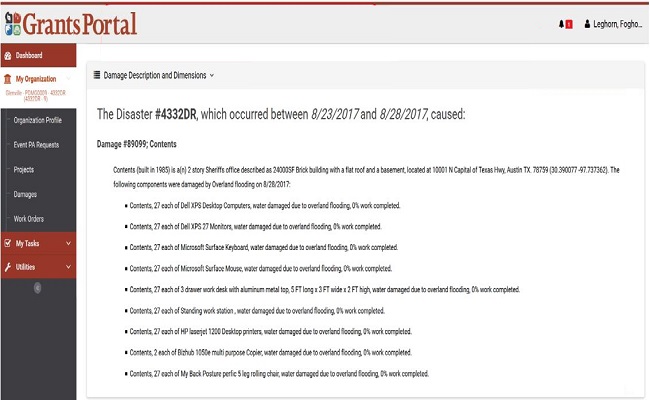
Refer to Appendix 1-1 for a full description.
Overview of Detailed Damage Description and Dimensions (2 of 2)

The Damage Inventory will be used by the Program Delivery Manager to group damage line items into projects and the line items will be used to generate Site Inspection Work Orders. The Site Inspector will review and document the physical damage and generate the Damage Description and Dimensions for work to be completed. The Consolidated Resource Center will generate the Damage Description and Dimensions for completed work using Applicant provided documentation and a project description developed with the Program Delivery Manager.

FEMA relies on the information in the Damage Description and Dimensions to determine project eligibility for Public Assistance and define the expectations for the scope of work and associated costs. Providing accurate and complete information for this section is critical to ensuring the best possible outcome for the Applicant.

Select this link to access the full image description.
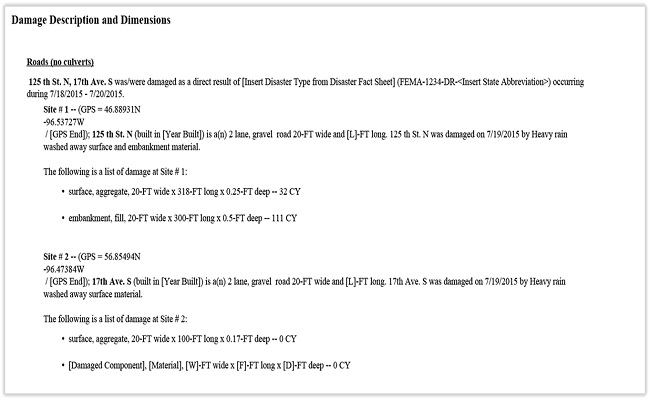
Refer to Appendix 1-2 for a full description.
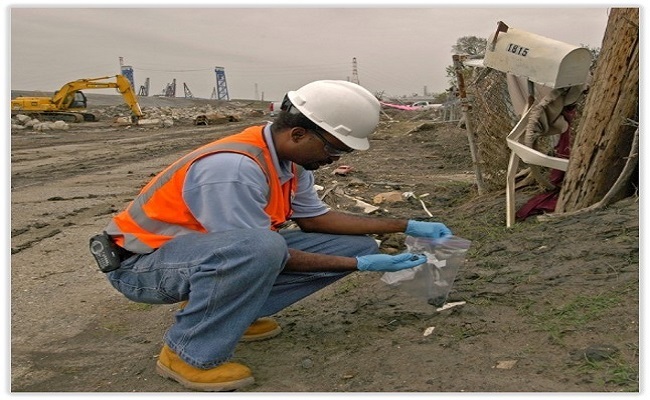
Role of the FEMA Site Inspector

Site Inspectors use the data collected from their inspections (e.g., photographs, site sketches/drawings, measurements) to develop the Damage Description and Dimensions.

During the site inspection, the Site Inspector will document:

  • Dimensions of the facility
  • Dimensions of the work that has been completed, including materials, and dimensions of the work that has yet to be completed

FEMA and the Applicant will then work together to reach an agreement on the Damage Description and Dimensions (as well as Emergency Protective Measures and debris impacts). After the FEMA Program Delivery Manager reviews the Damage Description and Dimensions, they will release it to the Applicant for review and approval in Grants Portal.

FEMA Site Inspector conducting a site inspection
Completed Work

For Completed Work, a site inspection may not be required. A site inspection may be part of a validation process. The Program Delivery Manager will work with the Applicant to support the Damage Description and Dimensions using the Applicant's incident-related documentation. The following are examples of supporting documents the Program Delivery Manager may collect from the Applicant to develop the project description and for the Consolidated Resource Center to develop the Damage Description and Dimensions:

  • Photographs of damage or repair
  • Mutual aid agreements invoices and contracts
  • GPS latitude and longitude coordinates
  • Equipment logs/call logs
  • Force Account labor/equipment records
Work to be Completed

For Work to be Completed, a site inspection is required to quantify the damage(s) which was a result of the incident. The damages are recorded on the Site Inspection Report, which will generate a Damage Description and Dimension.

The Site Inspector will work with the Applicant to capture the facility damage, with photographs, sketches, measurements, location map, flood map (FIRMette), notes of observations and discussion, and any other method to document the site inspection. These are compiled in the Site Inspection Report which is entered into Grants Manager and used to generate the Damage Description and Dimensions. The Site Inspector will ask how any outstanding work will be completed, whether by Force Account, contract, or a combination of both.

Damage Description and Dimensions and the Scope of Work

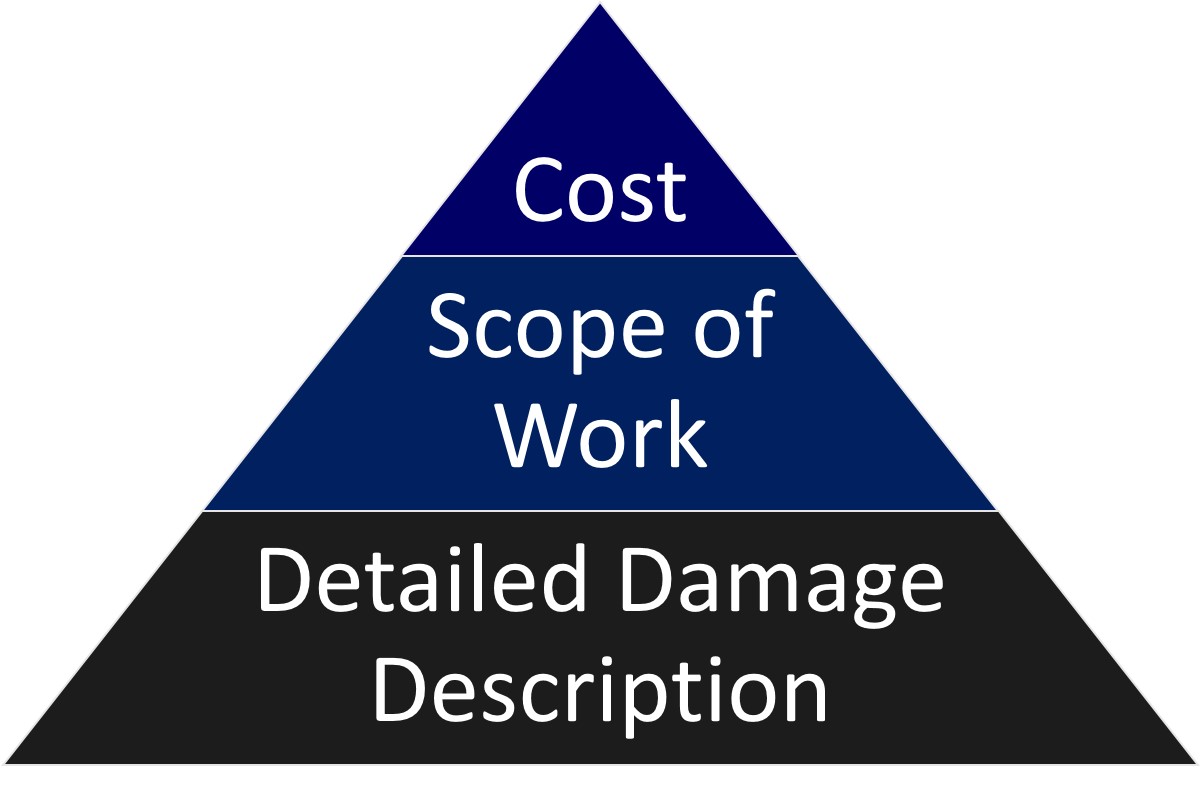
Once the Applicant concurs with the Damage Description and Dimensions, FEMA uses the Damage Description and Dimensions to populate the scope of work and cost estimate. If an Applicant provides the scope of work, FEMA will validate the information.

The scope of work must align with the Damage Description and Dimensions and be a direct result of the event in order to qualify for funding.

A Pyramid with three tiers: “Detailed Damage Descriptions” is the base, “Scope of Work” is the second tier, and “Cost” is the top tier.
Lesson 1 Summary

In this lesson, we discussed the purpose of the Damage Descriptions and Dimensions and provided a basic overview of the contents.

The next lesson will look further into the components of a Detailed Damage Description and Dimensions.