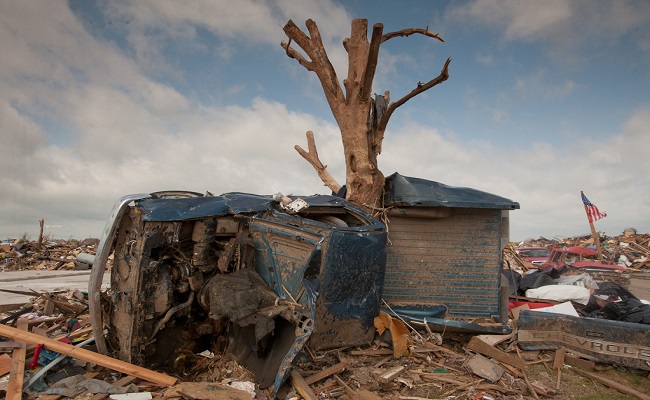
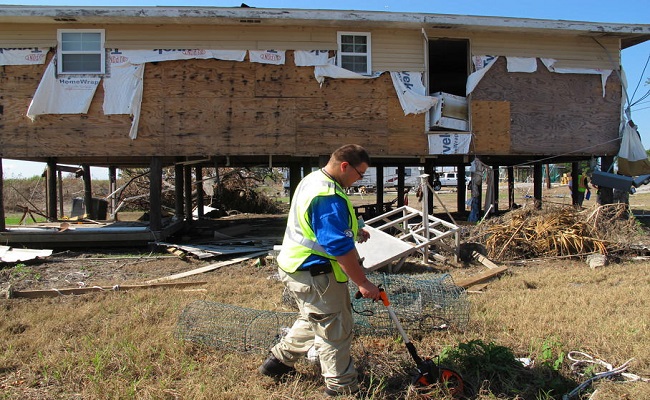
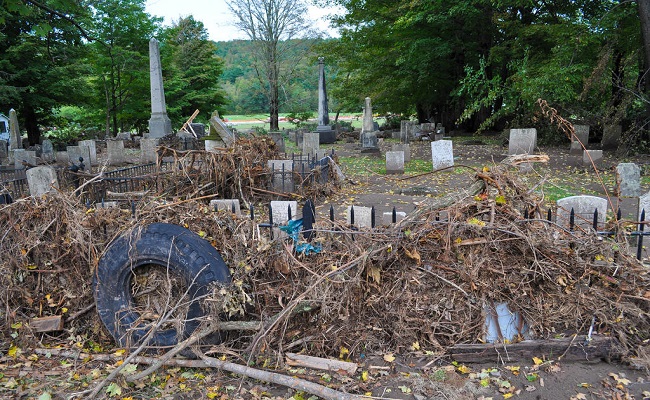
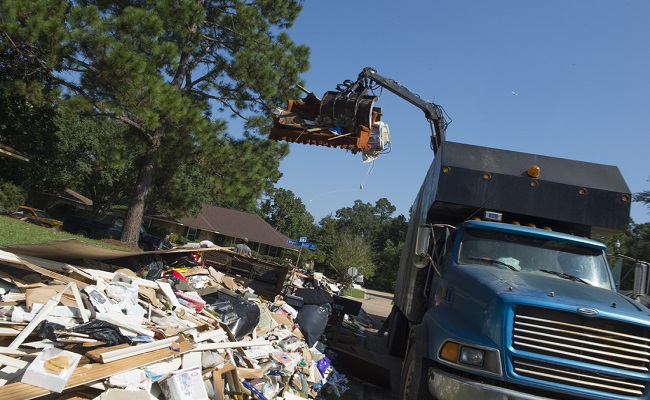
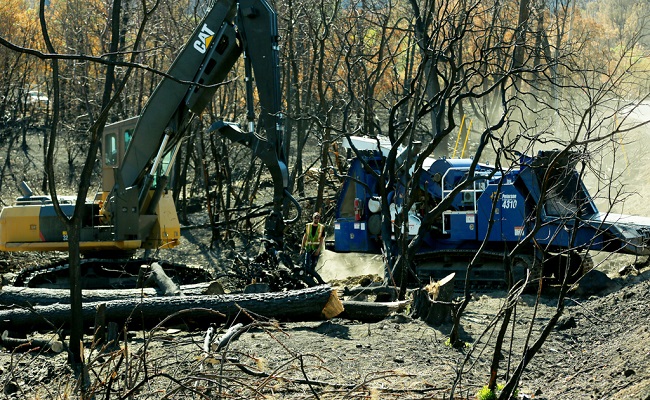
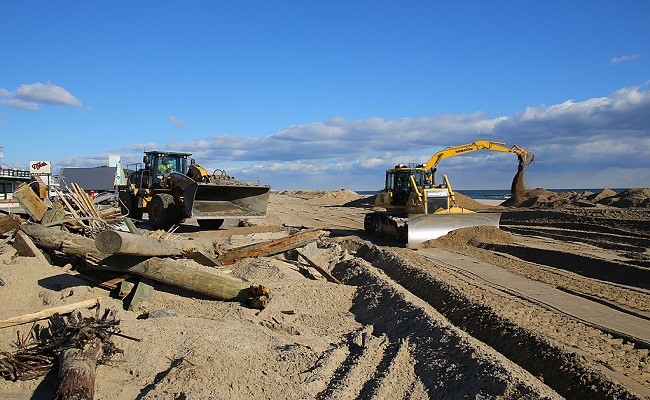
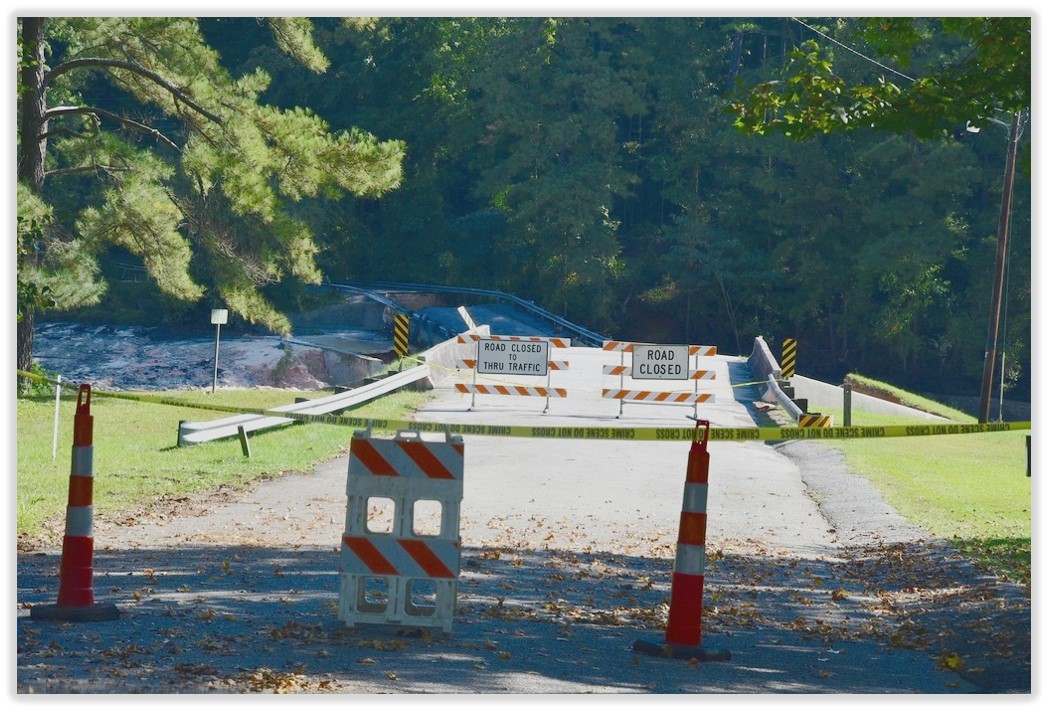
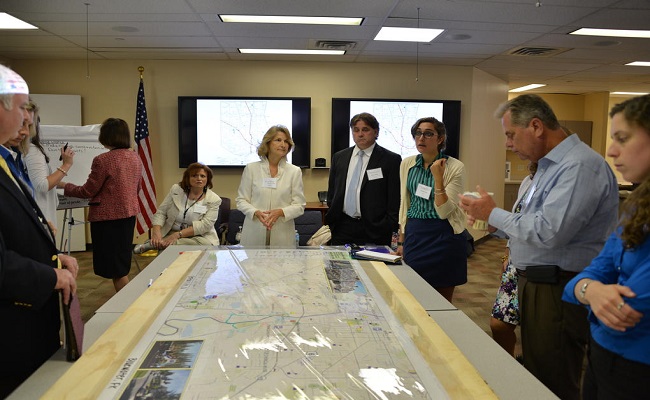
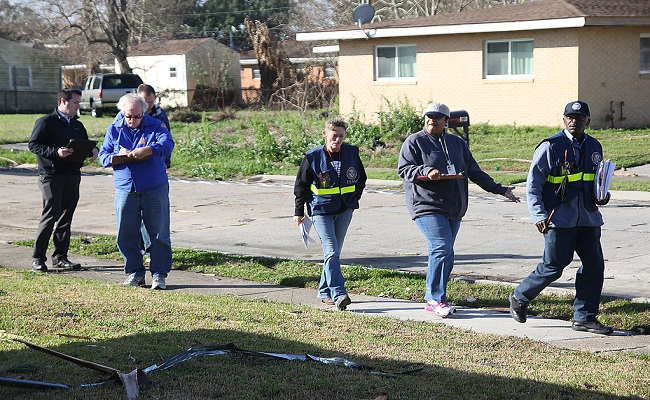
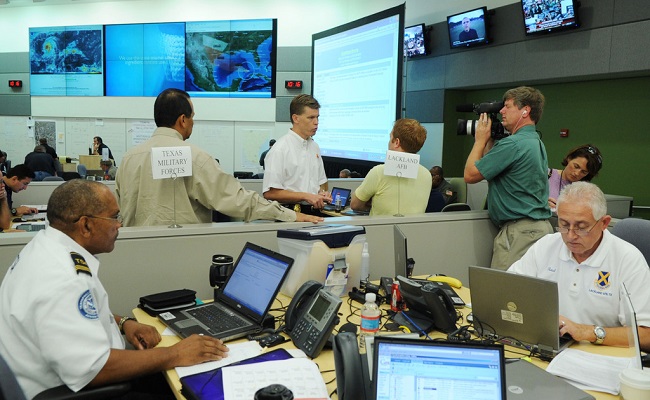
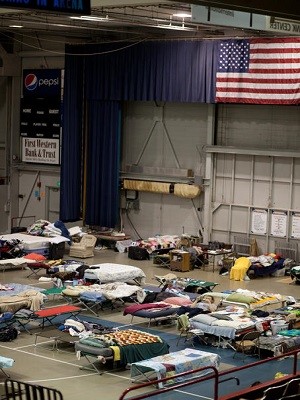
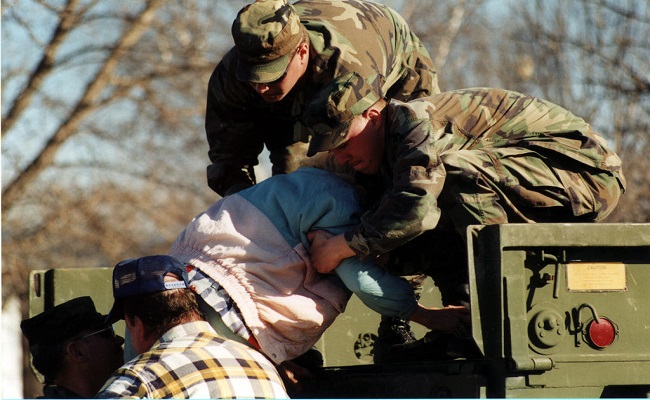
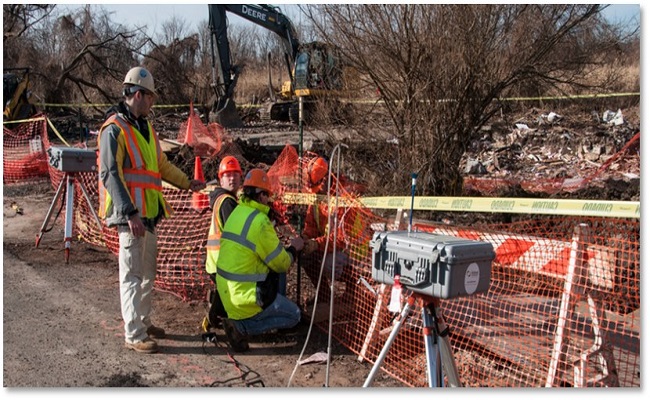
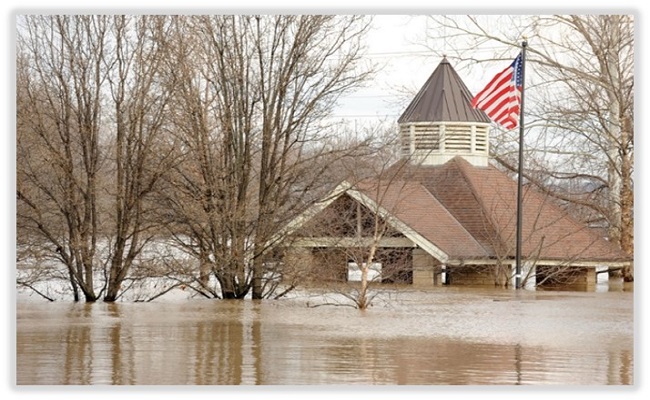
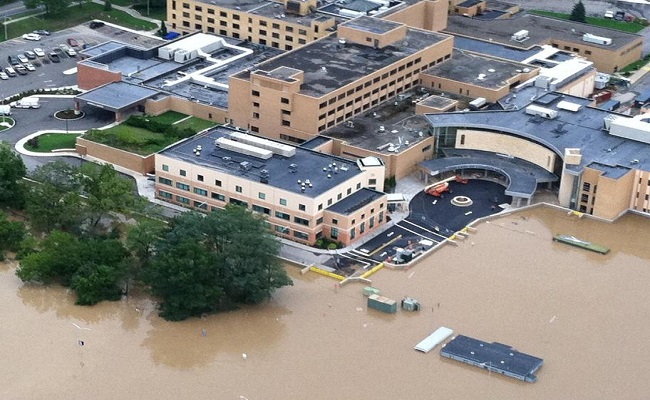
This lesson identifies the requirements for work to be eligible for Public Assistance Program grants.
Objectives:
Describe work eligibility
Explain differences between Permanent Work and Emergency Work
Review different categories of work
Overview of Work Eligibility (1 of 3)
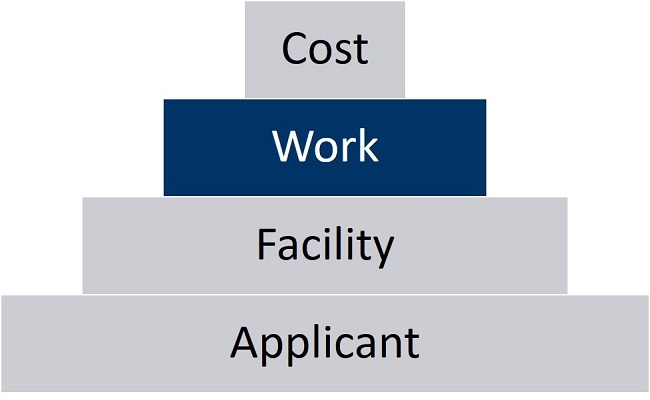
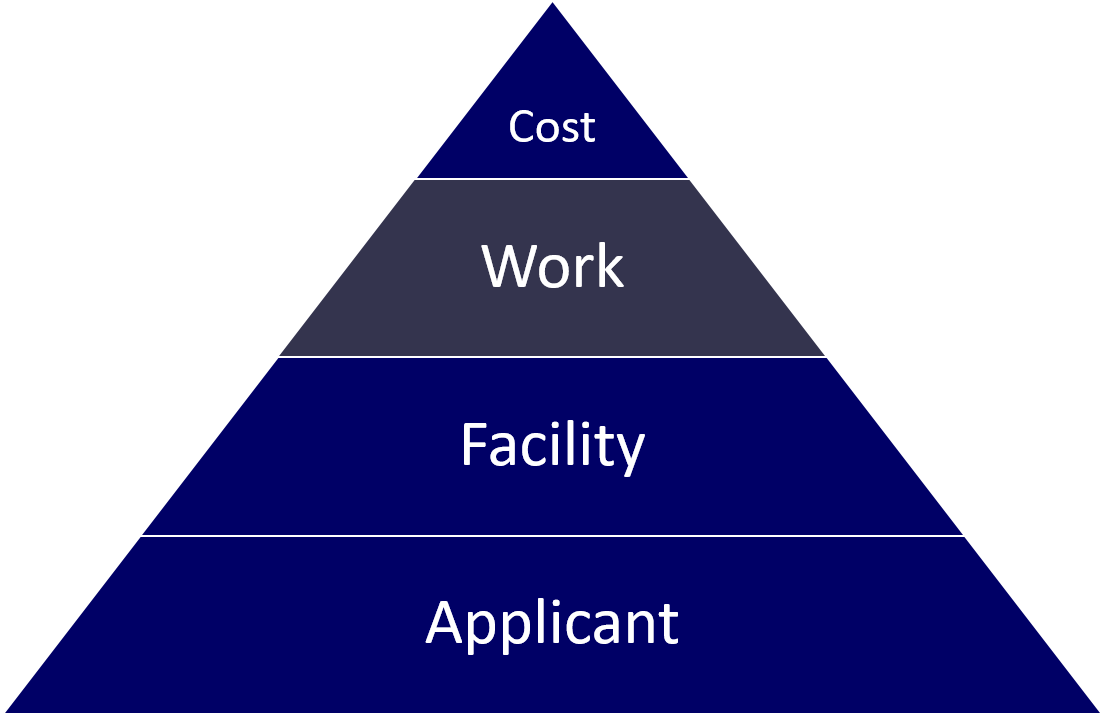
The next component of eligibility that this course focuses on is work eligibility. The Applicant's work to repair the damage must meet certain eligibility requirements for the Applicant to receive grant funding.
The first requirement of work eligibility is that it must meet minimum work eligibility requirements.
The second requirement of work eligibility is that it must fall within one of the categories of work. Through the Public Assistance program, FEMA provides grant funding for:
Emergency Work: Emergency protective measures and debris removal
Permanent Work: Permanent restoration of damaged facilities, including cost-effective hazard mitigation to protect the facilities from future damage including effective hazard mitigation and codes and standards upgrades
Overview of Work Eligibility (2 of 3)
Minimum Work Eligibility
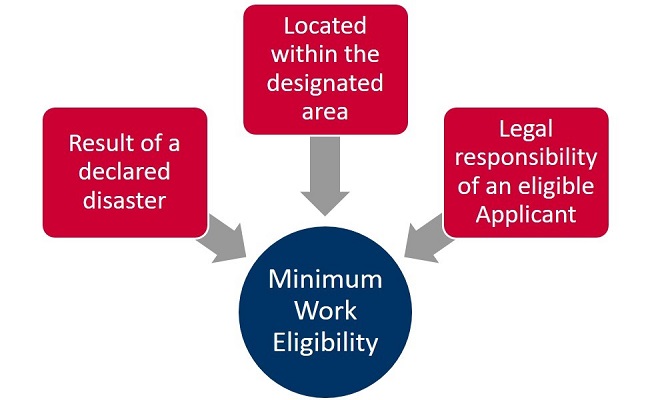
There are several factors that need to be considered when determining if work may be eligible for Public Assistance. At a minimum, work must meet each of the following three general criteria to be eligible:
Be required as a result of the declared incident;
Be located within the designated area, with the exception of sheltering and evacuation activities; and
Be the legal responsibility of an eligible Applicant
Overview of Work Eligibility (3 of 3)
Categories of Work
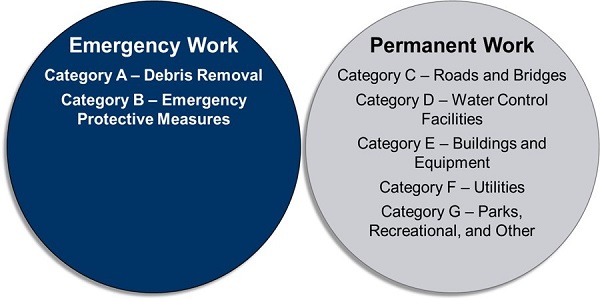
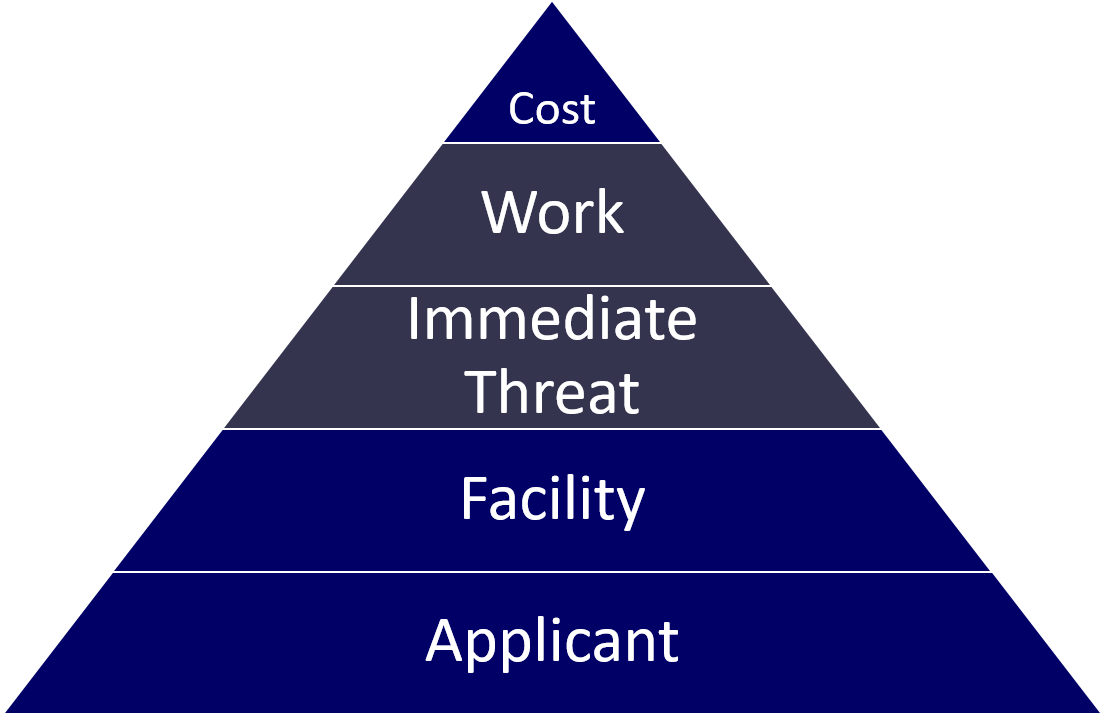
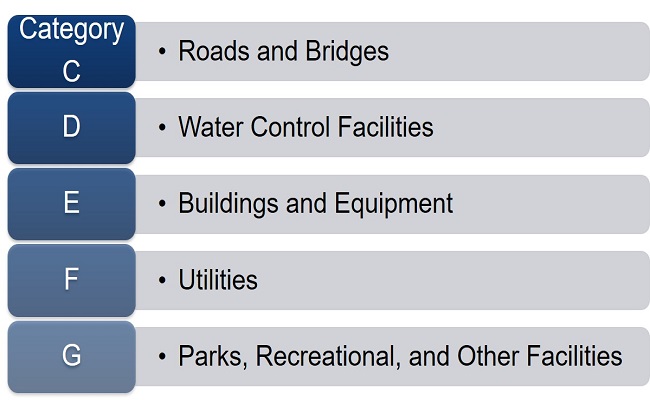
To facilitate the processing of Public Assistance funding, FEMA separates Emergency Work into two categories and Permanent Work into five categories based on general types of facilities.
Emergency Work addresses immediate threats, including:
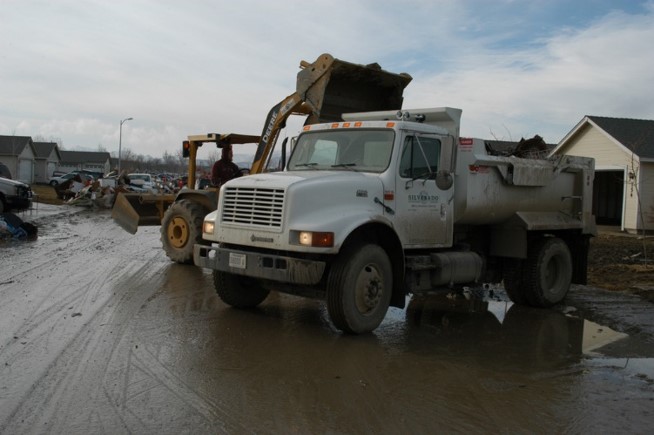
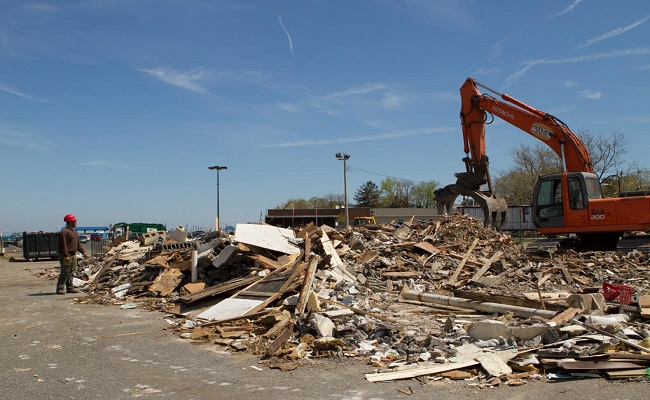
Debris removal
Emergency protective measures
Permanent Work addresses the restoration of the following:
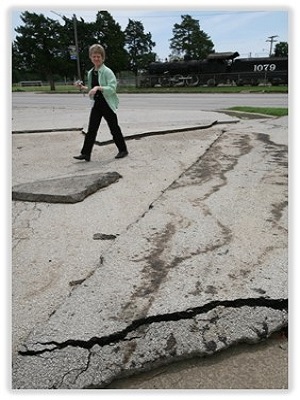
Roads/bridges
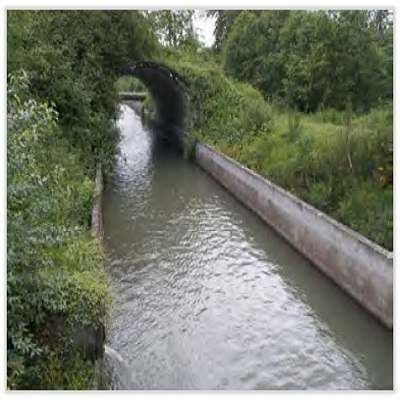
Water control facilities
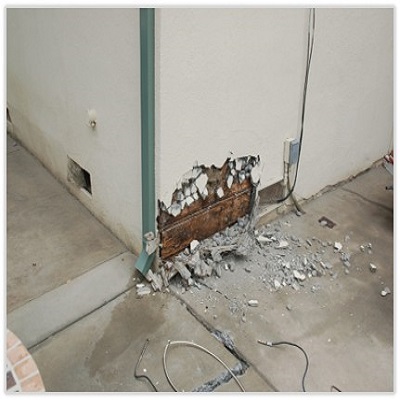
Buildings/equipment
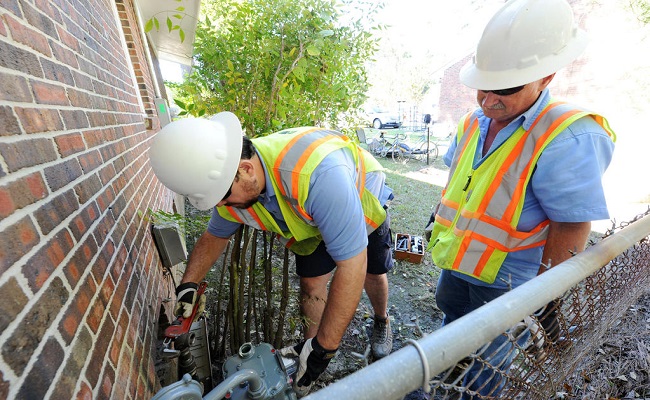
Utilities
Parks, recreational, and other facilities
Minimum Work Eligibility
The first section of this module discusses minimum work eligibility criteria. If the work does not meet these three criteria, even if the work falls under a Category of Work, the Applicant's project is generally ineligible.
Minimum Work Eligibility Criteria: Result of Declared Incident
One of the minimum work eligibility criterion is that the work is required as a result of the declared incident.
The Applicant is responsible for showing that work is required:
Due to an immediate threat resulting from the declared incident (for Emergency Work); or
To address damage caused by the declared incident.
For debris removal, the Applicant must demonstrate that the debris causing an immediate threat was generated during the declared incident period and directly by the declared incident.
For temporary repairs, mold remediation, and Permanent Work, the Applicant must demonstrate that damage was caused directly by the declared incident.
FEMA does notprovide Public Assistance funding for repair of damage caused by:
Deterioration
Deferred maintenance
The Applicant's failure to take measures to protect a facility from further damage
Negligence
Documents (maintenance records, photos, etc.) are very important to validate the damages claimed by the incident to distinguish between pre-disaster and post-disaster damages.
Minimum Work Eligibility Criteria: Designated Area
A second minimum work eligibility criterion is that the work is required as a result of the declared incident.
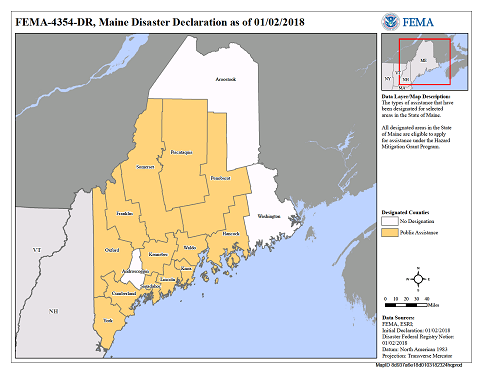
To be eligible, work must be located in the designated area defined in the declaration (with the exception of sheltering and evacuation activities).
Emergency Work or Permanent Work performed on a facility located outside of the designated area is not eligible.
Tribal Governments do not always have geographical boundaries, and some have boundaries that cross state lines, therefore, Tribal Government declarations do not usually define specific designated geographical areas.
If a specific designated area is not defined in the declaration, FEMA determines eligibility based on legal responsibility and whether the work is directly related to the declared incident.
Minimum Work Eligibility Criteria: Legal Responsibility (1 of 7)
The last minimum eligibility criterion for work is that it must be the legal responsibility of the Applicant requesting assistance.
To determine legal responsibility for Emergency Work, FEMA evaluates whether the Applicant requesting the assistance either had jurisdiction over the area or the legal authority to conduct the work related to the request at the time of the incident.
FEMA determines legal responsibility for facility restoration by evaluating whether the Applicant claiming the costs had legal responsibility for disaster-related restoration of the facility at the time of the incident based on ownership and the terms of any written agreements (such as for facilities under construction, leased facilities, and facilities owned by a Federal agency).
There are several factors to consider when determining the legal responsibility of the Applicant. The next seven screens provide in-depth considerations when assessing the following factors:
Facility ownership
Facilities under construction
Leased facilities
Federal facilities
Jurisdiction over an area
Conducting activities on private property
Minimum Work Eligibility Criteria: Legal Responsibility (2 of 7)
The Applicant must have legal ownership of the facility that requires repair or restoration.
When an Applicant requests Public Assistance funding to restore a facility, it is the Applicant's responsibility to provide proof that it owns the facility. To determine ownership, FEMA may review deeds, title documents, and local government tax records.
Ownership of a facility is generally sufficient to establish the Applicant's legal responsibility to restore the facility, provided it is not under construction by a contractor or leased to another entity at the time of the incident.
Minimum Work Eligibility Criteria: Legal Responsibility (3 of 7)
The second type of legal ownership FEMA reviews when checking work eligibility is if the facility is under construction and who during that contract is legally responsible for repairing the damage.
If the facility is under construction by a contractor at the time of the incident, FEMA reviews the contract to determine whether the Applicant is legally responsible for the repair of damage caused by the incident. At a minimum, FEMA evaluates the contract to determine if it:
Identifies the contractor or owner as being responsible for disaster-related repairs;
Requires a builder's risk policy for losses that occur while the contractor has control of the facility;
Has a Force Majeure provision, which is a clause that relieves the contractor from responsibility for damage beyond its reasonable control, such as natural disasters (often referred to "acts of God") or acts of war; or
Has a provision that identifies the point at which the contractor transfers legal responsibility for the facility, or portions of the facility, back to the owner.
Minimum Work Eligibility Criteria: Legal Responsibility (4 of 7)
A third type of legal responsibility that FEMA reviews before providing grant funding is who in a lease has legal ownership to make repairs.
An Applicant may own a facility and lease it to a tenant, or an Applicant may lease a facility owned by another party. In either case, FEMA reviews the lease agreement to determine legal responsibility for repair of damage caused by the incident. If the lease does not specify either party as responsible, FEMA considers the owner of the facility legally responsible for the costs to restore the facility.
If the lease is between two eligible Applicants, FEMA provides Public Assistance funding to the Applicant legally responsible for the restoration.
Minimum Work Eligibility Criteria: Legal Responsibility (5 of 7)
Another type of legal ownership FEMA reviews before providing grants is if a facility is owned by a Federal agency.
Facilities owned and maintained by Federal agencies are not eligible. However, if a Federal agency constructed a facility and formally designated the Applicant as the legally responsible entity for facility operation, maintenance, and repairs, then the facility is eligible. FEMA reviews the agreement between the Federal agency and the Applicant to confirm the legally responsible entity.
Minimum Work Eligibility Criteria: Legal Responsibility (6 of 7)
A fifth type of legal responsibility that FEMA reviews is jurisdiction of an Applicant, specifically for Emergency Work.
In general, an Applicant only has legal responsibility to conduct Emergency Work activities within its jurisdiction. If an Applicant conducts Emergency Work activities outside its jurisdiction, it must demonstrate its legal basis and responsibility to conduct those activities.
Minimum Work Eligibility Criteria: Legal Responsibility (7 of 7)
A last type of legal responsibility that FEMA looks for before providing grant funding is an Applicant's legal basis for conducting work on private property.
To determine whether a State, Territorial, Tribal, or Local government has legal responsibility to conduct activities on private property, FEMA reviews the Applicant's legal basis and authority to conduct the activities.
Emergency Work Eligibility: Grant Funding for Debris Removal and Emergency Protective Measures
FEMA is authorized to provide Public Assistance funding for Emergency Work, specifically, debris removal and emergency protective measures.
Emergency Work is that which must be done immediately to:
Save lives
Protect public health and safety
Protect improved property
Eliminate or lessen an immediate threat of additional damage
The next portion of this module will focus on eligibility considerations for Emergency Work.
Note: For private nonprofit Applicants, eligible Emergency Work is generally limited to that associated with an eligible private nonprofit facility as follows:
Debris removal from the facility property
Emergency protective measures to prevent damage to the facility and its contents
Emergency Work Eligibility: Damage Caused During Performance
During the performance of Emergency Work, an Applicant may damage improved property, supplies, or equipment. The repair of this damage is eligible as part of that respective project if the damage was:
Due to severe conditions resulting from the incident
Unavoidable
Not due to improper or excessive use
Category A: Eligibility Overview (1 of 3)
Within Emergency Work are two Categories of Work: Category A and Category B.
This subsection of Emergency Work discusses Category A: Debris Removal.
Recall that Category A work pertains to debris removal. Debris eligibility can be complicated and incidents with extensive debris operations will often require FEMA to create a Debris Task Force with specialists to address the issues.
Common types of debris include, but is not limited to:
Vegetative debris
Construction and demolition debris
Sand
Mud
Silt
Gravel
Rocks
Boulders
Vehicle and vessel wreckage
Hazardous household waste
Category A: Eligibility Overview (2 of 3)
Category A debris removal activities are generally eligible when the work:
Eliminates immediate threats to lives, public health, and safety
Eliminates immediate threats of significant damage to improved public or private property
Ensures economic recovery of the affected community to the benefit of the community at large
Mitigates risk to life and property
For a private nonprofit, eligible debris removal is limited to that associated with an eligible facility, including debris on the property of the eligible facility.
Generally, debris removal from the following is not eligible:
Federally maintained navigable channels and waterways
Flood control works under the authority of the Natural Resources Conservation Service
Agricultural land
Natural, unimproved land, such as heavily wooded areas and unused areas
When debris is placed on the public rights-of-way from commercial properties
When debris materials are related to the construction, repair, or renovation of either residential or commercial structures
Category A: Eligibility Overview (3 of 3)
Each type of debris has its own requirements. Because of this, this subsection of Emergency Work will discuss the following common types of debris further:
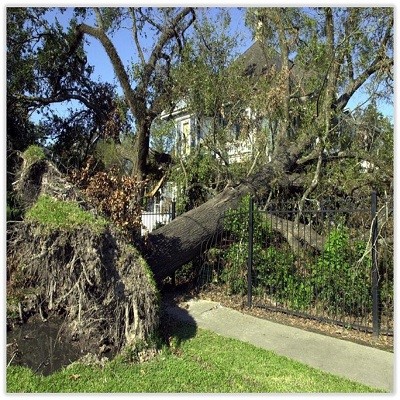
Hazardous limbs, trees and stumps
Hazardous Materials
Waterways
Private owned vehicle and vessels
Private property
After the discussion on common types of debris and their requirements, this module then dives into general considerations for all Category A work (i.e., disposal, costs, flood, environmental and historic preservation, and alternative procedures.
Category A: Overview of Hazardous Limbs, Trees, and Stumps
The next several slides take a closer look at eligibility considerations for the following common types of vegetative debris:
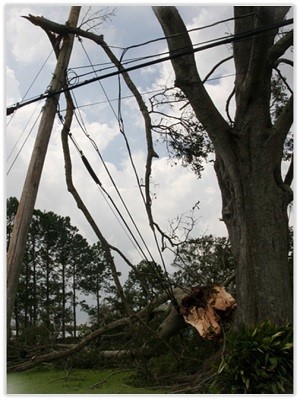
Tree limbs or branches
Trees that are still in place but damaged to the extent they pose an immediate threat
Stumps
While hazardous limbs, trees, and stumps are generally eligible to receive funding, debris removal activities for vegetative debris are generally not eligible when:
The hazard existed prior to the incident
The hazard occurred in a natural area and does not extend over improved property or public-use areas (such as trails, sidewalks, or playgrounds)
The activity is routine maintenance (e.g., pruning, trimming, landscaping)
Category A: Broken Limb or Branch Removal
While broken limbs or branches are common types of vegetative debris and are generally eligible, there are several factors that need to be taken into consideration when making an eligibility recommendation. For instance, the Applicant should take into account the location of the broken limb or branch; specifically, whether it is on public land or is it on private property. The location will help FEMA determine whether the limb or branch may be eligible for Public Assistance.
Generally, not eligible unless the following occurs:
The broken limb or branch has a diameter of 2 inches or larger and poses an immediate threat
The hazard hangs over improved property or public-use areas because it could fall and cause injury or damage to an improved property.
The broken limb or branch has been cut at the 'minimum cut' to remove the hazard
Cutting the branch at the trunk may not be eligible if the threat can be eliminated by cutting it at the closest main branch junction.
A broken limb or branch that is located on private property is generally not eligible. FEMA may consider funding removal when:
The limbs or branches extend over the public rights-of-way
The limbs or branches post an immediate threat
The Applicant removes the hazard from the public rights-of way without entering the private property
Category A: Tree Removal
FEMA may consider trees to be hazardous and eligible if the Applicant can attribute the damage to the incident and if the tree's diameter is 6 inches or greater, measures at least 4.5 feet above ground level, and has one or more of the following characteristics:
Split trunk
Broken canopy
Leaning at an angle greater than 30 degrees
In instances where a disaster-damaged tree has 50 percent or more of the root-ball exposed, the tree may be eligible for removal and the root-ball may be eligible for filling. Should FEMA determine that the tree is eligible for funding, the Applicant should note that:
For contracted removal, FEMA will not reimburse two separate unit costs to remove the tree and its root-ball.
When trees have less than 50 percent of the root-ball exposed, FEMA only provides Public Assistance funding to flush cut the item at ground level and dispose of the cut portion based on volume or weight; grinding any residual stump after cutting the tree is not eligible.
Category A: Stump Removal
A stump with 50 percent or more of the root-ball exposed may be eligible for removal and filling in of the root-ball hole. If grinding a stump in-place is less costly than extraction, grinding the stump in-place may be eligible.
Stump removal in areas with known or high potential for archaeological resources usually requires FEMA to further evaluate and consult with the State or Tribal Historic Preservation Officer. If the Applicant discovers any potential archeological resources during stump removal, the Applicant must immediately cease work and notify FEMA.
The Applicant should note that when a stump is removed by contracted services, FEMA reimburses contracted costs charged on a per-stump basis if:
The stump is 2 feet or larger in diameter measured 2 feet above the ground; and
Extraction is required as part of the removal.
The Applicant must ensure the price for stump removal includes extraction, transport, disposal, and filling the root-ball hole.
Category A: Hazardous Limbs, Trees, and Stumps Documentation Requirements
In order for the vegetative debris to be found eligible, the Applicant must provide all requested documentation to support the eligibility claim of removing tree limbs, branches, stumps, or trees that are still in place. Requested documents may include but are not limited to:
Specifics of the immediate threat with the latitude and longitude location and photograph or video documentation that establishes the item is on public property
Diameter of each item removed (measurement must be 2 feet up the trunk from the ground for stumps and 4.5 feet up for trees)
Quantity of material to fill root-ball holes
Equipment used to perform the work
Category A: Cost Considerations for Hazardous Limbs, Trees, and Stumps
Debris removal for limbs, trees, and stumps is typically charged based on a unit price for volume (cubic yards) or weight (tons). When a hazardous tree or stump is collected individually, contractors often charge a price per tree or stump based on its size.
There are eligibility criteria and documentation requirements based on a price per each item instead of by volume or weight. Without sufficient documentation, the Applicant may not receive funding.
FEMA encourages Applicants to procure branch or limb removal for a one-time charge per tree, as opposed to a unit price per limb or branch to facilitate more cost-effective operations.
Category A: Hazardous Materials (1 of 3)
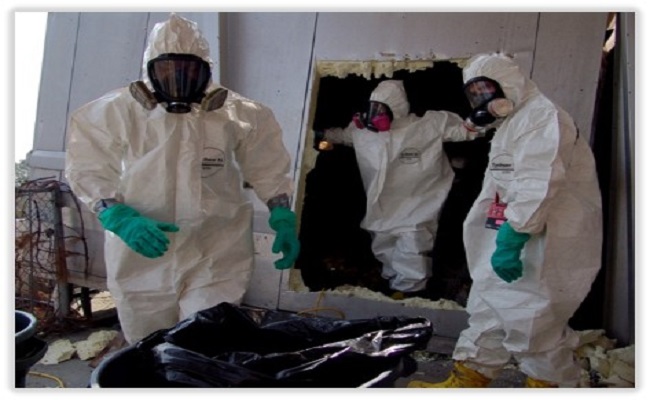
Another common type of debris is hazardous materials. The next two screens discuss eligibility considerations when dealing with the removal of this type of debris. Hazardous materials have properties that make it potentially harmful to human health or the environment.
Examples of types of hazardous material debris are:
Household hazardous waste are hazardous products and materials that are used and disposed of by residential rather than commercial or industrial consumers. Examples include:
Some paints, stains, varnishes, solvents, pesticides, and other products or materials containing volatile chemicals that catch fire, react, or explode under certain circumstances, or that are corrosive or toxic
Electronic waste(e-waste) refers to electronics that contain hazardous materials such as cathode ray tubes. Examples include:
Computer monitors and televisions
White goods are defined as discarded household appliances. Many white goods contain ozone-depleting refrigerants, mercury, or compressor oils. The Clean Air Act prohibits the release of refrigerants into the atmosphere and requires that certified technicians extract refrigerants from white goods before they are disposed of or recycled. Examples include:
Refrigerators, freezers, air conditioners, heat pumps, ovens, ranges, washing machines, clothes dryers, and water heaters
Public Assistance grant funding may be available for measures that address widespread hazardous materials contamination. Removal and disposal of pollutants and hazardous substances are generally eligible. Examples of potentially eligible activities include:
Separation of hazardous materials from other debris
Specialized procedures for handling and disposing of hazardous materials
Control or stabilization of the hazardous material
Pumping and treating water contaminated with the hazardous material
Clean-up and disposal of the hazardous material
Testing for contaminants in water, air, or soil (to ensure the immediate threat is eliminated)
Testing for contaminants for long-term cleanup actions is generally not eligible
Category A: Hazardous Materials (3 of 3)
The Applicant must comply with Federal, State, Territorial, Tribal, and Local government environmental requirements for handling hazardous materials. Before handling or disposing of hazardous materials, the Applicant should contact the appropriate Federal, State, Territorial, or Tribal agency and obtain required permits.
Additionally, appropriate certified hazardous waste specialists should handle, capture, recycle, reuse, or dispose of hazardous materials. When providing Public Assistance funding for work involving the handling of hazardous materials, FEMA must ensure compliance with the Resource Conservation and Recovery Act.
Category A: Waterways (1 of 5)
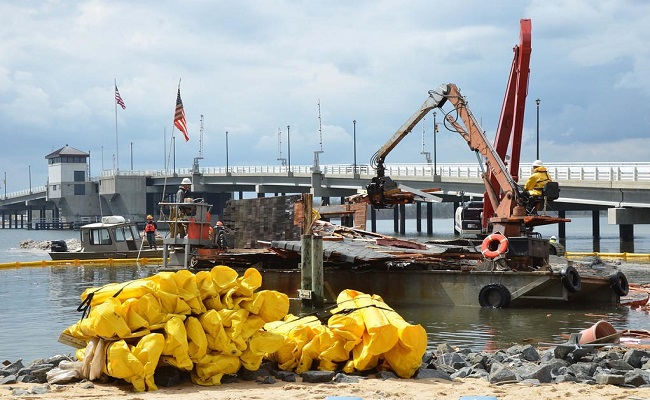
The next category of debris and eligibility considerations that will be discussed over the next five screens are debris located in waterways.
The Applicant should be aware of the Ports and Waterways Safety Act (33 U.S.C. 1221). This Act states that the U.S. Coast Guard is responsible for keeping waterways safe and open. While there is no specific language stating that the U.S. Coast Guard is responsible for debris removal from waterways, the U.S. Coast Guard has been tasked to assist in waterway and marine transportation system recovery. Public Assistance and U.S. Coast Guard have the specific authority to remove hazardous materials. Public Assistance reimburses for the removing of such material from inland water zones and U.S. Coast Guard is responsible for coastal water zones.
Debris removal from waterways that is necessary to eliminate the immediate threat to life, public health and safety, or improved property may be eligible to receive Public Assistance funding. Removal of debris in a waterway that does not meet this criterion is not eligible, even if the debris is deposited by the incident.
For FEMA to determine if debris removal from waterways is eligible, the Applicant must provide documentation that:
Establishes legal responsibility
Includes the basis of the immediate threat determination
Identifies locations, types, and quantities of debris
Demonstrates the debris claimed was deposited by the incident and was not pre-existing
Category A: Waterways (2 of 5)
Navigable Waterways
If the Applicant has legal responsibility for maintenance of a navigable waterway, removal and disposal of debris that obstructs the passage of vessels is eligible to a maximum depth of 2 feet below the low-tide draft of the largest vessel that utilized the waterway prior to the incident. Any debris below this zone is not eligible unless it is necessary in order to remove debris extending upward into an eligible zone.
Again, debris removal from federally maintained navigable waterways is not eligible the. U.S. Coast Guard and the U.S. Army Corps of Engineers have specific authorities for removal of hazardous substances, vessels, and other obstructions from federally maintained navigable waterways.
Category A: Waterways (3 of 5)
Non-navigable Waterways
Debris deposited by the incident may obstruct a natural waterway (a waterway not improved or maintained) or a constructed channel, including flood control works. Removal of the debris from the channel may be eligible if the debris poses an immediate threat, such as when the debris:
Obstructs, or could obstruct, intake structures
Could cause damage to structures, such as bridges and culverts
Is causing, or could cause, flooding to improved public or private property during the occurrence of a 5-year flood
Applicants should be aware of the Natural Resources Conservation Service and how it may impact their grant:
Removal of the obstruction may be eligible in streams where debris removal would also be eligible under the Natural Resources Conservation Service Emergency Watershed Protection Program unless Natural Resources Conservation Service provides assistance for the debris removal.
Debris removal from flood control works that are under the specific authority of Natural Resources Conservation Service is not eligible for Public Assistance funding, even if Natural Resources Conservation Service does not have sufficient funding or does not provide assistance.
Category A: Waterways (4 of 5)
Non-navigable Waterways
Additionally, the Applicant should be aware of the U.S. Army Corps of Engineers Rehabilitation and Inspection Program and how it may impact their grant:
Debris removal or flood control works may be eligible for the U.S. Army Corps of Engineers Rehabilitation and Inspection Program
U.S. Army Corps of Engineers does not reimburse Applicants for debris removal but conducts this activity directly when necessary
Category A: Waterways (5 of 5)
Identifying Debris Impact Locations and Documentation
The Applicant is responsible for identifying debris deposited by the incident that poses an immediate threat. The Applicant should work with the Program Delivery Manager to determine what documentation is required to demonstrate debris impact locations.
Random surveys to look for debris, including surveys performed using side scan sonar, are not eligible.
If the Applicant identifies an area of debris impacts and demonstrates the need for a survey to identify specific immediate threat, FEMA may provide Public Assistance funding for the survey in that location, including the use of side scan sonar.
Category A: Privately Owned Vehicles and Vessels
The next common type of debris found after a disaster are privately owned vehicles and vessels. Removal of privately owned vehicles and vessels may be eligible if all of the following conditions are met:
The vehicle or vessel blocks access to a public-use area.
The vehicle or vessel is abandoned and the Applicant is unable to identify the owner.
The Applicant follows applicable State, Territorial, Tribal, and Local government ordinances or laws for private vehicle or vessel removal.
The Applicant verifies the chain of custody of the vehicle or vessel.
A limited timeframe for vehicle and vessel storage may be eligible if it is necessary to remove the item prior to being able to identify the owner. If the owner is subsequently identified, the Applicant must return to FEMA the Federal share of any funds it recovers for storage costs.
Category A: Debris Removal from Private Property (1 of 7)
If debris on private property is so widespread that it threatens public health and safety or the economic recovery of the community, FEMA may provide Public Assistance funding for debris removal from private property. This debris removal must be in the public interest, not merely benefiting an individual or a limited group of individuals within the community.
In limited circumstances, based on the severity of the impact of an incident, FEMA may determine that debris removal from private property is potentially eligible under the Public Assistance Program. In making its determination, FEMA evaluates whether the impacts of debris on private property affect the general public in that community and whether the Applicant has legal authority to perform the work.
In such cases, FEMA works with the State, Territorial, Tribal, and Local governments to designate specific areas where debris removal from private property, including private waterways, is eligible.
The following slides outline various requirements to determine if the debris on private property may be eligible for funding.
Category A: Debris Removal from Private Property (2 of 7)
Written Request
Prior to commencing work on private property, the Applicant must submit a written request and receive approval from FEMA. The written request must include:
A public interest determination
Documentation supporting the Applicant's legal authority to remove the debris
Indemnification
The Applicant needs to identify the specific properties or areas of properties for which it is requesting approval.
Category A: Debris Removal from Private Property (3 of 7)
Public Interest Determination
The Applicant must provide the basis for the determination that removing the debris from the private property requested is in the public interest. The determination must be made by the State, Territorial, Tribal, county, or municipal government's public health authority or other public entity that has legal authority to make a determination that disaster-generated debris on private property in the designated area constitutes an immediate threat to life, public health, or safety, or to the economic recovery of the community at large.
Additionally, the Applicant must submit its established, specific legal requirements for declaring the existence of a threat to public health and safety.
Category A: Debris Removal from Private Property (4 of 7)
Legal Authority and Responsibility
The Applicant not only must provide documentation to confirm its legal authority and responsibility to enter private property and remove disaster related debris, they must also comply with all the conditions of the Public Assistance grant requirements.
This includes:
Citation of the law, ordinance, code, or emergency powers for which it is exercising its legal authority to remove debris from private property
The authority cited must be applicable to the condition representing the immediate threat and not merely the Applicant's uniform level of services
Typically, solid waste disposal ordinances are part of an Applicant's uniform level of services and not a justification for entering private property to remove disaster-related debris
Confirmation that a legally authorized official of the Applicant has ordered the exercise of public emergency powers or other appropriate authority to enter onto private property in the designated area to remove debris to address immediate threats to life, public health, and safety
Category A: Debris Removal from Private Property (5 of 7)
Indemnification and FEMA Approval
The Applicant must indemnify the Federal Government and its employees, agents, and contractors from any claims arising from the removal of debris from private property.
FEMA will provide a written response to the request specifying any properties or area of properties for which debris removal is approved.
The Applicant must provide confirmation that it satisfied all legal processes and obtained permission requirements from the property owners (rights-of-entry) and agreements to indemnify and hold harmless the Federal Government before FEMA will provide PA funding for debris removal from private property.
Category A: Debris Removal from Private Property (6 of 7)
Duplication of Benefits
When applying for Public Assistance grant funding, the Applicant must be aware of duplication of benefits, especially when dealing with private property.
The Applicant should work with private property owners to pursue and recover insurance proceeds and credit FEMA the Federal share of any insurance proceeds received. In some circumstances, FEMA may provide Individual Assistance to individuals for debris removal; consequently, FEMA Public Assistance staff will coordinate closely with Individual Assistance staff to ensure FEMA does not fund the same work under both programs.
Category A: Debris Removal from Private Property (7 of 7)
Certain types of private properties have specific requirements for debris removal beyond the normal discussion of debris removal from, private property. Such examples are debris removal from gated communities and from commercial property.
Debris Removal from Gated Communities:
Debris removal from private residential property within a gated community is not eligible. However, if the debris is placed on a private road within the gated community, debris removal from the road may be eligible in accordance with the eligibility and request criteria listed in Chapter 2.VI.A.6 (a).
Debris Removal from Commercial Property:
Removal of debris from commercial properties, such as industrial parks, golf courses, cemeteries, apartments, condominiums, and trailer parks, is generally ineligible because commercial enterprises are expected to retain insurance that covers debris removal. In very limited, extraordinary circumstances, FEMA may provide an exception. In such cases, the Applicant must meet the requirements of Chapter 2.VI.A.6 (a) and (b).
Category A: Disposal of Debris (1 of 3)
FEMA provides Public Assistance funding for various costs related to disposing of debris. The Applicant should dispose of debris in an efficient and cost-effective manner.
Vegetative debris is bulky and can consume a significant volume of landfill space. To minimize the use of landfill space, FEMA encourages the Applicant to reduce the volume of vegetative debris before burying. Costs to reduce vegetative debris using methods such as mulching, grinding, or burning are eligible.
Certain types of construction and demolition debris are reusable or recyclable. The Applicant should conserve landfill space by separating materials for reuse or recycling.
Category A: Disposal of Debris (2 of 3)
Temporary Staging Sites
Establishing and operating a temporary staging site necessary for the purpose of debris separation and reduction is eligible. The cost to lease property is eligible. Additionally, if the terms of the lease require that the Applicant restore the leased property back to its condition prior to the Applicant's use, the costs related to that restoration are also eligible as part of the Category A project.
Hand-Loaded Trucks and Trailers
FEMA has determined that, for vegetative debris, hand-loaded trucks and trailers achieve approximately half the compaction level of mechanically loaded trucks and trailers. Therefore, FEMA only provides Public Assistance funding for 50 percent of the vegetative debris in hand-loaded trucks and trailers.
Similarly, trucks without solid tailgates cannot be compacted to full capacity. Therefore, FEMA will only fund a maximum of 85 percent of the debris in trucks without solid tailgates.
The Applicant must document the types and total quantity of debris that was hand-loaded and the types and total quantity of debris hauled in trucks without solid tailgates and provide this information to FEMA to ensure appropriate reductions are taken for this debris.
Category A: Disposal of Debris (3 of 3)
Tipping Fees
A tipping fee is the charge levied upon a given quantity of waste received at a waste processing facility. In the case of a landfill it is generally levied to offset the cost of opening, maintaining and eventually closing the site. Landfill tipping fees usually include fixed and variable costs, along with special taxes or fees assessed by the jurisdiction in which the landfill is located.
Eligible tipping fee costs are limited to the variable and fixed costs directly related to landfill operations, such as recycling tax. The components of tipping fees not directly related to landfill operations, such as special taxes or fees related to other government services or public infrastructure, are not eligible as part of the tipping fee. When providing Public Assistance funding for tipping fees, FEMA removes any ineligible components.
The Applicant may use a significant portion of the available capacity of a landfill to dispose of incident-related debris. Although FEMA provides Public Assistance funding for tipping fees, it cannot provide funding for the value of the loss of landfill capacity due to incident-related debris.
General Category A Considerations
As stated previously, this module provided an overview of common types of debris removal and their requirements.
The next few slides discuss the general considerations an Applicant should make for all Category A projects. This includes the following:
Monitoring debris removal operations
Special considerations
Environmental and historic preservation
Alternative Procedures Pilot Program for debris removal
Once completed, this module discusses Category B of Emergency Work.
Category A: Monitoring Debris Removal Operations (1 of 2)
The Applicant must provide debris types, quantities, reduction methods, and pickup and disposal locations for FEMA to determine the eligibility of debris removal operations.
FEMA requires the Applicant to monitor all contracted debris operations to document this information and ensure the contractor removes eligible debris. If the Applicant does not monitor these operations, Public Assistance funding for that work may be jeopardized.
Category A: Monitoring Debris Removal Operations (2 of 2)
Force Account resources (including temporary hires), contractors, or a combination of these may be used by the Applicant for monitoring. It is not necessary or cost-effective to have Professional Engineers or other certified professionals perform debris monitoring duties.
The use of staff more qualified than necessary for the associated work is considered an unreasonable cost. If staff with professional qualifications are used to conduct debris monitoring, the reason must be documented.
FEMA provides training to the Applicant's force account debris monitors upon request. Eligible debris monitoring activities may include:
Field supervisory oversight
Monitoring contracted debris removal at both the loading and disposal sites
Compiling documentation, such as load tickets and monitor reports, to substantiate eligible debris
Training debris monitors on debris removal operations, monitoring responsibilities and documentation processes, and FEMA debris eligibility criteria
Category A: Special Considerations - Environmental and Historic Preservation
Although debris removal is generally statutorily excluded from National Environmental Policy Act review, FEMA must ensure compliance with other Federal laws, regulations, and executive orders prior to funding the work. The Applicant should contact applicable Federal, State, Territorial, and Tribal regulatory agencies to ensure compliance with requirements and permits for debris-related operations.
Accordingly, FEMA must ensure that the Applicant's debris removal operations avoid impacts to floodplains, wetlands, federally listed threatened and endangered species and their critical habitats, and historic properties.
The Applicant must stage debris at a safe distance from property boundaries, surface water, wetlands, structures, wells, and septic tanks with leach fields.
Upon completion of debris removal and disposal, site remediation may be necessary at staging sites and other impacted areas.
For more information on environmental and historic preservation, please refer to the course: IS-1016 Environmental and Historic Preservation Considerations and Compliance.
Category A: Alternative Procedures for Debris Removal
The Applicant may elect to participate in the Alternative Procedures for debris removal and receive reimbursement for straight-time for the Applicant’s budgeted employees that conduct debris removal activities.
The Applicant opts-in by including straight-time in their debris removal (Category A) project claims.
For more information on the Public Assistance Alternative Procedures Program, please take course IS-1005 Public Assistance Alternative Procedures.
Category B: Emergency Protective Measures
The second Category of Work under Emergency Work is Category B: Emergency Protective Measures.
This subsection of Emergency Work discusses activities designated as emergency protective measures and eligibility requirements surrounding them.
For more information on the topic of emergency protective measures, please refer to the course: IS-1010: Emergency Protective Measures.
Category B: Eligibility Overview
Emergency Protective Measures conducted before, during, and after an incident are eligible if the measures:
Eliminate or lessen immediate threats to lives, public health, or safety; OR
Eliminate or lessen immediate threats of significant additional damage to improved public or private property in a cost-effective manner
FEMA may require certification by Federal, State, Territorial, Tribal, or Local government officials that a threat exists, including:
Identification and evaluation of the threat
Recommendations of the work necessary to cope with the threat
This subsection discusses the following:
Grouping of common emergency protective measures
Considerations for private nonprofits
Common emergency protective measures
Grouping of Common Emergency Protective Measures
The groupings align with the eligibility measures previously discussed. Emergency Protective Measures must:
Eliminate or lessen immediate threats to lives, public health, or safety; OR
Eliminate or lessen immediate threats of significant additional damage to improved public or private property in a cost-effective manner
Category B: Grouping of Common Emergency Protective Measures (1 of 3)
Saving Lives and Protecting Public Health and Safety
The following emergency protective measures and costs are potentially eligible because the actions save lives or protect public health or safety. This list is not all-inclusive.
Transporting and pre-positioning equipment and other resources for response
Flood fighting
Emergency Operation Center-related costs
Emergency access
Supplies and commodities
Medical care and transport
Evacuation and sheltering, including that provided by another State or Tribal government
Child care
Safety inspections
Animal carcass removal
Demolition of structures
Search and rescue to locate survivors, household pets, and service animals requiring assistance
Fire fighting
Security, such as barricades, fencing, or law enforcement
Use or lease of temporary generators for facilities that provide essential community services
Dissemination of information to the public to provide warnings and guidance about health and safety hazards using various strategies, such as flyers, public service announcements, or newspaper campaigns
Searching to locate and recover human remains
Storage and interment of unidentified human remains
Mass mortuary services
Category B: Grouping of Common Emergency Protective Measures (2 of 3)
Protecting Improved Property
Emergency Protective Measures to protect improved property that are generally eligible include:
Constructing emergency berms or temporary levees to provide protection from floodwaters or landslides
Emergency repairs necessary to prevent further damage, such as covering a damaged roof to prevent infiltration of rainwater
Buttressing, shoring, or bracing facilities to stabilize them or prevent collapse
Temporary slope stabilization
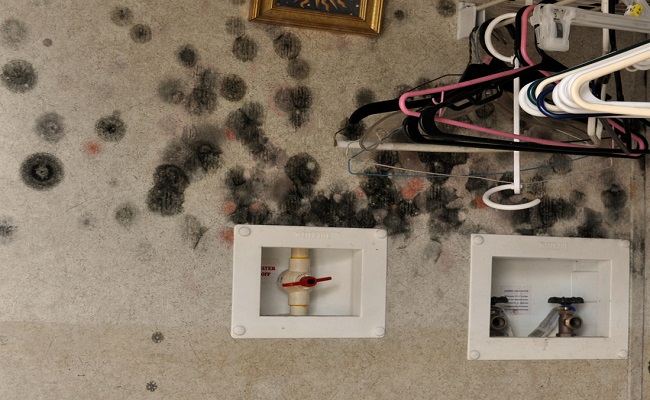
Mold remediation
Removal and storage of contents from eligible facilities for the purpose of minimizing additional damage
Extracting water and clearing mud, silt, or other accumulated debris from eligible facilities if the work is conducted expeditiously for the purpose of addressing an immediate threat (if the work is only necessary to restore the facility, it is Permanent Work, not Emergency Work)
Taking actions to save the lives of animals that are eligible for replacement
This list is not all-inclusive.
Category B: Grouping of Common Emergency Protective Measures (3 of 3)
Emergency Protective Measures on Private Property
The Applicant must include the following support documentation with the claim for the work to be eligible:
A detailed explanation documenting the Applicant's legal authority and responsibility to enter private property
The basis for the determination that a threat exists to the general public in that community
Copies of the rights-of-entry and agreements to indemnify and hold harmless the Federal Government
If the above criteria are not met, the private property owner may be eligible for assistance under FEMA's Individual Assistance Programs. FEMA staff will coordinate to ensure the same work is not funded by both programs.
Considerations for Private Nonprofit Organizations
Private nonprofit organizations have specific and additional requirements they must meet in order to receive grant funding for emergency protective measures.
Category B: Considerations for Private Nonprofit Organizations
Emergency services are usually the responsibility of State, Local, Tribal, or Territorial governments. Therefore, private nonprofits are generally not legally responsible for emergency services and FEMA does not provide Public Assistance funding to private nonprofits for the costs associated with providing those services.
When a private nonprofit provides emergency services at the request of and is certified by the legally responsible government entity, FEMA provides Public Assistance funding through that government entity as the eligible Applicant. These services include:
Fire and rescue activities
Animal control
Emergency ambulance service for evacuation
911 call services, if tracked and related to eligible work
Other similarly urgent governmental services
Eligible Emergency Protective Measures for private nonprofits are generally limited to activities that prevent damage to an eligible facility and its contents.
Private nonprofits that own or operate a medical or custodial care facility are eligible for direct reimbursement of costs related to patient evacuation. In limited circumstances, FEMA may also reimburse a private nonprofit directly when essential components of a facility are urgently needed to save lives or protect health and safety, such as an emergency room of a private nonprofit hospital or a private nonprofit sewage or water treatment plant.
Volunteer Fire Departments
A State, Territorial, Tribal, or Local government through an established agreement, may designate the private nonprofit volunteer fire department as an official recognized entity legally authorized to provide emergency services in specifically designated areas of coverage. FEMA may reimburse the volunteer fire department directly as an eligible Applicant.
Category B: Pre-positioning Resources
Common Emergency Protective Measure 1
Costs related to pre-positioning resources specifically for the declared incident are eligible if the resources are used in the performance of eligible Emergency Work.
Pre-positioning resources for the purpose of evacuating, or providing emergency medical care during the evacuation period (such as ambulances and busses), is eligible even if those resources are not ultimately used, provided the staging of those resources was necessary and prudent based on the data at the time of staging.
Category B: Operating a Facility
Common Emergency Protective Measure 2
The Applicant may incur additional costs related to operating a facility as a result of the incident because of an increased demand for the services the facility provides.
These additional costs are only eligible if:
The services are specifically related to eligible emergency actions to save lives or protect public health and safety or improve property
The costs are for a limited period of time based on the exigency of the circumstances
The Applicant tracks and documents the additional costs
Potentially eligible increased operating costs include, but are not limited to, costs for:
Generators at a hospital or police station
Water testing and treatment supplies in the immediate aftermath of the incident to counter a specific threat
Fuel for increased use of a pumping station
Emergency Operations Center facility costs (e.g., utilities)
Ineligible operating costs include, but are not limited to:
Patient care
Administrative activities
Provision of food
Obtaining electrical power from an alternate source
Obtaining water from an alternate source
School make-up days, including contracted costs for bus service for make-up days
Provision of fuel for school bus service
See the Public Assistance Program and Policy Guide for exceptions to ineligible operating costs.
Category B: Emergency Public Transportation and Communication
Common Emergency Protective Measure 3
A State, Territorial, Tribal, or Local government may provide emergency communication services and public transportation when existing systems are damaged to the extent vital functions of community life or incident response are disrupted.
Generally these costs are not eligible for reimbursement since this is part of the normal operation of these departments
However, FEMA may provide short-term Damage-Frequency Assessment for these services
Category B: Flood Fighting
Common Emergency Protective Measure 4
Flood fighting activities are eligible if necessary to reduce an immediate threat to life, public health and safety, or improved property.
These activities are eligible even if they are associated with a facility that is eligible for the U.S. Army Corps of Engineers Rehabilitation and Inspection Program, as U.S. Army Corps of Engineers cannot reimburse Applicants for flood fighting
These activities are not eligible if associated with flood control works under the specific authority of Natural Resources Conservation Service
Flood fighting activities may include, but are not limited to:
Sandbagging
Dewatering behind a levee by breaching or pumping
Increasing the height of a levee
The repair of deliberate breaches made by the Applicant to accomplish dewatering is eligible as part of the Emergency Work project.
Dewatering agricultural and natural areas behind levees and other water control structures is not eligible
Category B: Emergency Operations Centers
Common Emergency Protective Measure 5
The Applicant may use its Emergency Operations Center to direct and coordinate resources and response activities for a period of time. Response activities conducted at emergency operations centers are eligible provided they are associated with eligible work.
Costs associated with operating the executive Emergency Operations Center are also eligible, including, but not limited to:
Increased utility costs
Costs to lease a facility
Supply costs
Meal costs
Category B: Emergency Access
Common Emergency Protective Measure 6
If the extent of damage makes access routes to an essential community service or to a community with survivors inaccessible, work related to providing access may be eligible.
Eligible work is limited to that necessary for the access to remain passable
Removal of debris from a privately-owned facility, including those within gated communities, is eligible only when all of the following conditions are met:
There is no other access point
Debris impedes emergency access
The Applicant completes all legal processes and obtains rights-of-entry and agreements to indemnify and hold harmless the Federal Government
Work is performed by an eligible Applicant with legal authority to perform the work
Emergency repairs to a privately-owned facility are eligible only when all of the following conditions are met:
There is no other access point
Repair of the damage economically eliminates the need for temporary housing
The Applicant completes all legal processes and obtains rights-of-entry and agreements to indemnify and hold harmless the Federal Government
Work is performed by an eligible Applicant with legal authority to perform the work
Category B: Supplies and Commodities
Common Emergency Protective Measure 7
The purchase of supplies and commodities required for emergency protective measures is eligible.
Costs related to the Applicant purchasing supplies or using their own stock to perform Emergency Work for their own facility are eligible.
E.g., safety equipment, personal protective equipment, radios
Purchasing and packaging life-saving and life-sustaining commodities and providing them to the impacted community are eligible.
E.g., food, water, ice, personal hygiene items
The cost of delivering the life-saving and life-sustaining commodities to unsheltered residents where these commodities aren't easily accessible to purchase is eligible
The cost of leasing distribution and storage space for the commodities is eligible
Category B: Meals
Common Emergency Protective Measure 8
Applicants often provide meals for emergency workers. Provision of meals, including beverages and meal supplies, for employees and volunteers engaged in eligible Emergency Work, including those at emergency operations centers, is eligible provided the individuals are not receiving per diem and one of the following circumstances apply:
Meals are required based on a labor policy or written agreement
Conditions constitute a level of severity that requires employees to work abnormal, extended work hours without a reasonable amount of time to provide for their own meals; or
Food or water is not reasonably available for employees to purchase
FEMA only reimburses the cost of meals that are brought to the work location and purchased in a cost-effective and reasonable manner, such as bulk meals. FEMA does not reimburse costs related to group outings at restaurants or individual meals.
Category B: Medical Care
Common Emergency Protective Measure 9
When the emergency medical delivery system within a declared area is destroyed, severely compromised, or overwhelmed, FEMA may fund extraordinary costs associated with operating emergency rooms and with providing temporary facilities for emergency medical care of survivors.
Costs are eligible for up to 30 days from the declaration date unless extended by FEMA
Eligible medical care may include, but is not limited to:
Triage and medically necessary tests and diagnosis
Treatment, stabilization, and monitoring
First-aid assessment and provision of first aid
A one-time 30-day supply of prescriptions for acute conditions or to replace maintenance prescriptions
Durable medical equipment
Leased or purchased equipment for use in temporary medical care facilities
Facilities
Ineligible medical costs include:
Long-term medical treatment
Medical care costs incurred once a survivor is admitted to a medical facility on an inpatient basis
Administrative costs associated with the treatment of survivors
Category B: Evacuation and Sheltering
Common Emergency Protective Measure 10
Evacuation and sheltering of survivors are eligible activities. This includes household pets and service and assistance animals, but not exhibition or livestock animals. The sheltering activity must have legal responsibility and being funded through the governmental entity.
Eligible evacuation and sheltering activities include:
Evacuation including accessible transportation and emergency medical transportation
Child care services
Costs related to emergency sheltering for survivors:
Shelter facility costs
Shelter staff costs
Shelter supplies and commodities
Shelter services
(Refer to the Public Assistance Program and Policy Guide.)
Category B: Infectious Disease Event
Common Emergency Protective Measure 11
The U.S. Department of Health and Human Services Centers for Disease Control and Prevention has primary authority to enable support and assistance to States, Territorial, or Tribal Governments in response to an infectious disease event.
FEMA may provide assistance for the rescue, evacuation, and movement of persons; movement of supplies; and care, shelter, and other essential needs of affected human populations. Any assistance provided by FEMA in response to an infectious disease event is done in coordination with the U.S. Department of Health and Human Services Centers for Disease Control and Prevention.
Category B: Mosquito Abatement
Common Emergency Protective Measure 12
Mosquito abatement measures may be eligible when a State, Territorial, Tribal, or Local government public health official validates in writing that a mosquito population poses a specific health threat.
FEMA consults with the U.S. Department of Health and Human Services Centers for Disease Control and Prevention to determine the eligibility of mosquito abatement activities. FEMA only provides Public Assistance funding for the increased cost of mosquito abatement. This is the amount that exceeds the average amount based on the last 3 years of expenses for the same period.
Category B: Residential Electrical Meters
Common Emergency Protective Measure 13
To reduce the number of survivors needing shelter, FEMA may provide limited Public Assistance funding to a State, Territorial, Tribal, or Local government to repair residential electrical meters. To receive Public Assistance funding, the State, Territorial, Tribal, or Local government must:
Issue a finding of an immediate threat to safety due to loss of power caused by damaged meters or weather heads
Request participation in this program
Receive FEMA approval for each identified property
Only residential properties are eligible for this program. Commercial properties, including apartment complexes are not eligible.
Category B: Safety Inspections
Common Emergency Protective Measure 14
Post-incident safety inspections for public and private facilities are eligible, as well as posting appropriate placards (e.g., "red-tagging" a building that is unsafe).
The specific purpose of the inspection must be to determine whether the facility is safe for entry, occupancy, and lawful use.
The Applicant must clearly substantiate that the purpose of the inspection was for safety and not to assess damage. Building inspections are not eligible if the purpose of the inspection is to:
Determine whether the building is Substantially Damaged for the purpose of compliance with the community's floodplain management ordinance
Determine whether the building needs to be elevated or relocated, in accordance with the community's floodplain management ordinance
Ensure that repairs are completed in accordance with the community's building code or standard
Category A: Animal Carcasses (1 of 2)
Removal and disposal of animal carcasses, including interim processing, is eligible. If the removal and disposal is conducted as part of the overall debris removal operations, the work may be funded as Category A.
FEMA may require certification from the State, Local, Tribal, or Territorial government health department, U.S. Department of Health and Human Services, or the U.S. Department of Agriculture that a threat to public health and safety exists.
When few in number, smaller animal carcasses (e.g., rodents, skunks, or possums) do not usually pose an immediate threat to public health or safety. Removal and disposal of these carcasses are not eligible.
Category A: Animal Carcasses (2 of 2)
FEMA does not provide Public Assistance funding when another Federal agency has authority to provide assistance for carcass removal and disposal.
Natural Resources Conservation Service has authority to remove animal carcasses and to provide technical assistance to the Applicant under its Emergency Watershed Protection Program.
The U.S. Department of Agriculture's Farm Service Agency may provide assistance for farmland debris cleanup.
The Public Assistance and U.S. Coast Guard have authority to provide technical assistance and to remove animal carcasses contaminated with oil, hazardous substances, pollutants, or contaminants.
Category B: Demolition of Private Structures
Common Emergency Protective Measure 15
Emergency demolition of structures located on private property may be eligible when partial or complete collapse is imminent and that collapse poses an immediate threat to the general public.
Demolition of structures owned by commercial enterprises, including businesses, apartments, and condominiums, are generally ineligible.
In some instances, restricting public access to an unsafe structure and the surrounding area, such as securing the area with a fence, is sufficient to alleviate the immediate threat and is more cost-effective than demolition. In these cases, demolition is not eligible.
If a structure is condemned prior to the incident, emergency protective measures related to that structure are not eligible.
FEMA must review the Applicant's demolition process for compliance with all applicable environmental and historic preservation laws, regulations, and executive orders.
Category B: Temporary Relocation
Common Emergency Protective Measure 16
If the applicant provides essential community services at a facility that is unsafe, inaccessible, or destroyed as a result of the incident, temporary relocation of these service to another facility is eligible.
Essential community services are those services of a governmental nature that are necessary to save lives, protect property and the public, and preserve the proper function and health of the community at large.
The regulatory time limitation for temporary facilities is six months from the declaration date
Eligible temporary relocation of essential services includes, but are not limited to:
Essential community services provided by a State, Territorial, Tribal, or Local government Applicant are eligible
E.g., Police, Fire protection, Emergency services, Medical care
Essential community services provided by private nonprofit Applicant are eligible (provided they own and operate the facility)
E.g., Alcohol and drug rehabilitation, child care, fire protection and emergency services
Eligible work associated with the temporary relocation of essential services includes but is not limited to:
Lease, purchase, or construction of a temporary space
Construction of safe room for temporary school facilities
This is only eligible if the permanent facility had one as well
Relocation work and costs
Category B: Emergency Berms on Beaches
Common Emergency Protective Measure 17
If a natural or engineered beach has eroded to a point where a 5-year flood could damage improved property, cost-effective emergency protective measures on the beach that protect against damage from that flood are eligible.
Eligible measures typically include the construction of emergency sand berms to protect against additional damage from a 5-year flood. The Applicant may construct emergency berms with sand recovered from the beach or with imported sand. If the Applicant constructs the berm with imported sand, FEMA will only provide Public Assistance funding if the sand is from a source that meets applicable environmental regulations and one of the following circumstances exists:
Recoverable quantities are insufficient
State, Territorial, Tribal, or Local government regulations prohibit placement of the recovered sand
Based on the average expected erosion for a 5-year flood, FEMA only provides Public Assistance funding for emergency berms constructed with up to 6 cubic yards per linear foot of sand above the 5-year stillwater elevation or the berm's pre-storm profile, whichever is less. In some cases, placing sand below the 5-year stillwater elevation may be necessary to provide a base for the berm. The placement of that sand is eligible as part of the emergency protective measure.
Category B: Temporary Emergency Repair or Stabilization
Common Emergency Protective Measure 18
Temporary emergency repair or stabilization of an eligible facility is eligible as Emergency Work if it eliminates or lessens an immediate threat.
Work performed under an exigent circumstance that restores the pre-disaster design and function of the facility in accordance with codes and standards is Permanent Work, not Emergency Work
Temporary emergency repair of a facility is not eligible if another Federal agency has the specific authority to provide assistance for the facility, such as for:
Federal-Aid highways - Federal Highway Administration
Flood control works - U.S. Army Corps of Engineers and Natural Resources Conservation Service
For Tribal Governments specifically, although the Bureau of Indian Affairs or Federal Highway Administration may have authority to provide temporary emergency repair of Tribal roads, such roads may be eligible for Public Assistance funding, provided the Tribal Government does not receive funding from Bureau of Indian Affairs or Federal Highway Administration for the work.
Category B: Temporary Slope Stabilization
Common Emergency Protective Measure 19
If a landslide or other slope instability is triggered by the incident and poses an immediate threat to life, public health and safety, or improved public or private property, emergency protective measures to stabilize the slope may be eligible.
FEMA only provides Public Assistance funding for the least costly option necessary to alleviate the threat.
FEMA limits eligible stabilization measures to the area of the immediate threat, not the entire slope
Eligible emergency protective measures include, but are not limited to:
Temporary drainage measures
Temporary ground protection to better stabilize the mass (rip rap, sheeting)
Partial excavation at the head of a sliding mass to reduce its driving force
Backfilling or buttressing at the toe of a sliding mass using measures such as gabions, rock toes, cribwalls, binwalls, and soldier pile walls
Installation of barriers to redirect debris flow
Category B: Mold Remediation
Common Emergency Protective Measure 20
The incident may cause facilities to be inundated or exposed to wet and humid weather conditions for extended periods of time. These conditions may cause growth and spreading of mold in structures and on contents, causing threats to public health and increasing the repair cost.
The following remediation activities may be eligible as emergency protective measures:
Wet vacuuming, damp wiping, or vacuuming with High-Efficiency Particulate Air equipment of the interior space
Removal of contaminated gypsum board, plaster (or similar wall finishes), carpet or floor finishes, and ceilings or permanent light fixtures
Cleaning of contaminated heating and ventilation (including ductwork), plumbing, and air conditioning systems or other mechanical equipment
For mold remediation to be eligible, mold must not be a result of poor facility maintenance or failure to take protective measures to prevent the spread of mold in a reasonable time after the incident.
Category B: Snow-Related Activities (1 of 2)
Common Emergency Protective Measure 21
FEMA provides limited Public Assistance funding for snow-related activities when the President declares an incident as a snowstorm or specifically authorizes snow assistance in a declaration for a severe winter storm.
Snow-related activities are only eligible emergency protective measures when a winter storm event results in record or near-record snowfall. Snow assistance is authorized by county based on the finding that the county received record or near-record snowfall or meets the contiguous county criteria.
Snow-related activities that may be eligible include:
Limited-time activities (for limited time as discussed above):
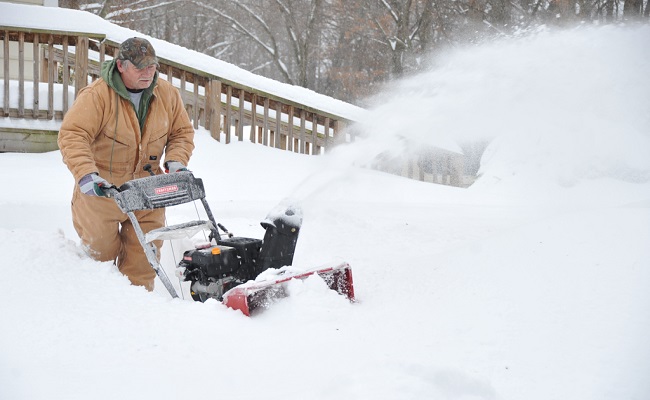
Snow removal
Snow dumps
De-icing
Salting
Sanding of roads and other eligible facilities
Other emergency protective measures (not restricted to the limited time), including but not limited to, search and rescue and sheltering
Category B: Snow-Related Activities (2 of 2)
Limited Time Period for Work
Snow-related activities are eligible for a continuous 48-hour period to address the most critical emergency needs. Each Applicant designates the beginning of its 48-hour period. However, a State agency that conducts snow-related activities in multiple locations throughout a State, such as a Department of Transportation, may use different 48-hour periods for different locations.
Once FEMA approves a project for the Applicant's designated 48-hour period, the Applicant cannot change its selected period.
If the Applicant awards a contract for periods greater than the 48-hour period, Public Assistance funding is limited to the costs incurred during the 48-hour period.
The FEMA Assistant Administrator of the Recovery Directorate may extend the eligible period by 24 hours in counties, parishes, or Tribal Government areas where the snowfall exceeds the historical record snowfall by at least 50 percent.
Category of Work: Permanent Work
The last section of this module discusses Permanent Work.
This section of the module specifically outlines Categories C-G.
Permanent Work Eligibility Overview (1 of 2)
This section provides an introduction to Permanent Work eligibility and an overview of eligibility considerations by facility.
This section also includes discussions on key eligibility considerations and relevant topics such as Codes and Standards, Hazard Mitigation, Repair vs. Replacement, Relocation, Facilities Located in Floodplains, and Capped Projects.
Permanent Work (Categories C-G) is work required to restore a facility to its pre-disaster design (size and capacity) and function in accordance with applicable codes and standards. All Permanent Work is subject to the eligibility of the facility. Temporary emergency repair or stabilization for the purpose of eliminating or lessening an immediate threat is Emergency Work.
Permanent Work Eligibility Overview (2 of 2)
Pre-disaster design means the size or capacity of a facility as originally constructed or subsequently modified. It does not mean the capacity at which the Applicant was using the facility at the time of the incident if different from the most recent designed capacity.
FEMA will only restore to predisaster design, function and capacity unless there is a code and standards or hazard mitigation measure that requires an upgrade. Otherwise changes would not be considered eligible.
If an Applicant designed and constructed an administrative building, but later altered it in accordance with applicable construction codes or standards to use as a school, the pre-disaster function would be as a school.
If the facility was serving an alternate function at the time of the incident, but was not altered to provide that function, FEMA provides Public Assistance funding to restore the facility either to the original pre-disaster function, OR pre-disaster alternate function, whichever costs less.
Category C: Roads and Bridges (1 of 2)
Roads may be paved, gravel, or dirt. Road components include, but may not be limited to:
Surfaces
Bases
Shoulders
Ditches
Drainage structures, such as culverts
Low water crossings
Associated facilities, such as lighting, sidewalks, guardrails, and signs
Bridge components include, but may not be limited to:
Decking
Guardrails
Girders
Pavement
Abutments
Piers
Slope protection
Approaches
Associated facilities, such as lighting, sidewalks, and signs
See the Public Assistance Program and Policy Guide for a summary of eligibility by facility type.
Category C: Roads and Bridges (2 of 2)
Permanent Work to restore roads and bridges is eligible unless restoration is under the specific authority of another Federal Agency such as Federal Highway Administration. Work to repair scour or erosion damage to a channel or stream bank is eligible if the repair is necessary to restore the structural integrity. Earthwork in a channel or stream embankment that is not related to restoring the structural integrity of an eligible facility is not eligible.
For Tribal Governments specifically, although Bureau of Indian Affairs or Federal Highway Administration may have authority to provide permanent restoration of public Tribal roads, such roads may be eligible for Public Assistance funding provided the Tribal Government does not receive funding from Bureau of Indian Affairs or Federal Highway Administration for the same work.
Private roads, including homeowners' association roads, are not eligible. However, roads owned by a Tribal Government may be eligible even if they are not open to the general public.
Category C: Maintenance
The incident may cause minor damage to roads that result in damage similar to that which may occur over time from other causes, such as the age of the road, traffic flow, and frequent rain. Therefore, distinguishing between pre-existing damage and damage caused by the incident is often difficult. For the repair of this type of damage to be eligible, the Applicant must demonstrate that the damage was directly caused by the incident.
When evaluating eligibility of reported road damage, in addition to evaluating how the incident caused the damage, FEMA reviews maintenance records or documentation establishing that the Applicant has a routine maintenance program. In the absence of maintenance records, FEMA reviews material purchase invoices and activity logs and inspects other sections of the Applicant’s road system to confirm the performance of normal maintenance activities.
Normal maintenance is not eligible. Work to repair potholes or fatigue cracking is generally ineligible as this type of damage is rarely caused directly by one incident.
Category D: Water Control Facilities
Water control facilities are those facilities built for the following purposes:
Channel alignment
Recreation
Navigation
Land reclamation
Irrigation
Maintenance of fish and wildlife habitat
Interior drainage
Erosion prevention
Flood control
Storm water management
They include:
Dams and reservoirs
Levees and floodwalls
Lined and unlined engineered drainage channels
Canals
Aqueducts
Sediment and debris basins
Storm water retention and detention basins
Coastal shoreline protective devices
Irrigation facilities
Pumping facilities
Navigational waterways and shipping channels
Category D: Channels, Basins, and Reservoirs (1 of 2)
Restoring the pre-disaster carrying or storage capacity of engineered channels, debris and sediment basins, storm water detention and retention basins, and reservoirs may be eligible, but only if the Applicant provides documentation to establish:
The pre-disaster capacity of the facility; and
That the Applicant maintains the facility on a regular schedule
If the Applicant chooses to remove non-incident-related material along with that deposited as a result of the incident, the project is considered an Improved Project.
Category D: Channels, Basins, and Reservoirs (2 of 2)
Flood Control Works:
Flood control works are those structures such as levees, flood walls, flood control channels, and water control structures designed and constructed to have appreciable effects in preventing damage by irregular and unusual rises in water levels.
Generally, flood control works are under the authority of U.S. Army Corps of Engineers or Natural Resources Conservation Service and restoration of damaged flood control works under the authority of another Federal agency is not eligible.
Secondary levees riverward of a primary levee are ineligible, unless the secondary levee protects human life.
Category E: Buildings and Equipment
Buildings, including:
All structural and non-structural components, including mechanical, electrical, and plumbing systems
Contents and equipment within the building
Furnishings
Equipment includes:
Vehicles
Construction equipment
Repair or replacement of buildings and equipment is eligible.
Category E also covers:
Equipment and supplies
Files
Research-related contents
Animals
Irreplaceable collections and individual objects
Library books and publications
Category E: Buildings (1 of 2)
For buildings and building systems, distinguishing between damage caused by the incident and pre-existing damage may be difficult. Before making an eligibility determination, FEMA considers each of the following:
The age of the building and building systems
Evidence of regular maintenance or pre-existing issues, such as water damage from a leaky roof
The severity and impacts of the incident
Mold remediation and removal of mud, silt, or other accumulated debris is eligible as Permanent Work when conducted in conjunction with restoration of the facility.
Category E: Buildings (2 of 2)
FEMA 352 – Recommended Post Earthquake Evaluation and Repair Criteria for Welded Steel Moment-Frame Buildings:
FEMA has specific eligibility criteria for evaluating and repairing earthquake damage to buildings constructed with welded steel moment frames. FEMA bases the eligibility criteria on Recommended Post Earthquake Evaluation and Repair Criteria for Welded Steel Moment Frame Buildings.
The repair of the damaged frame connections to pre-earthquake design in accordance with FEMA 352, Chapter 6, is eligible, but only if FEMA approves a specific statement of work for the repairs prior to the Applicant performing the work. Repair of the architectural finishes and fire retardants removed in the area of the damage are also eligible.
See the Public Assistance Program and Policy Guide for Recommended Post Earthquake Evaluation and Repair Criteria for Welded Steel Moment Frame Buildings (FEMA 352).
Category E: Equipment and Supplies (1 of 2)
Repairing damaged-or replacing destroyed-equipment and supplies with the same number of equivalent items is eligible.
Equivalent items are similar in age, condition, and capacity.
The Applicant may replace equipment or supplies with different items used for the same general purpose. However, FEMA caps the eligible cost at the estimated amount for items equivalent to those damaged.
When equipment is not repairable, FEMA uses "blue book" or market values or similar price guides to estimate the eligible cost.
Category E: Equipment and Supplies (2 of 2)
Files:
Eligible activities associated with the recovery of files include, but are not limited to:
Recovery of damaged hard copies
Stabilizing the damaged hard copies
Sanitizing damaged hard copies
Photocopying or scanning damaged hard copies to re-establish files
Recovering data from water-damaged computer hard drives
Recovery of damaged hard copies includes labor and materials, such as bags, boxes, and containers. Stabilizing damaged hard copies includes freeze-drying. Photocopying or scanning includes labor and materials such as new folders and paper.
Not all activities are eligible. Examples of ineligible activities include:
Establishing new information databases
Manually entering data that was lost in damaged computers
Scanning re-established hardcopy files into computers to create digital files
Deciphering photocopies of damaged hard copies
Category E: Research-Related Contents
Reagents and specimen collections are eligible for replacement based on the following criteria.
The number of units of each reagent eligible for replacement is equal to the number actually lost OR to the number necessary to restore basic research activity, whichever is less.
FEMA reimburses the purchase price from commercial sources or other institutions, whichever is less. The replacement of reagents that are so unique that they are considered an outcome of a research program is not eligible.
Replacing a representative, but not necessarily a whole portion, of a specimen collection may be eligible. To be eligible for replacement, the specimen types should be available for purchase from commercial sources or other institutions and support an ongoing eligible educational or medical program.
Category E: Animals (1 of 2)
Animals housed or exhibited in an eligible facility are eligible for replacement with the same number of comparable animals if they are:
Injured to the extent they are no longer able to function for the intended purpose
Killed
A destroyed specimen
A damaged specimen that is not recoverable
The animal is not eligible for replacement if a comparable animal is not available for purchase or the Applicant is unable to obtain a comparable at a reasonable cost.
Eligible animals may include, but are not limited to:
Police animals
Trained and certified rescue dogs
Animals in museums, zoos, or publicly owned nature centers
Fish in fish hatcheries
Taxidermy specimens
Animals used by rehabilitation facilities as part of diagnosis or treatment
Laboratory animals used in an active research program
Category E: Animals (2 of 2)
The replacement of animals on loan to an eligible facility at the time they are destroyed is eligible if the Applicant is able to provide documentation that establishes legal responsibility.
Additionally, FEMA may provide Public Assistance funding for actions taken to save the lives of these animals as a Category B emergency protective measure.
Category E: Determining Costs for Replacement Animals (1 of 2)
The estimated cost to replace an animal is usually determined through market surveys. Costs associated with acquiring donated, loaned, or wild animals as replacement animals are eligible provided they do not exceed the estimated cost of purchasing a comparable animal.
For laboratory animals, eligible costs associated with replacement include, but are not limited to, the replacement cost of a laboratory animal that is as genetically close as possible to, but does not exceed, the genetic progression of the lost animal AND can be reasonably procured commercially.
Category E: Determining Costs for Replacement Animals (2 of 2)
Ineligible costs associated with replacing laboratory animals include:
The cost of reproducing a new animal with all the characteristics of the lost animal to re-establish research
The cost of using a laboratory to perform a breeding program to advance benchmark stock to the genetic changes lost because of the incident
The cost associated with surgery required to replace a surgically altered animal
The cost associated with the replacement of a laboratory animal when an animal of similar genetic characteristics can be obtained at no cost from other researchers or institutions
If the Applicant requests, and the Recipient approves, FEMA caps the Federal share based on the estimated in-kind replacement costs.
Category E: Irreplaceable Collections and Individual Objects
Stabilization of damaged collections or individual objects is eligible. Stabilization is a series of treatment measures to maintain the integrity of a collection or object and to minimize deterioration. Stabilization involves taking the minimum steps necessary to return a collection or object to a condition in which it can function in the same capacity as it did prior to the incident. This includes:
Treating damaged items through proper environmental controls, such as temperature and humidity
Chemical or mechanical cleaning to stabilize items to prolong their existence, maintain their integrity, and minimize further deterioration from the damaging effects of the incident
Restoring materials, equipment, and exhibition furnishings associated with the storage, display, preservation, or exhibition of collections and individual objects is also eligible. These may include, but are not limited to:
Equipment regulating temperature or humidity
Exhibit panels
Models
Video and audio equipment
Category E: Library Books and Publications
Replacement of damaged or destroyed library books and publications is eligible based on the pre-disaster inventory of the quantities of the books and publications. Re-shelving, cataloging, and other work incidental to the replacement of library books and publications is also eligible.
However, special library collections, including rare books, manuscripts, and other fragile materials, are only eligible for treatment, not replacement.
Category F: Utilities
Utilities include:
Water storage facilities, treatment plants, and delivery systems
Power generation, transmission, and distribution facilities, including, but not limited to, wind turbines, generators, substations, and power lines
Natural gas transmission and distribution facilities
Sewage collection systems and treatment plants
Communication systems
Right-of-Way Clearance:
The Applicant may need to clear its rights-of-way to obtain access to repair a utility. It is the Applicant's responsibility to maintain its rights-of-way. FEMA may fund limited clearance of disaster-related debris from the rights-of-way to enable access to the facility.
Additionally, if trees in the vicinity of the facility were damaged by the incident and an arborist confirms that the trees cause an immediate threat of further damage to the facility (e.g., overhead power lines), FEMA may provide Public Assistance funding to remove those trees. Any further clearance of debris in the rights-of-way is not eligible for FEMA funding.
Category F: Conductor Replacement
A conductor is only eligible for replacement when the Applicant cannot effectively repair it because one of the following applies:
Twenty-five percent or more of the conductor spans have visible damage, such as broken strands, splices, or sleeves or severe pitting, burns, or kinks
Thirty percent or more of the line spans are visually stretched or do not meet clearance requirements such as conductor-to-conductor or conductor-to ground clearance
Forty percent or more of the supporting poles need to be replaced or plumbed. A pole is considered to be in need of straightening if it is leaning such that it is unsafe to climb.
Forty percent or more of the supporting structures have damage such as broken cross-arms, braces, ties, insulators, guys, pulled anchors, or bent pins. If more than one element of the support structure is damaged, it still only counts as one damaged support structure. If a pole is counted under the previous bullet, FEMA does not count the supporting structure under this criterion
Sixty-five percent or more of any combination of the damage described in the bullets
Evidence provided by a licensed Professional Engineer that demonstrates the conductor is damaged beyond repair
Category G: Parks, Recreational, and Other (1 of 2)
Eligible publicly owned facilities in this category include:
Mass transit facilities such as railways
Beaches
Parks
Playground equipment
Swimming pools
Bath houses
Tennis courts
Boat docks
Piers
Picnic tables
Golf courses
Ball fields
Fish hatcheries
Ports and harbors
Other facilities that do not fit in Categories C-F
Category G: Parks, Recreational, and Other (2 of 2)
Plantings (such as trees, shrubs, and other vegetation) are eligible when they are part of the restoration of an eligible facility for the purpose of erosion control, to minimize sediment runoff, or to stabilize slopes, including dunes on eligible improved beaches.
Grass and sod replacement is eligible if it is an integral part of the restoration of an eligible recreational facility.
Vegetation replacement is also eligible if necessary to restore the function of the facility.
Plantings required to mitigate environmental impacts, such as those required to address impacts to wetlands or endangered species habitat, are only eligible if required by a Federal, State, Territorial, Tribal, or Local government.
Category G: Ineligible Planting
Long-term monitoring to ensure vegetative growth is not eligible even if it meets the requirements on the previous screen.
Plantings ineligible for replacement include, but are not limited to:
Replacement of trees, shrubs, and other vegetation
Replacement of destroyed crops
Cosmetic or aesthetic vegetation, such as landscaping around public facilities or in median strips along roadways
This restriction applies even when the vegetation is damaged during performance of eligible work, such as when repairing underground utilities within landscaped areas.
Category G: Beaches
Replacement of sand on beaches is only eligible under certain conditions, described below. The amount of sand eligible for replacement is limited to the amount lost as a result of the incident. A beach is considered an eligible facility when all of the following conditions exist:
The beach is not a federally constructed shoreline under the specific authority of U.S. Army Corps of Engineers;
The beach was constructed by the placement of imported sand-of proper grain size-to a designed elevation, width, and slope
The Applicant has established and adhered to a maintenance program involving periodic nourishment with imported sand to preserve the original design
Category G: Landslides and Slope Stabilization
If an eligible facility is located on a slope and is damaged as a result of a landslide or slope instability triggered by the incident, FEMA determines the stability of the slope that supports the facility before it approves Public Assistance funding to restore the facility. Restoration of the integral ground that supports the facility may also be eligible. The impact of slope stability on eligibility is as follows:
If the site is stable, permanent restoration of the facility and its integral ground is eligible
If the site is unstable and there is no evidence of pre-disaster instability after the facility was constructed, permanent restoration of the facility and its integral ground is eligible, including measures to stabilize the integral ground
If the site is unstable and there is evidence of pre-disaster instability after the facility was constructed, restoration of the facility's integral ground is not eligible. Restoration of the facility is eligible only upon the Applicant stabilizing the site and restoring the integral ground.
Permanent Work Eligibility Considerations
The next slides detail key considerations regarding Permanent Work eligibility.
Permanent Work is only eligible if the facility is eligible.
Permanent Work and Environmental and Historic Preservation Considerations (1 of 2)
The Applicant needs to make every effort to afford FEMA the opportunity to perform environmental and historic preservation reviews prior to the start of construction for any Permanent Work project. Proceeding with Permanent Work before FEMA completes environmental and historic preservation reviews jeopardizes Public Assistance funding.
Permanent Work projects that restore a damaged facility essentially to pre-disaster design are excluded from National Environmental Policy Act review through a statutory exclusion. All other projects require National Environmental Policy Act. Many qualify for one of the Categorical Exclusions, which are actions that typically have little or no impact on the environment.
Permanent Work and Environmental and Historic Preservation Considerations (2 of 2)
Although many projects are statutorily excluded from National Environmental Policy Act review or covered by a Categorical Exclusion, most projects still require review for compliance with other environmental and historic preservation laws, regulations, and executive orders.
When environmental and historic preservation laws, regulations, or executive orders require actions to mitigate adverse effects, the Applicant is responsible for all costs associated with performing the required mitigation measures, unless such actions are directly related to the restoration of disaster-related damage.
Requirement to Obtain and Maintain Insurance (1 of 2)
Applicants that receive Public Assistance funding for Permanent Work to replace, repair, reconstruct, or construct a facility must obtain and maintain insurance to protect the facility against future loss. This requirement applies to insurable facilities or property (buildings, contents, equipment, and vehicles). FP 206-086-1, Public Assistance Policy on Insurance, describes these requirements in detail.
The Applicant must insure facilities with the types and extent of insurance reasonably available, adequate, and necessary to protect against future loss to the property. The type of insurance refers to the hazard(s) that caused the damage and extent refers to the amount of insurance required, which is calculated based on the eligible costs prior to any reductions (including the non-Federal share reduction).
Requirement to Obtain and Maintain Insurance (2 of 2)
The Applicant is not required to obtain and maintain insurance on facilities with less than $5,000 in eligible costs (prior to any reductions).
The Applicant may request that FEMA modify the insurance requirement when:
The required insurance is not reasonably available;
An alternative to the insurance requirement provides adequate protection against future loss to the property; or
The required insurance is not necessary to protect against future loss to the property
Insurance Reductions and Impact on Facility Eligibility in Subsequent Disasters
If the Applicant does not maintain the required insurance from a previous disaster, then the facility is not eligible for Public Assistance funding in a subsequent disaster, regardless of the hazard(s) that caused the damage.
When the Applicant receives Public Assistance funding for a facility damaged by the same hazard in a subsequent disaster, FEMA reduces funding in this subsequent disaster by the amount of insurance required from the previous disaster.
FEMA understands that the insurance industry usually applies a certain amount of self retained risk on an insurance policy in the form of a deductible. If the subsequent event damages are less than the previous obtain and maintain requirement, FEMA will not fund this deductible for the subsequent event.
If FEMA or the State Insurance Commissioner certification modified the Applicant's insurance requirement, FEMA reduces funding by the modified insurance amount. If the Applicant's anticipated or actual insurance proceeds are higher than the amount of insurance required in the previous disaster, FEMA reduces funding by the anticipated or actual amount of insurance proceeds to avoid a duplication of benefits.
Codes, Standards, and Eligibility Criteria
FEMA provides Public Assistance funding to restore facilities on the basis of pre-disaster design and function in conformity with current applicable codes, specifications, and standards.
Facility repairs and new construction may "trigger" upgrade requirements established by codes or standards. Upgrades required by Federal, State, Territorial, Tribal, or Local repair or replacement codes or standards are eligible only if the code or standard:
Applies to the type of restoration required;
Is appropriate to the pre-disaster use of the facility;
Is reasonable, in writing, formally adopted by the State, Territorial, Tribal, or Local government, and implemented by the Applicant on or before the declaration date, OR is a legal Federal requirement;
Applies uniformly; and
Was enforced during the time it was in effect.
FEMA Required Minimum Codes and Standards (1 of 2)
If the building is eligible for repair, replacement, or is being constructed as an improved or alternate project, FEMA generally requires that the Applicant incorporate the natural hazard-resistant codes and standards and related provisions referenced in the most recent published edition of the International Code Council's International Building Code, International Existing Building Code, or International Residential Code into the building design and construction.
This includes natural hazard-resistant provisions, such as tornado, wind, seismic, and flood as identified in the International Building Code, International Existing Building Code, or International Residential Code regardless of the type of incident that caused the damage. In accordance with these codes and standards, the Risk Category of the eligible building determines the applicable tornado, wind, seismic, flood, snow, ice, and rain loads.
FEMA Required Minimum Codes and Standards (2 of 2)
Generally, the International Building Code, International Existing Building Code, or International Residential Code apply when a building:
Is substantially damaged;
Suffered substantial structural damage; or
Is eligible for replacement
The determination of whether a code and standard is triggered may be made by:
A building official or inspector;
The Applicant's registered design professional; or
Other appropriate and qualified individual.
Natural Hazard-Requirements
Based on an eligible scope of work, natural hazard-specific repairs may be required. These requirements are not limited to the following:
In areas where tornado shelter design wind speeds are 250 mph or greater, the Applicant must incorporate a storm shelter or safe room (designed to International Code Council 500 standards) for elementary and secondary schools with an occupant load of 50 or more, Emergency Operations Center, 911 call stations, fire stations, rescue stations, ambulance stations, and police stations.
For wind-resistant requirements, the Applicant must incorporate applicable wind-resistant design and construction standards contained in the International Building Code, International Existing Building Code or International Residential Code and its referenced standards [e.g., American Society of Civil Engineers/Structural Engineering Institute.
For seismic-resistant requirements, the Applicant must incorporate applicable seismic-resistant design and construction standards contained in the International Building Code, International Existing Building Code or International Residential Code and its referenced standards (e.g., American Society of Civil Engineers).
For flood-resistant requirements, the Applicant must incorporate applicable flood-resistant design and construction standards contained in the International Building Code, International Existing Building Code or International Residential Code and its referenced standards (e.g., American Society of Civil Engineers).
Ineligible Upgrades
Upgrades recommended by design standards, guidelines, policies, industry practices, or other non-mandatory provisions are not eligible if the provisions do not meet all of the codes, standards, and eligibility criteria previously discussed in this module.
Upgrades that are deemed ineligible but enhance a facility's ability to resist similar damage in a future incident, may be eligible as hazard mitigation. Even though a upgrades are deemed ineligible, an Applicant may request approval for an Improved Project.
Historic Preservation Compliance
If the facility is listed in, or meets the criteria to be listed in, the National Register of Historic Places, and an applicable code or standard requires repair in a certain manner, costs associated with work to comply with that code or standard are eligible, even if repair costs exceed replacement costs. This is an exception to the regulatory requirement that when a facility is eligible for replacement, FEMA limits eligible costs to the less expensive of repairs or replacement.
If a State, Territorial, or Tribal historic building codes and standards requires specific work to be completed, FEMA evaluates the codes and standards using the standard eligibility criteria. Most State historic building codes and standards encourage code officials to allow less intrusive alternatives to requirements of the prevailing codes and standards, but do not require any particular work to be completed. As a result, the codes and standards usually fail to meet the eligibility criteria.
Floodplain Management and Wetland Protection (1 of 2)
For any structure (walled or roofed buildings, including mobile homes and gas or liquid storage tanks) that is built, replaced, or substantially improved in a Special Flood Hazard Area, the Applicant must, at a minimum, either elevate or floodproof the lowest floor (including the basement) to or above the 100-year base flood elevation.
If the structure houses critical actions and is in the 100-year floodplain, the Applicant must, at a minimum, elevate the lowest floor (including the basement) to or above the 500-year flood level. If the structure is non-residential, the Applicant may opt to floodproof to the required level instead of elevating.
Floodplain Management and Wetland Protection (2 of 2)
Similarly, if the structure houses critical actions and is in the 500-year floodplain, the Applicant must elevate the lowest floor (including the basement) to or above the 500-year flood level. Again, if the structure is non-residential, the Applicant may opt to floodproof to the required level instead of elevating.
Further, if the structure is in a Coastal High Hazard Area, the Applicant must elevate the facility to the base flood elevation (the 500-year level for critical actions) (including wave height) on open works (walls columns, piers, piles, etc.) and anchor it properly.
National Flood Insurance Program Requirements
A community that participates in the National Flood Insurance Program must adopt and enforce a floodplain management ordinance that meets or exceeds the minimum National Flood Insurance Program requirements.
The ordinance must contain construction requirements for new construction or substantial improvement of buildings located in a Special Flood Hazard Area. In addition to other requirements, the ordinance must require that new or substantially improved buildings be elevated so the lowest floor is at or above the base flood elevation or floodproofed to a level equal to or above the base flood elevation (some communities have more restrictive ordinances that require elevation or floodproofing to greater levels).
Work required for compliance with the floodplain ordinance is eligible provided the ordinance meets the eligibility criteria for codes and standards and the substantial improvements are disaster-related repairs. If the cost to repair a facility in accordance with the floodplain ordinance is greater than the cost to replace the facility in accordance with the ordinance, the eligible cost is capped at the replacement cost.
Americans with Disabilities Act Access Requirements
The Americans with Disabilities Act requires that any public, residential, or workplace facility be accessible to and usable by disabled persons.
FEMA provides Public Assistance funding for costs related to Federal Americans with Disabilities Act accessibility requirements based on the repair and replacement criteria.
Facilities Eligible for Replacement
When a facility is eligible for replacement, FEMA provides Public Assistance funding for compliance with reasonable accessibility requirements triggered by Americans with Disabilities Act in newly constructed facilities. FEMA provides Public Assistance funding regardless of whether the facility was in compliance prior to the incident, provided the Applicant was not cited for an Americans with Disabilities Act violation.
A new facility is not required to be fully compliant with Americans with Disabilities Act if the Applicant can demonstrate that it is structurally impractical to meet the requirements.
For some private nonprofits, exceptions are available for installation of elevators in small buildings less than three stories or less than 3,000 square feet per story. These exceptions do not apply to any publicly owned or operated facility.
Facilities Eligible for Repair (1 of 2)
For Americans with Disabilities Act-relevant repairs, FEMA provides Public Assistance funding for required Americans with Disabilities Act upgrades that have a reasonable and technically supportable relationship to the damaged elements of the facility.
In addition, when disaster-related and Americans with Disabilities Act-relevant repairs are made to a primary function area of the facility, FEMA provides Public Assistance funding to make the path of travel to the primary function area accessible to the maximum extent feasible, including facilities that serve the primary function area.
Examples of facilities that serve the primary function area include restrooms, telephones, drinking fountains, pathways, and similar service facilities. Pathways include internal and external paths of travel, such as hallways, sidewalks, and parking lots.
Facilities Eligible for Repair (2 of 2)
When 20 percent is not adequate to meet Americans with Disabilities Act-accessible path-of-travel and service facility requirements, the Applicant must apply Americans with Disabilities Act access requirements to the maximum extent possible with the limited funds. The Applicant should make limited changes in the following order of priority:
Accessible entrance
Accessible route to the altered area
At least one accessible restroom for each sex or single unisex restroom
Phones
Drinking fountain
Other elements such as parking, storage, and alarms
State, Territorial, Tribal, or Local Government Requirements
If a Federal, State, Territorial, Tribal, or Local government permitting agency requires additional work based on codes and standards that do not meet the standard eligibility criteria for Permanent Work, the cost of the additional work is only eligible if the work:
Does not change the pre-disaster size, capacity, or function of the facility;
Applies to the type of repair or restoration required;
Is reasonable based on the type and extent of damage; and
Is an established, enforced, uniform practice that applies to all similar types of facilities within the Applicant's jurisdiction, regardless of the circumstance.
Hazard Mitigation
Hazard mitigation is any sustained action taken to reduce or eliminate long-term risk to people and property from natural hazards and their effects. FEMA has authority to provide Public Assistance funding for cost-effective hazard mitigation measures for facilities damaged by the incident.
In addition to providing funding for hazard mitigation under the Public Assistance Program, FEMA also provides hazard mitigation funding under its Hazard Mitigation Assistance programs, authorized under Sections 404 and 406 of the Robert T. Stafford Act. FEMA's Federal Insurance and Mitigation Administration administers the Hazard Mitigation Assistance programs, which are briefly described in Figure 15 of the Public Assistance Program and Policy Guide.
The eligibility criteria, procedures, and timelines for implementation of the hazard mitigation measures funded under the Hazard Mitigation Assistance programs differ from the hazard mitigation measures funded under the Public Assistance Program.
The Applicant may use both 406 and 404 mitigation funds to implement mitigation measures on the same facility, but not for the same work. The Applicant cannot use funds from one of these mitigation programs to meet the non-Federal cost share of work funded under the other mitigation program.
Hazard Mitigation Section 406 (1 of 2)
FEMA evaluates proposed mitigation measures for cost-effectiveness, technical feasibility, and compliance with environmental and historic preservation laws, regulations, and executive orders.
FEMA considers mitigation measures to be cost-effective if any of the following criteria are met:
The cost for the mitigation measure does not exceed 15 percent of the total eligible repair cost (prior to any insurance reductions) of the facility or facilities for which the mitigation measure applies
The mitigation measure is specifically listed in Appendix J: Cost-Effective Hazard Mitigation Measures, and the cost of the mitigation measure does not exceed 100 percent of the eligible repair cost of the facility or facilities for which the mitigation measure applies
The Recipient or Applicant demonstrates through an acceptable benefit-cost analysis methodology that the measure is cost-effective
Hazard Mitigation Section 406 (2 of 2)
To be eligible, the mitigation measures must directly reduce the potential of future, similar damage to the facility. Examples include:
Constructing floodwalls around damaged facilities
Installing new drainage facilities (including culverts) along a damaged road
Dry floodproofing both damaged and undamaged buildings that contain components of a system that are functionally interdependent (i.e., cases where the entire system is jeopardized if any one component of the system fails)
Repair vs. Replacement
When evaluating whether a damaged facility is eligible for replacement, FEMA compares the repair cost with the replacement cost and evaluates the feasibility of repairing the facility.
A facility is considered repairable when:
The cost to repair the disaster-related damage does not exceed 50 percent of the cost to replace the facility based on its pre-disaster size, capacity, and function; and
It is feasible to repair the facility so that it can perform the pre-disaster function as well as it did prior to the incident
The comparison of the repair cost to the replacement cost results in a fraction that expresses repair as a percentage of replacement. The percentage is calculated with the repair cost as the numerator and the replacement costs as the denominator. FEMA refers to this calculation as the "50% Rule."
Permanent Work Cost Calculation (1 of 2)
The repair cost (numerator) is the cost of repairing disaster-related damage only and includes costs related to compliance with codes and standards that apply to the repair of the damaged elements only (including federally required codes and standards). The numerator does not include costs associated with:
Upgrades of non-damaged elements even if required by codes or standards (e.g., elevation of an entire facility triggered by repair)
Demolition beyond that which is essential to repair the damaged elements
Site work
Soft costs
Contents
Hazard mitigation measures
Emergency Work
Permanent Work Cost Calculation (2 of 2)
The replacement cost (denominator) is the cost of replacing the facility on the basis of its pre-disaster design (size and capacity) and function in accordance with applicable codes or standards. The denominator does not include costs associated with:
Demolition
Site work
Soft costs
Contents
Hazard mitigation measures
Emergency Work
Although certain costs are not included in the 50% Rule calculation to determine whether the facility is eligible for replacement, the costs may be eligible for Public Assistance funding subject to all other eligibility requirements.
Eligible Funding
If the estimated repair cost exceeds 50 percent of the estimated replacement cost, the actual replacement cost is eligible. The Applicant may elect to repair the facility in conformance with applicable codes and standards. In this case, FEMA limits the eligible cost to the estimated cost of repair or replacement, whichever is lower.
If the repair cost does not exceed 50 percent of the replacement cost, AND upgrades to undamaged elements are triggered by codes and standards, AND the total of both is greater than 100 percent of the estimated replacement cost, FEMA caps the total eligible cost at the estimated replacement cost.
Demolition of a facility that is eligible for replacement is eligible as part of the work to replace the facility. Eligible costs include removal of the associated demolition debris.
If applicable codes and standards require that a historic facility be restored in a certain manner and do not allow other options, the cost to restore the facility in accordance with the codes and standards is eligible and may exceed the estimated replacement cost. A historic facility is defined as one listed in, or eligible for listing in, the National Register of Historic Places.
Replacement of Components of a Facility or System (1 of 2)
FEMA does not apply the 50% Rule to a facility's structural or mechanical components (e.g., windows, roofs, heating, ventilation, and air conditioning; electrical, plumbing). For example, FEMA does not apply the 50% Rule to a damaged heating, ventilation, and air conditioning system to determine whether the system should be repaired or replaced because it is a component of a building. As long as the heating, ventilation, and air conditioning system is repairable, as determined by an inspector or engineer with appropriate technical expertise, FEMA limits its funding to the repair of the system.
Replacement of Components of a Facility or System (2 of 2)
The following are examples of facilities that are systems to which FEMA applies the 50% Rule calculation to individual components:
Drainage channel or irrigation system: a section from node to node
Water or sewer line system: a section of piping from manhole to manhole, a lift station, or a manhole structure Water or wastewater treatment plant: a control building, clarifier, or sedimentation pond
Roadway: each damaged roadway section
The following are examples of facilities to which FEMA applies the 50% Rule to the entire facility:
Bridge
Culvert
Building
Pumping station
Pier
Pool, including integral pumping
Bath house or rest room
Equipment
Lighting structure
Sign
Relocation
FEMA may approve funding for and require restoration and relocation of an Applicant's destroyed (i.e., eligible for replacement) facility at a new location when all of the following conditions apply:
The facility is subject to repetitive heavy damage because of its location. For example, facilities located in a Special Flood Hazard Area are subject to repetitive heavy damage;
Project approval is not barred by other regulations; and
The overall project, including all costs, is cost-effective
If the cost to relocate the facility is less than the eligible cost to replace the facility at its original location then the project is cost effective
In instances where the cost of relocation exceeds the cost to replace the facility at its original location FEMA may use its benefit-cost analysis process and software to determine cost effectiveness
An applicable Federal, State, or Local code or standard, such as a floodplain management regulation, may also require that a damaged facility be relocated away from a hazardous area (e.g. floodway). If the facility is destroyed (i.e. eligible for replacement) then FEMA determines whether relocation is cost-effective in the same manner as described above.
Eligible Work and Funding for Relocation
Eligible work associated with relocation includes land acquisition and construction of necessary support facilities, such as roads, parking lots, and utilities. Demolition and removal of the original facility are also eligible if deemed necessary. FEMA limits Public Assistance funding to the amount necessary to make the relocated facility and its associated components operational.
FEMA considers the proximity of the new site to utilities (water, sewer, and electric) and approves the least costly solution. Construction of an off-site support facility is only eligible if it is a utility that would serve the relocated facility exclusively.
For land acquisition, if the facility was located on 10 acres of land at the time of the incident, and FEMA determines that 10 acres is not necessary for the operation of the facility, FEMA limits Public Assistance funding to the necessary amount of land.
When FEMA requires relocation, FEMA does not provide future Public Assistance funding for repair or replacement of the original facility or for other facilities at the original site unless the facility facilitates an open space use.
Sale or Lease of Property at Original Site
The Applicant may sell or lease the original facility or the land on which a relocated facility was originally located. The Applicant must inform the purchaser of the property that FEMA will not provide future Public Assistance funding for repair or replacement of the original facility or for other facilities at the original site unless the facility facilitates an open space use.
If the Applicant takes an action, such as demolition, using Public Assistance funds at the original site, FEMA must complete an environmental and historic preservation review before the action occurs.
Facility Located in or Impacting a Floodplain
When FEMA provides Public Assistance funding for restoration of a facility located in or impacting a floodplain, FEMA is required to ensure minimization of harm to or within the floodplain.
FEMA is responsible for determining whether a Public Assistance project will have an adverse impact on the 100-year floodplain (500-year floodplain for critical actions). To make this determination, FEMA initiates the 8-Step Decision-making Process. As part of this process FEMA evaluates the impacts the project may have on the floodplain and practicable alternatives.
FEMA evaluates environmental, social, economic, technical, and legal factors. Some alternatives may not be eligible for Public Assistance funding. FEMA considers whether each alternative identified is eligible for Public Assistance funding and, if not, whether the Applicant has funding available to proceed with the alternative without Public Assistance funding.
Projects in the 100-year floodplain (500-year floodplain for critical actions) are only eligible if, as a result of completing the 8-step process, FEMA is unable to identify a practicable alternative to restoring the facility within the floodplain. The 8-step process is not required for projects where the repair cost is less than $5,000.
Facility Located in a Special Flood Hazard Area
Special Flood Hazard Areas are areas that are subject to inundation during a 100-year flood (a flood having a 1 percent chance of occurrence in a given year).
National Flood Insurance Program:
For an National Flood Insurance Program-insurable facility located in a Special Flood Hazard Area, FEMA must reduce Public Assistance funding when the facility is:
Located in an area that FEMA has identified as an Special Flood Hazard Area for more than 1 year
Damaged by flooding
Uninsured for flood loss
If the Applicant does not have flood insurance for the facility or carries inadequate flood insurance for the insurable facility, FEMA will reduce eligible project costs by the lesser of:
The maximum amount of insurance proceeds that have been obtained from an National Flood Insurance Program standard flood insurance policy for the building and its contents; or
The value of the building and its contents at the time of the incident.
Capped Projects
FEMA provides three options that provide flexibility for the Applicant to use Public Assistance funding differently than restoring the pre-disaster design and function of the facility. For these options, FEMA caps the amount of Public Assistance funding based on the estimated amount to restore the damaged facility to its pre-disaster design and function, including current eligible codes and standards as defined in the Public Assistance Policy and Procedures Guide, Codes and Standards.
The three capped project options are:
Improved Project
The Applicant may wish to make improvements to a damaged facility that are not required by eligible codes or standards. A project that restores the pre-disaster function of a facility and incorporates improvements or changes to the pre-disaster design is an Improved Project
Alternate Project
The Applicant may determine that the public welfare is not best served by restoring the function of the damaged facility. When this occurs, the Applicant must obtain FEMA’s approval to apply PA funding toward a different facility (or facilities). FEMA refers to this as an Alternate Project. The Alternate Project must be a permanent project that benefits the general public, serving the same general area that was being served by the original facility.
Alternative Procedures Project under Section 428 (Large Projects only)
This type of project offers the maximum amount of flexibility with how the Applicant may use PA funding, including use of excess funds which are not eligible under the Improved or Alternate Project options. The Applicant may use funds across all Permanent Work Alternative Procedures Projects with no requirement to rebuild communities back to what existed prior to the disaster. Alternative Procedures Projects are subject to acceptance of a fixed-cost offer within the deadlines described in the Public Assistance Program and Policy Guide, Fixed Cost Offer Deadlines.
Capped projects may involve significant changes to the pre-disaster configuration of a facility (e.g., location, footprint, or size). FEMA conducts EHP compliance reviews on the actual proposed statement of work to be performed, prior to approving the project.
See the Public Assistance Program and Policy Guide for additional information regarding Fixed Cost Offer Deadlines.
Expert Panel Cost Estimate Review
For an Alternative Procedures Project with an estimated Federal share of at least $5 million, upon the Applicant's request, FEMA provides a FEMA-funded, independent validation of the cost estimate. The validation is conducted by an expert panel composed of design, engineering, construction, cost-estimating, and industry professionals retained by a contractor or another agency with which FEMA has established an agreement for the panel's services. FEMA also has discretion to direct estimates to the panel for review.
If the Applicant requests this validation, the panel:
Conducts its review before the Applicant's acceptance and before FEMA's obligation of funds
Limits its review to issues pertaining to the estimated cost (the panel will not make decisions related to the eligibility of the damage or statement of work); however, it may make determinations with regard to incorporation of cost elements relating to project execution that could affect the statement of work
May review cost documentation for completed work, if applicable and necessary
If the estimated amount deemed appropriate by the expert panel is less than the Applicant’s estimated amount and the Applicant is unwilling to accept the capped amount, the Applicant may forgo the Alternative Procedures and request that FEMA process the project using standard procedures.
Capped Project Approval
Improved Project:
For Improved Projects, the Applicant must obtain approval from the Recipient. If the Improved Project significantly changes the pre-disaster configuration of the facility, the Recipient must forward the request to FEMA to ensure that the Improved Project complies with appropriate environmental and historic preservation laws, regulations, and executive orders.
Alternate Project:
For Alternative Procedures Projects, FEMA, Recipient, and the Applicant must obtain approval from FEMA. If the Alternate Project involves construction, the Applicant must obtain FEMA approval prior to the start of construction.
Alternative Procedures Project:
For Alternative Procedures Projects, FEMA, the Recipient, and the Applicant must reach agreement on the capped amount within 12 months of the declaration date. Upon request from the Applicant, FEMA may approve a time extension on a project-by-project basis. The Applicant's request must include the circumstances that justify the extension and demonstrate progress on reaching an agreement. In complex or catastrophic incidents, upon request from the Recipient, FEMA may approve an extension for all Applicants.
Environmental and Historic Preservation Review
Capped projects may involve significant changes to the pre-disaster configuration of a facility (e.g., location, footprint, or size). As with all projects, the Applicant needs to obtain FEMA approval prior to the start of construction so that FEMA can ensure that the project complies with appropriate environmental and historic preservation laws, regulations, and executive orders. If the Applicant starts construction prior to FEMA's completion of this review, it may jeopardize Public Assistance funding for the entire project.
Insurance:
FEMA will reduce the amount of the fixed estimate to account for insurance coverage based on:
Actual insurance proceeds, if known; or
Anticipated insurance proceeds based on the Applicant's insurance policy, if the amount of actual proceeds is unknown.
Upon completion of the project, FEMA adjusts the fixed estimate to account for actual insurance proceeds as described in the Public Assistance Program and Policy Guide.
Capped Project Funding
Prior to work commencing, the Applicant must receive approval of a capped project. Once FEMA caps the funding, the type of capped project impacts the maximum Federal funding the Applicant can receive.
Improved Project Funding:
FEMA limits Federal funding for an Improved Project to the lesser of the following:
The Federal share of the approved estimated cost to restore the damaged facility to its pre-disaster design and function; or
The Federal share of the actual costs of completing the Improved Project.
FEMA only increases eligible funding for an Improved Project if the Applicant identifies an error or omission in the original statement of work or cost estimate related to restoring the facility to its pre-disaster design and function
Alternate Project Funding:
FEMA limits Federal funding for an Alternate Project to the lesser of:
The Federal share of the approved estimate to restore the damaged facility to its pre-disaster design and function; or
The Federal share of the actual cost of completing the Alternate Project
Alternative Procedures Project Funding Under Section 428:
FEMA caps Federal funding for an Alternative Procedures Project based on the aggregate Federal share of the approved estimated cost:
To restore the damaged facilities to pre-disaster design and function in accordance with eligible codes and standards; and
For cost-effective PA mitigation measures associated with the actual restoration statement of work that the Applicant will perform.
Alternative Procedures Alternate Project
The Applicant may use Alternative Procedures Project funds toward an Alternate Project.
In this case, FEMA does not implement the reduction that is applied under the standard program (described in the preceding section). All other Alternate Project requirements under the standard Public Assistance Program apply to Alternative Procedures Alternate Projects, such as how the Applicant may or may not use the funds.
Use of Improved Project Funds
FEMA has different requirements for how the Applicant can use the funds related to each type of capped project.
Use of Improved Project Funds:
When restoring a damaged facility, the Applicant may decide to make improvements to the facility. A project that incorporates such improvements is an Improved Project. The improved facility must have the same function and at least the same pre-disaster capacity as the damaged facility. The following are examples of Improved Projects:
Laying asphalt on a gravel road
Replacing a firehouse that originally had two bays with a firehouse that has three bays
Incorporating requirements dictated by codes and standards that do not meet Public Assistance eligibility criteria
Relocating a facility when the relocation is not required by FEMA
The Applicant must obtain approval from the Recipient. If the Improved Project significantly changes the pre-disaster configuration of the facility, the Recipient must forward the request to FEMA to ensure that the Improved Project complies with appropriate EHP laws, regulations, and executive orders (EOs).
The Applicant can combine Public Assistance funds with funding from another Federal agency to construct the Improved Project. However, the Applicant cannot use funding from another Federal agency toward the non-Federal cost share of the Public Assistance-funded project, unless the legislation for the other grant allows such use.
Use of Alternate Project Funds
An Applicant may determine that the public welfare is not best served by restoring the function of the damaged facility. When this occurs, the Applicant may request approval from FEMA to apply Public Assistance funding toward a different project(s). FEMA refers to this as an Alternate Project.
The Alternate Project must be a permanent project that benefits the general public, serving the same general area that was being served by the original facility. The Applicant may use Alternate Project funds to:
Repair, expand, mitigate, or construct a facility that would otherwise be an eligible facility under the Public Assistance Program
Demolish facilities
Purchase capital equipment that has a useful life of at least 1 year and is equal to, or greater than, $5,000 per unit
Fund project shortfalls due to mandatory flood insurance reductions taken from Public Assistance Program funding for repairs to buildings in Special Flood Hazard Areas
Supplement funds for an Improved Project
Conduct cost-effective hazard mitigation measures, regardless of whether the facility was damaged by the incident and whether the measures reduce the risk of future damage from the same type of incident or of the same type of damage caused by the incident
Ineligible Alternate Project Funds
The Applicant may not use Alternate Project funds to:
Meet budget shortfalls
Create a new community plan
Landscape
Pay for operating expenses
Purchase supplies, furniture, or equipment costing less than $5,000 per unit
Pay the non-Federal share of any Public Assistance project
Fund buyouts for mitigation, such as acquisition of flood-prone property to create open space
Supplement funds on projects that utilize other Federal agency grants
Fund a project located in a FEMA-designated floodway
Use of Alternative Procedures Project Funds
When the Applicant agrees to a capped project under the Alternative Procedures, it may utilize any one or more of the following procedures:
Consolidation of multiple capped projects
Elimination of reduced funding for Alternate Projects
Retention of excess funds for approved purposes
Third-party expert panel review for estimates with a Federal share of $5 million or greater
The Applicant may use Alternative Procedures Project funds to restore the pre-disaster design and function of the facility or it may use the funds to complete a project with a different design and/or function. The Applicant may use the funds to:
Construct new facilities
Purchase equipment
Conduct measures that reduce future risk
The Applicant may not use the funds for the following:
Facilities or equipment that are not otherwise eligible for Public Assistance funding
Meet the Local cost share for other Federal projects
Pay down debts, cover budget shortfalls, or meet operating expenses
Conduct planning and design that go beyond the work related to the project, such as community-wide planning
Consolidated Project
The Applicant may combine two or more capped projects into a single project, creating a Consolidated Project. FEMA caps funding for the Consolidated Project at the aggregate amount of the eligible costs for the formerly separate, individual, capped projects. The Applicant must consolidate each individual project in its entirety (i.e., all sites from the project).
The Applicant may consolidate projects regardless of the status of construction. It may consolidate projects with different categories of Permanent Work (e.g., by combining Category C and Category E projects) or consolidate within the same Category of Work (e.g., multiple school-campus locations).
The Applicant may share funding across any of the facilities or sites within the Consolidated Project to meet its post-disaster recovery needs.
The Applicant must notify FEMA of the projects to be consolidated and the final statement of Work to be Completed under the Consolidated Project within 12 months of the declaration date. Upon request from the Applicant, FEMA may approve a time extension for the Applicant to consolidate its capped projects. The Applicant's request must include the circumstances that justify the extension.
Use of Excess Funds
The Applicant must submit a proposed statement of work for use of any excess funds, along with a project timeline to the Recipient within 90 days of completing its last Alternative Procedures Project. The Recipient must forward the request to FEMA within 180 days of date the last Alternative Procedures Project was completed. FEMA evaluates the proposed use of excess funds for reasonableness to ensure prudent use of funds. FEMA also evaluates the submitted project timeline and approves an appropriate deadline for work completion, not to exceed the overall disaster period of performance..
The Applicant may use the excess funds for the following:
Cost-effective hazard mitigation measures that will reduce the risk of damage in future incidents.
The Applicant may use the funds for hazard mitigation on facilities not damaged in the incident, provided the facilities would otherwise be eligible for Public Assistance funding, and toward hazard mitigation activities on other Alternative Procedures Projects.
Activities that improve future Public Assistance Program Permanent Work operations, such as training and planning for future disaster recovery operations.
Unacceptable uses of excess funds includes:
Payment of debts
Payment of the non-Federal share of Public Assistance projects or other Federal awards
Operating expenses
Cost overruns on other Public Assistance projects
Incorporation into the community's General Fund
Restoring a facility not damaged in the declared incident
Restoring a facility that would not otherwise be eligible for Public Assistance funding obtain-and-maintain requirements for insurance apply to work funded with excess funds, as appropriate
Retention of 406 Mitigation Funds
If FEMA approves mitigation funds as part of the capped amount, FEMA's allowance for the Applicant to retain those funds depends upon the type of capped project and the statement of work being conducted.
Improved Project:
If the capped amount for an Improved Project includes Public Assistance mitigation funds and the Applicant either does not complete the Public Assistance mitigation work, or replaces or relocates the original facility, FEMA deobligates the Public Assistance mitigation funds.
Alternate Project:
If the statement of work to restore a facility includes Public Assistance mitigation, and the Applicant elects to proceed with an Alternate Project, FEMA does not include costs related to the Public Assistance mitigation in the capped amount for the Alternate Project.
Alternative Procedures Project:
When the Applicant is restoring the function, but changing the pre-disaster capacity of a facility, the proposed Public Assistance mitigation statement of work is developed based on the actual statement of work to be performed; however, the cost-effectiveness is evaluated based on the fixed-cost amount accepted for the pre-disaster restoration statement of work. If the capacity is increased, the proposed hazard mitigation statement of work and cost is limited to the statement of work and cost necessary to mitigate to the pre-disaster capacity of the damaged facility. If the Applicant does not complete the approved Public Assistance mitigation, FEMA deobligates the portion of the fixed-cost amount related to hazard mitigation.
Funding from a Facility with an Approved Temporary Facility
If FEMA approves a capped project for a facility that has also been approved for temporary relocation of the services to a temporary facility, FEMA does not apply funds from the temporary facility toward the capped project.
Improved Project:
If FEMA approves an Improved Project for a facility for which it also approved temporary relocation of the services to a temporary facility, the temporary facility is only eligible for Public Assistance funding for the estimated amount of time necessary to restore the facility to its pre-disaster design and function.
Alternate Project:
If FEMA approves an Alternate Project for a facility for which it also approved temporary relocation of the services to a temporary facility, FEMA does not reimburse any temporary facility costs incurred after the date the Applicant requests that Alternate Project.
Alternative Procedures Project:
If FEMA approves an Alternative Procedures Project for a facility for which it also approved temporary relocation of the services to a temporary facility, continued Public Assistance funding for the temporary facility is dependent upon the statement of work of the Alternative Procedures Project.
Disposition of Original Facility
For Alternate and Alternative Procedures Projects, if the Applicant does not repair, replace, or sell the damaged facility for which the capped project funding was based, and that facility is unsafe if not repaired, the Applicant must render the facility safe and secure or demolish it.
If the Applicant receives funds for salvaged components of the facility, FEMA adjusts the capped project by the value or anticipated fair market value of salvaged materials less the estimated costs necessary to demolish the facility, grade the site, or make the facility safe and secure.
For any action at the original site, such as demolition, that is completed using Public Assistance funds, FEMA must conduct an environmental and historic preservation review. However, if the Applicant completes the work at the original site using non-Public Assistance funds, a FEMA environmental and historic preservation review is not required.
If the Applicant opts to keep a damaged facility for a later use, the facility may be eligible for Public Assistance funding in future incidents, provided the Applicant repaired the facility in accordance with current codes and standards, and completed any mitigation measures that FEMA included in the original statement of work prior to the incident.
Lesson 4 Summary
This lesson identified the requirements for work to be eligible for Public Assistance Program grants. Participants should be able to describe work eligibility and explain differences between Permanent Work and Emergency Work